
Advent cross stitch patterns need a layout plan as well as attractive individual motifs. A December countdown with 24 panels or pockets must fit its intended display, and the numbers need to remain readable. Plan the entire arrangement before stitching the first square so a small size error does not repeat across the whole calendar.
Calendar reference: December countdowns usually begin December 1; Western Advent Sunday is November 28, 2027. Check the calendar reference and your recipient’s local plans before setting a deadline.
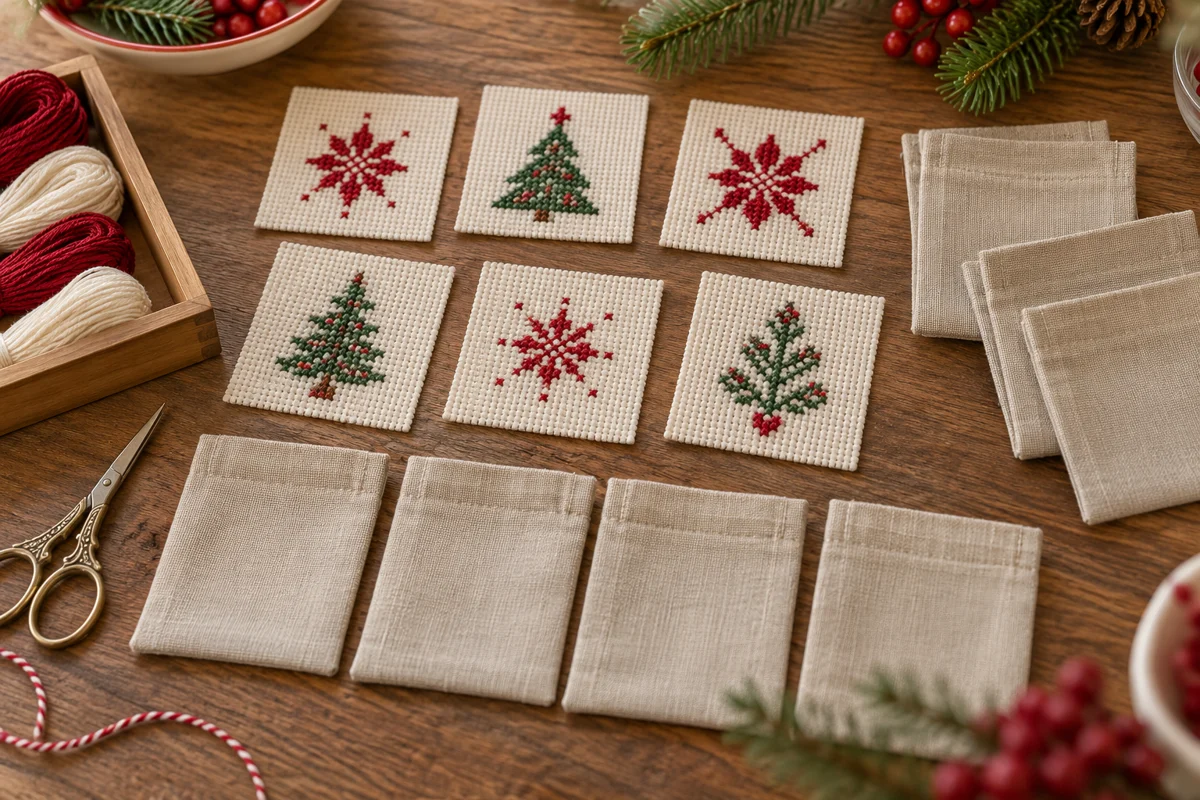
Decide which kind of countdown you are making
Many decorative Advent calendars count from December 1 to 24, while the liturgical season of Advent begins on a Sunday that changes date each year. In 2027, Western Advent Sunday is November 28. Decide whether your project is a December countdown or a different religious calendar, and describe it accordingly.
Choose a chart or layout that supplies the numeral set and construction information you need. Twenty-four pretty motifs do not automatically form a finished pocket calendar. If you plan to sew pockets, consider backing, seams, hanging support and any objects placed inside as a separate construction task.
Calculate the whole display rather than one tile
Write down the tile width, tile height, number of rows and columns, and the gap between units. For example, four columns of 20-square tiles with three 4-square gaps span 92 squares. Six rows with five 4-square gaps span 140 squares. On 14-count Aida, that chart area is approximately 6.57 by 10 inches, before outer borders and finishing allowance.
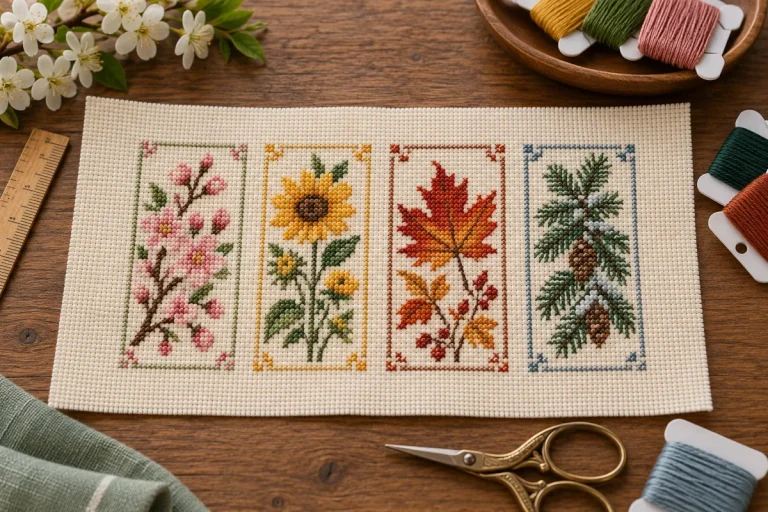
Check the widest numeral combination and the largest motif against the same tile space. A repeated layout looks more coherent when baseline, spacing and border thickness are consistent. If you mix designs from different charts, confirm that their scale and usage terms allow the combination you plan.
Make one complete unit before repeating twenty-four
Stitch and assemble a sample tile or pocket with the actual cloth, thread and backing. Check how much fabric the seam consumes, whether the number remains visible and whether the piece hangs flat. Correct the sample rather than discovering the same issue after all the motifs are stitched.
Work in manageable groups and keep a checklist of the numbers already completed. If the available time is short, choose a smaller display or spread the project over more than one season. Keep hanging textiles away from candles, and choose attachment methods appropriate to the intended users rather than treating loose small decorations as toys.
Before you begin
- Read the actual symbol chart, thread key and stitch-type notes.
- Calculate the design area and add the allowance required for your chosen finish.
- Test the intended cotton and fabric together on an offcut.
- Keep a readable working copy and check the first completed motif before repeating it.
Questions and next steps
Does an Advent calendar have to use 24 different motifs?
No. A coherent set can repeat a few motifs while the numbers distinguish the days.
Can I stitch the motifs first and decide the layout later?
It is possible, but you risk inconsistent size and missing allowance. Plan the full layout and test one unit first.
Does a counted chart include pocket sewing instructions?
Only if the listing says so. Read the file contents before assuming that chart and construction instructions are both supplied.
For practical preparation, see matching cloth counts across small pieces, and calculating the full display area.
For another seasonal project, explore Christmas Cross Stitch Patterns or Christmas in July Cross Stitch. Choose a chart that is actually supplied or available to buy; this selection guide does not promise a new downloadable pattern.