
A coquette calico kitty cross stitch pattern brings together two appealing details: a three-color kitten and the soft, ribbon-led look of coquette decor. If you’re new to counted cross stitch, start with a chart that gives you clearly outlined fur patches, an easy-to-read symbol key, and a bow you can distinguish without magnifying the page. That matters much more than a listing calling a design “beginner friendly.”
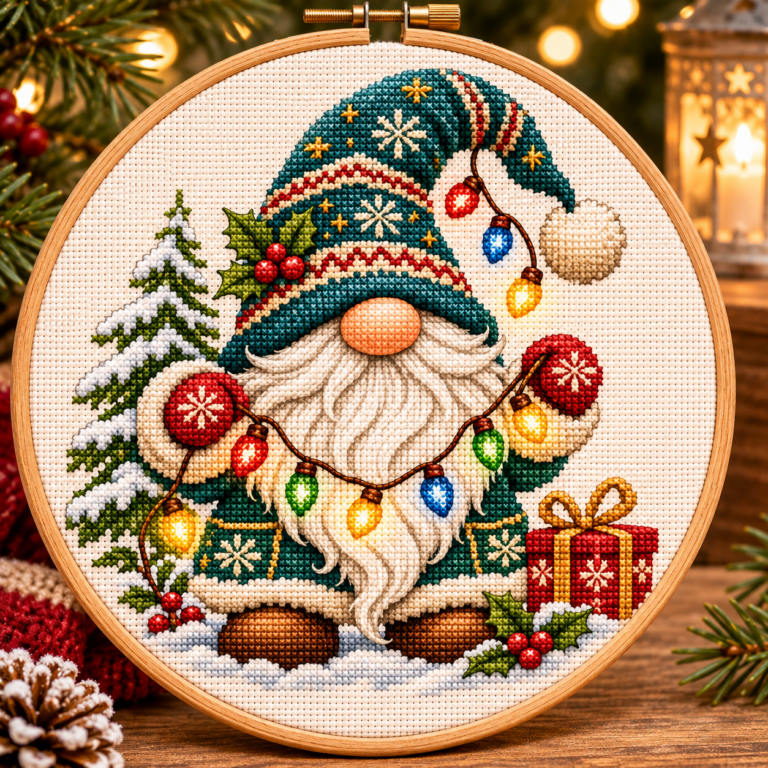
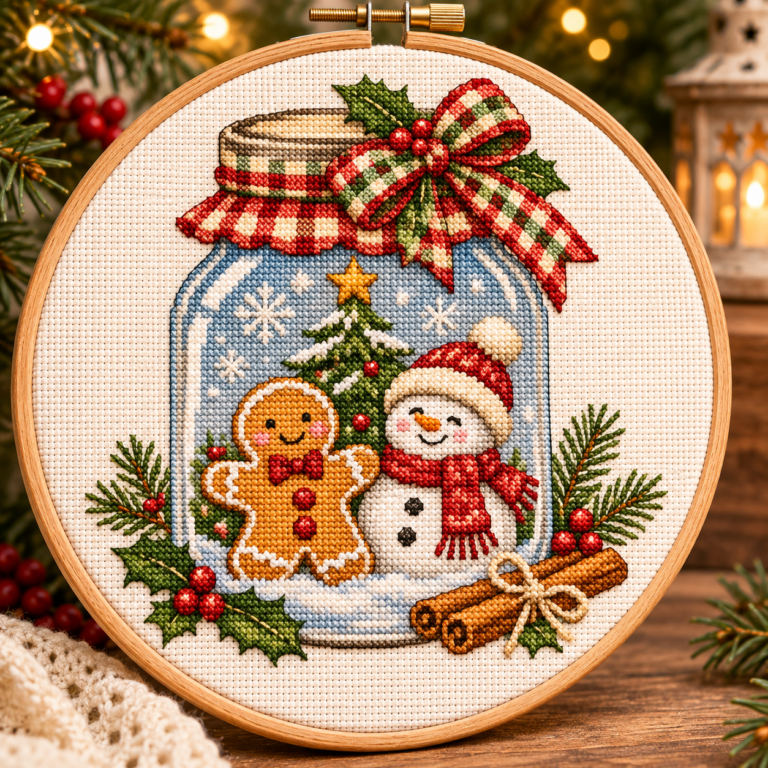
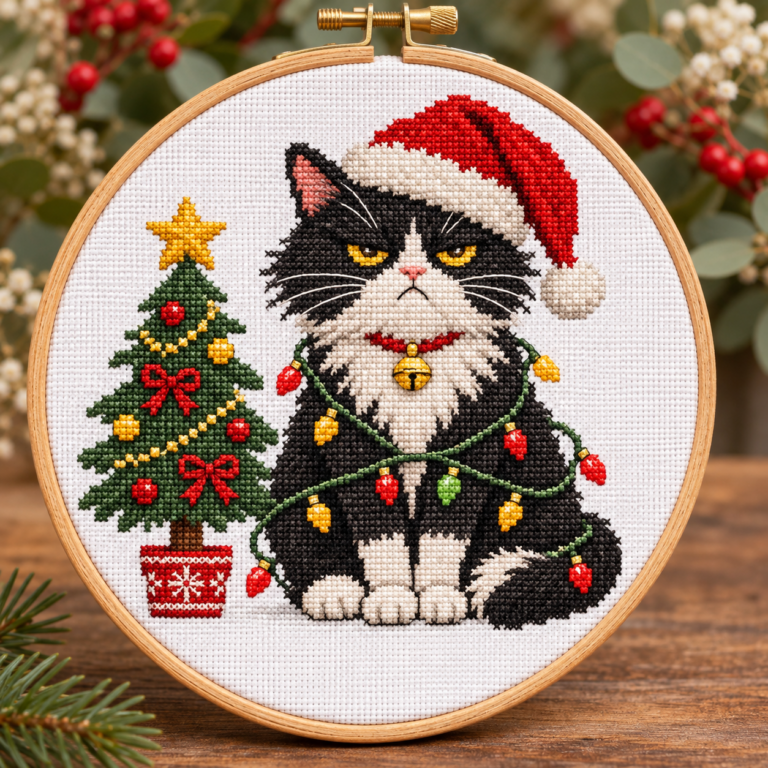
This practical guide explains how to evaluate a calico cat PDF sampler, choose between 14-, 16- and 18-count Aida, keep white, ginger and dark fur separate, stitch tiny bow details and turn the result into a pretty hoop, framed piece or handmade gift. The images are original editorial inspiration, not a reproduction of a seller’s copyrighted chart or proof of a test-stitched sample.
What is a coquette calico kitty cross stitch design?
“Coquette” describes a delicate, feminine-influenced visual style: ribbon bows, blush tones, lace-like details, dainty flowers and vintage-inspired softness. In cross stitch, it works best as restraint, rather than adding every decorative motif at once. A small bow near a kitten’s ear, a modest frame of flowers, or a blush border can evoke the style without overwhelming the cat.
A calico cat has distinct patches of white, orange or ginger, and dark brown or black. The charm in a small chart comes from how those patches identify the kitten: a darker ear, warm cheek marking, pale chest and tail shape can communicate more than an elaborate background. Calico is a coat-color pattern, not a cat breed, so the silhouette need not follow one specific pedigree.
A “sampler” may mean a composition that groups several small motifs, a short decorative phrase, or simply a compact stitched design. Do not assume the referenced Etsy file includes an alphabet, multiple charts, or stitched text merely because its title uses the word. Check the seller’s current PDF contents and preview before treating it as a traditional sampler.
How this topic differs from general cat pattern guides
Our cat cross stitch patterns overview compares silhouettes, tabbies and portraits. This article is deliberately narrower: it focuses on the three-patch calico color arrangement, a pink ribbon detail, and a polished beginner-friendly finish. If you’re making a customized pet likeness instead of a decorative kitten, use our pet-photo selection guide first.
Before downloading: check what the PDF actually contains
The Etsy listing title describes a PDF download, but the full pattern’s stitch count, precise DMC key, number of pages and chart features could not be independently confirmed. The following checklist helps you know what to look for rather than guessing from a small product thumbnail.
- Chart dimensions: ask for the number of stitches wide and high, not only the hoop or framed display size. The chart grid is what determines your fabric calculations.
- Printable key: a color-symbol chart is useful, but a legible black-and-white symbol version can be especially helpful when pale pink and cream look similar.
- Stitch types: confirm whether the kitten uses full crosses only, or includes fractional stitches, backstitch or French knots around its eyes, ribbon and whiskers.
- Thread specifications: the seller should identify the thread brand or matching color system, and tell you how many strands are recommended. Never assume every PDF uses the same floss coverage.
- Page layout and rights: verify the digital files, printing instructions, any chart-page overlaps, and what the designer permits you to do with the pattern or a finished piece.
The original chart—not an enlarged listing photograph—must control the stitch positions. Keep one untouched copy of the PDF and use a separate printed or digital working copy to mark completed areas. Don’t infer compatibility with Pattern Keeper or another marking app without testing the actual file.
Build a balanced calico and blush-pink palette
A coquette kitten usually looks most coherent when the cat’s coat remains the visual subject and the bow stays an accent. Think in color roles before thinking in individual thread codes. The face needs enough contrast to be recognizable; the ribbon needs enough contrast to look like a separate object; and the background should support both.
| Area | Colors to consider | What to check |
|---|---|---|
| Calico dark patches | Charcoal, very dark brown | The outline is distinct from the eyes and whiskers. |
| Calico warm patches | Ginger, cinnamon, muted orange | The warm patch remains separate from blush-pink accents. |
| Light coat | Off-white, cream, pale gray | White fur does not vanish against your chosen Aida. |
| Coquette bow | Dusty rose, blush, deeper pink shadow | The knot and loops remain readable in miniature. |
| Optional flowers or border | Sage, muted mauve, pale pink | Decorative elements stay quieter than the kitten. |
These are illustrative palette suggestions, not a verified list of colors in the linked Etsy pattern. Use the chart’s actual legend when purchasing floss. Do not swap DMC numbers because skeins appear interchangeable in an online photograph; thread in daylight may show tonal differences that a screen hides.
The grayscale test for calico patches
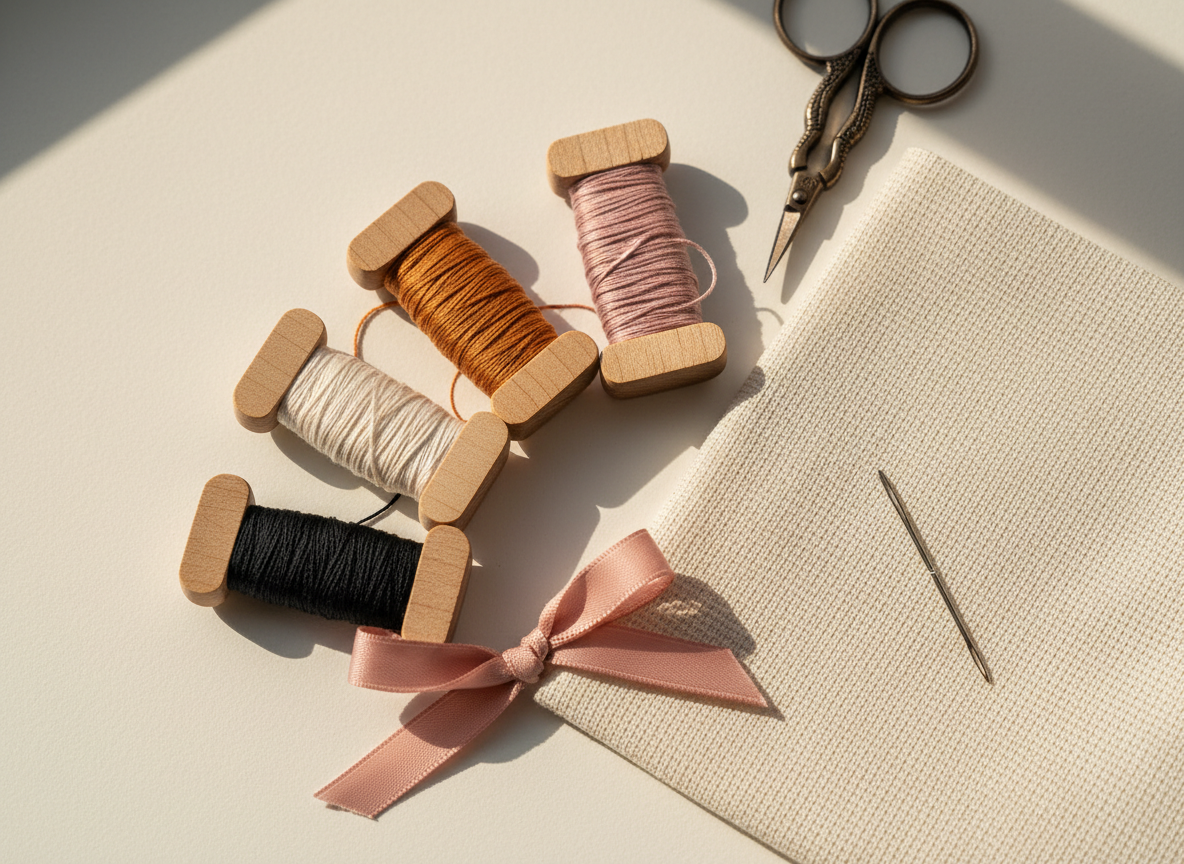
Lay a black or charcoal skein, a ginger skein, a white skein and your chosen bow pink on the fabric. Photograph them in indirect daylight. Then view the photo in grayscale. If the bow disappears against the white patch, your choice may be too pale for the fabric. If black fur and the eye symbols merge into one shape, the pattern may rely on a lighter face outline or nearby stitches for expression. Review the printed symbols before changing anything.
The more advanced discussion of coat boundaries is in our cat coat-color cross stitch guide. Here, the special challenge is the three-color coat next to a pastel bow. Keep the ribbon’s small knot and both loops separate from any orange fur patch.
Which Aida count is best for a beginner kitty sampler?
For most beginners, 14-count Aida is a comfortable starting point: the square holes are easy to distinguish and you can see where each cross belongs. 16-count produces a smaller result from the same chart; 18-count makes an even finer design but is more demanding for people who prefer larger holes. DMC explains the count system in its official Aida fabric guide. Choose fabric according to the actual pattern instructions and your comfort.
Cream or very pale pink fabric is a natural match for coquette styling, but don’t overlook the white-fur problem: off-white patches can lose their edges on a bright white background. An oatmeal, palest warm gray, or soft blue-gray can help define pale paws and cheeks while staying gentle. Place real floss on the cloth before cutting; the finished appearance is not reliably predicted by screen colors.
Worked sizing example for a hypothetical 84 × 104-stitch chart
This example shows how to measure your fabric—it is not the Etsy chart’s stated size. For a grid that is 84 stitches wide and 104 stitches high, divide both measurements by the Aida count. Then add 2.5 inches of working or finishing margin on each side, equal to 5 inches added to both stitched dimensions.
| Aida count | Stitched area (W × H) | Fabric cut with example margins |
|---|---|---|
| 14-count | 6.00 × 7.43 in | 11.00 × 12.43 in |
| 16-count | 5.25 × 6.50 in | 10.25 × 11.50 in |
| 18-count | 4.67 × 5.78 in | 9.67 × 10.78 in |
To convert to centimeters, multiply inches by 2.54. These are dimensions for the entire example grid, even if the chart contains unstitched margins. Your actual seller-provided chart may be much smaller or larger. A professional frame, a stitched border, or a hoop with a gathered backing may require a different allowance. Before you cut, compare the chart dimensions with our Aida fabric and margin calculation guide.
How to stitch the kitten without losing the calico markings
A cute kitten can be harder than it looks if its white chest is broken into isolated stitches, if a dark patch crosses the face, or if the pink bow is only a few stitches wide. Work in sections that give you reliable reference points, not in a random order based on which color you picked up first. Our floral kitten stitching guide covers flower spacing and the importance of accurately placing facial features.
1. Center the motif and check the outer silhouette
Find the design’s center using the printed grid, and find the fabric center by folding gently or counting. Whether you actually start at the middle or near a strong outline is a matter of preference; DMC’s how to begin cross stitch guide explains why centering and working from stable areas can reduce counting errors. Count the outer ear, head, body and tail landmarks before filling large patches.
2. Keep ginger and dark patches in clear sections
Find the largest connected patch on the cat’s head or body. Stitch that area, then recount the gap between it and the next patch. If the chart uses two similar orange shades, don’t merge them automatically: one may form a shadow that keeps the face rounded. In dark patches, stitch enough neighboring symbols to verify where the outline meets the ear or cheek before filling everything in.
3. Save eye and nose checks for their own checkpoint
The face deserves a specific checkpoint. Work one eye, count across the chart and locate the other before adding the nose. A single square misplaced near a small kitten’s eyes can dramatically alter expression. Compare the completed face at normal viewing distance as well as close up.
4. Complete the ribbon knot before its loops
If your chart includes a bow, identify the central knot and the two loops. Stitch the knot’s most visible shade first and use it as a landmark, then fill connected loop sections. If the bow has a darker pink outline, follow the symbols rather than adding uncharted backstitch. Particularly tiny ribbon tails can look uneven if you pull thread too tightly across an unstitched gap.
5. Add borders and small flowers only after checking balance
For a little coquette-style sampler, a slim border or floral accent should be subordinate to the cat. Work the decorations only where the original chart places them. If you’re adapting a chart for private use and the license allows changes, test your arrangement on paper first so the bow and flowers don’t crowd the ears or tail.
A beginner’s five-session stitching plan
A useful first project is broken into checkpoints rather than an artificial promise to finish in one weekend. Each session may be short or long depending on the chart’s true size and your pace.
- Session 1 — prepare and count: review the PDF, sort floss, cut Aida and protect fabric edges. Locate the center and strongest outer landmark.
- Session 2 — establish the cat: stitch a connected part of the body or head and verify its location before moving farther away.
- Session 3 — work the coat: build the ginger, dark and pale patches while checking boundaries so colors don’t merge.
- Session 4 — complete delicate details: add the face, bow and any charted outlines. Keep all top cross legs consistent.
- Session 5 — inspect and finish: secure ends, review for missing symbols, treat the fabric only as the materials allow, and mount the piece.
If your actual chart has hundreds of symbols across many pages, each “session” above may take several evenings. Track a small sample of your own stitching pace rather than relying on a generic time estimate. If you make a counting mistake, our cross stitch mistakes guide can help you decide how much really needs to be undone.
Thread, needle and hoop tips for a clean miniature design
Counted cross stitch typically uses a blunt-tipped tapestry needle and stranded embroidery floss. The exact needle size and number of strands depend on the cloth and the chart. DMC’s cross stitch introduction describes the basic supplies and recommends beginner-friendly 14-count Aida. Follow the pattern instructions for its specified number of strands instead of assuming two strands is universally correct.
Keep thread lengths comfortable enough to avoid shredding or tangling, and secure ends behind existing stitches rather than creating large knots behind the face. If you move across a wide pale section, end and restart the thread instead of leaving a long dark carry that can show through white Aida. Use a hoop large enough to hold the working area without forcing the kitten’s stitches against the frame edge.
Separate six-strand floss into the number of working strands specified in the key, then recombine if appropriate. Match labeled bobbins to the legend so light blush and pale peach don’t get mixed up. Check a few stitches against the actual cloth before deciding whether the fabric makes your white patches disappear.
Turn the completed coquette kitten into something lovely
A delicate wooden-hoop wall hanging
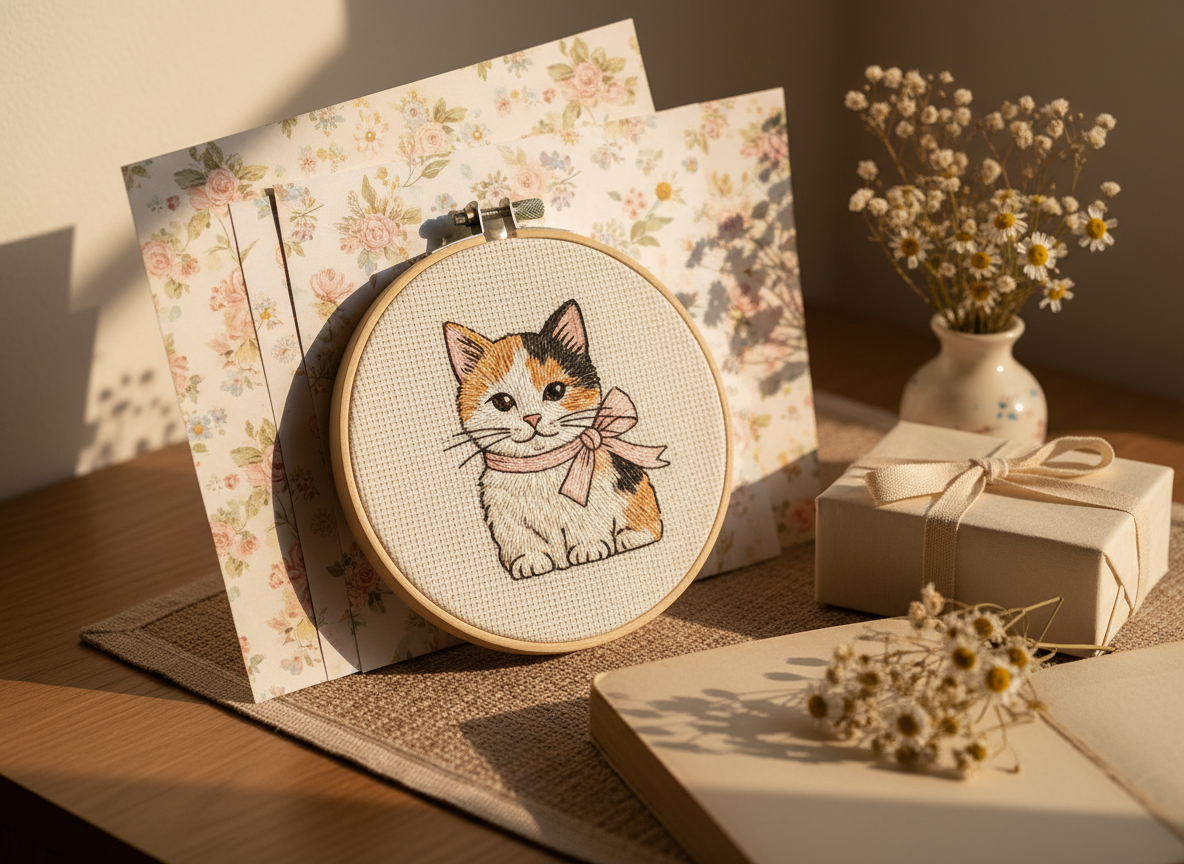
A hoop finish is especially attractive for an airy, bow-led miniature. Leave enough extra cloth around the stitched design for gathering or lacing at the back. A narrow satin ribbon on the outside of the finished hoop can echo a stitched pink bow without changing the underlying pattern. Keep any tied ribbon removable if the piece will need cleaning later.
A personalized shelf display
Place the finished hoop beside a small stack of books or framed artwork. Pale wood, warm cream and muted pink provide gentle contrast. A shallow frame may work better if your design is rectangular rather than square; don’t squeeze the embroidery against the glass. Our cross stitch framing guide discusses fitting and mounting concerns.
A thoughtful gift for a cat lover
For a birthday or housewarming present, a stitched calico kitten becomes personal when its colors recall the recipient’s own pet, but don’t claim a decorative chart is a custom portrait. A gift note can explain the inspiration and the hours you put into the work. If the original chart includes an empty border and its license allows adaptation, you might add an initial or date as a separate original motif.
Want something smaller to pair with the hoop? Our free cross stitch bookmark ideas are a separate source of bookish gifts; don’t resize the entire commercial kitten chart into a bookmark without checking that the details remain legible.
Mistakes that make a cute sampler less readable
- Choosing fabric solely for its pink color: check whether white fur and pink bow stitches remain distinguishable.
- Relying on an Etsy mockup for stitch placement: the downloadable chart, not the lifestyle photo, contains the counted information.
- Overdecorating the border: a single ribbon or small flower may have more impact than several competing motifs.
- Ignoring dark thread on the reverse: long carries can show through pale cloth and become distracting.
- Buying floss from an assumed palette: use the actual PDF’s numbered color key, not a list found in a different calico project.
- Assuming beginner-friendly means no backstitch: read the stitch legend and decide if you’re happy learning the extra techniques.
Frequently asked questions
Is a coquette calico cat cross stitch pattern good for a complete beginner?
It can be, provided the chart has readable symbols and a manageable number of color changes and stitch types. The beginner-friendly label in a listing should be checked against the PDF’s actual dimensions and backstitch requirements. A tiny face or decorative bow may need more careful counting than a larger solid-color motif.
What does ‘coquette’ mean in a cross stitch sampler?
Here it refers to a soft decorative look associated with bows, ribbons, pale pink, lace-inspired edges and dainty flowers. It does not define a particular embroidery stitch, technique or standardized sampler format.
Can I change the kitten’s patches to match my own cat?
For private work, you can experiment with colors if the pattern’s terms permit it, but be careful: changing one patch can erase the shape of a cheek or ear. Save the original chart, test a small area first, and don’t describe your adaptation as the designer’s exact original pattern.
Can I stitch it on 16-count Aida instead of 14-count?
Often yes, for conventional counted full crosses, but the physical stitched area becomes smaller while the chart stitch total stays the same. Check the seller’s instructions for specialty stitches and use the actual grid measurements to recalculate fabric.
How many DMC colors does this particular PDF require?
That hasn’t been independently verified from the linked Etsy PDF. Refer to the seller’s floss legend for the exact colors and quantities. The palette examples on this page are visual planning suggestions, not original-pattern specifications.
Does this article include a free PDF of the commercial sampler?
No. This is an original educational guide. It doesn’t contain the Etsy seller’s copyrighted cross stitch chart, and the editorial images are illustrative rather than chart-accurate.
A small project with plenty of personality
The best coquette calico kitty embroidery lets the kitten remain the hero. Keep the dark, ginger and pale patches readable, give the pink bow enough contrast and use the real PDF grid to measure fabric accurately. Small, consistent crosses and careful finishing will do more for a polished result than adding extra decorations.
For additional beginner projects, try our free easy cat silhouette guide or first cross stitch project tutorial. You can also join the XStitchPattern Stitch Studio for free-pattern updates and new ideas. Newsletter signup is separate from the commercial download mentioned here.
Ready for a larger scene after a small kitten project? Explore our kitten family cross stitch PDF guide about a 270 × 186-stitch dresser filled with cats, plus fabric size calculations and tips for tiny face details. The original Cozy Cat Hideaway PDF belongs to another Etsy designer.
For a freehand variation on cute cat faces, read our practical cat hand embroidery tutorial: eight small motif ideas, a simple 6 cm drawn cat and beginner outline techniques. It is an independent surface-embroidery exercise, not a PDF chart bundled with this calico kitten cross stitch guide.