
Fourth of July cross stitch patterns can be as simple as a small star panel or as detailed as a patriotic sampler. Choose the scale and purpose before assembling a red, white and blue palette. Decorative stars, an accurate flag and a dated family keepsake require different chart decisions, even when they share the same colors.
Calendar reference: July 4, 2027. Check the calendar reference and your recipient’s local plans before setting a deadline.
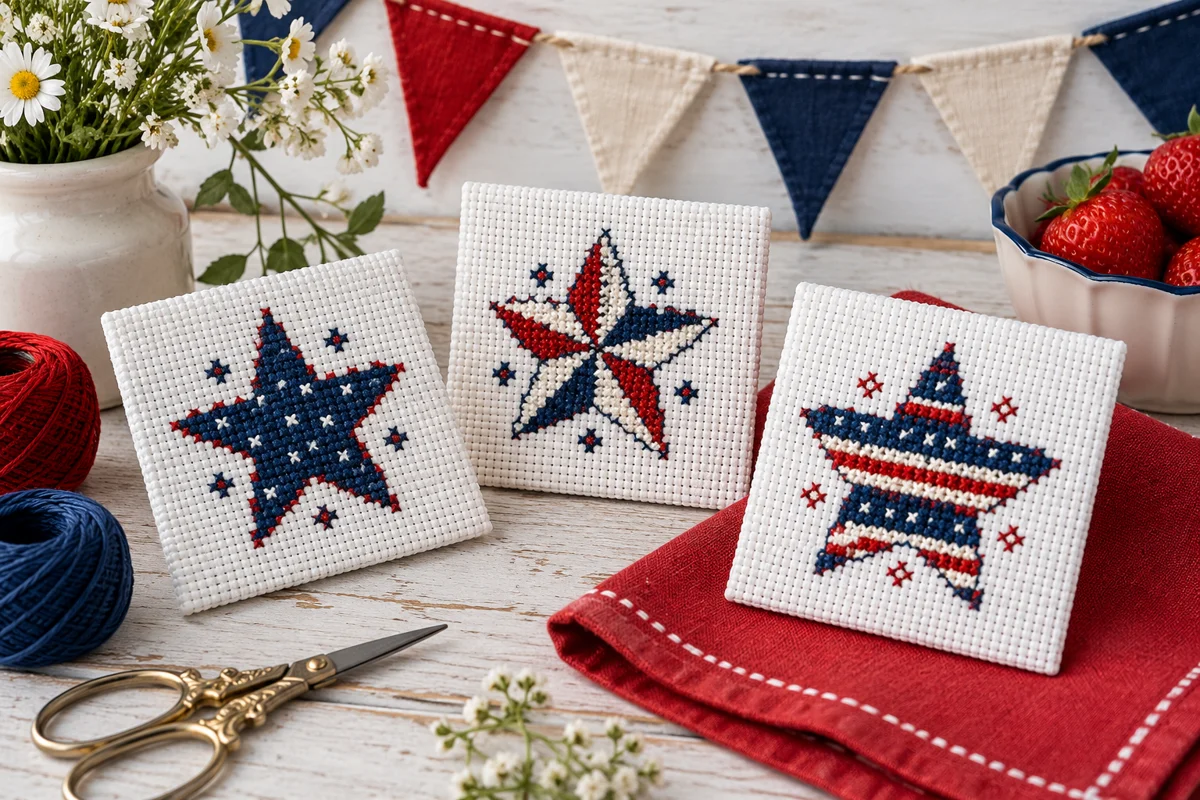
Choose decorative motifs or a documented flag chart
For a small card or framed piece, a few stars and a clear border can suggest the celebration without needing an exact flag layout. If the subject is the US flag, choose a chart designed around the appropriate proportions and star arrangement. Do not assume a simplified illustration is an accurate flag specification.
Inspect the chart’s stitch types as well as its preview. Thin stripes, small lettering and star points may rely on backstitch or fractional work. A limited three-color palette can still require careful counting, particularly in repeated rows where a one-square shift changes the spacing.
Give white stitches a visible boundary
White floss may disappear against white Aida unless another part of the design defines its edge. Test a light neutral background, a darker neighboring shade or the chart’s specified outline before changing the palette. Keep enough contrast between navy and any dark border so the shapes remain readable.
For an adapted design, record the replacement color assigned to each symbol. Avoid carrying navy or red thread across empty cloth behind a white area. A tidy reverse is especially useful if the panel will sit in a paper card or against a light backing.
Choose a safe display and a realistic deadline
July 4, 2027 is the celebration date, but your gathering or mailing deadline may be earlier. A small frame or card is a practical format when time is limited. A 56-square-wide chart uses 4 inches across on 14-count Aida, before the fabric needed for gripping and mounting.
Keep decorative fabric away from fireworks, candles, cooking equipment and hot serving dishes. A stitched motif is not automatically a weatherproof decoration or heat-resistant mat. If you want reusable bunting, plan seams, backing and attachment points as a separate construction project rather than assuming the counted chart supplies them.
Before you begin
- Read the actual symbol chart, thread key and stitch-type notes.
- Calculate the design area and add the allowance required for your chosen finish.
- Test the intended cotton and fabric together on an offcut.
- Keep a readable working copy and check the first completed motif before repeating it.
Questions and next steps
Is any red, white and blue sampler an accurate flag?
No. Decorative motifs can use those colors without representing the national flag. Use a documented flag chart when accuracy is the goal.
Can I stitch several stars in one color?
Yes, if the silhouette remains clear and the chart does not rely on shading to separate details.
Does a smaller chart guarantee a fast finish?
No. Isolated stitches, specialty techniques and mounting can take time. Judge the actual chart and your own pace.
For practical preparation, see comparing small-chart complexity, and reading fine backstitched details.
For another seasonal project, explore Canada Day Cross Stitch Patterns or Christmas in July Cross Stitch. Choose a chart that is actually supplied or available to buy; this selection guide does not promise a new downloadable pattern.