
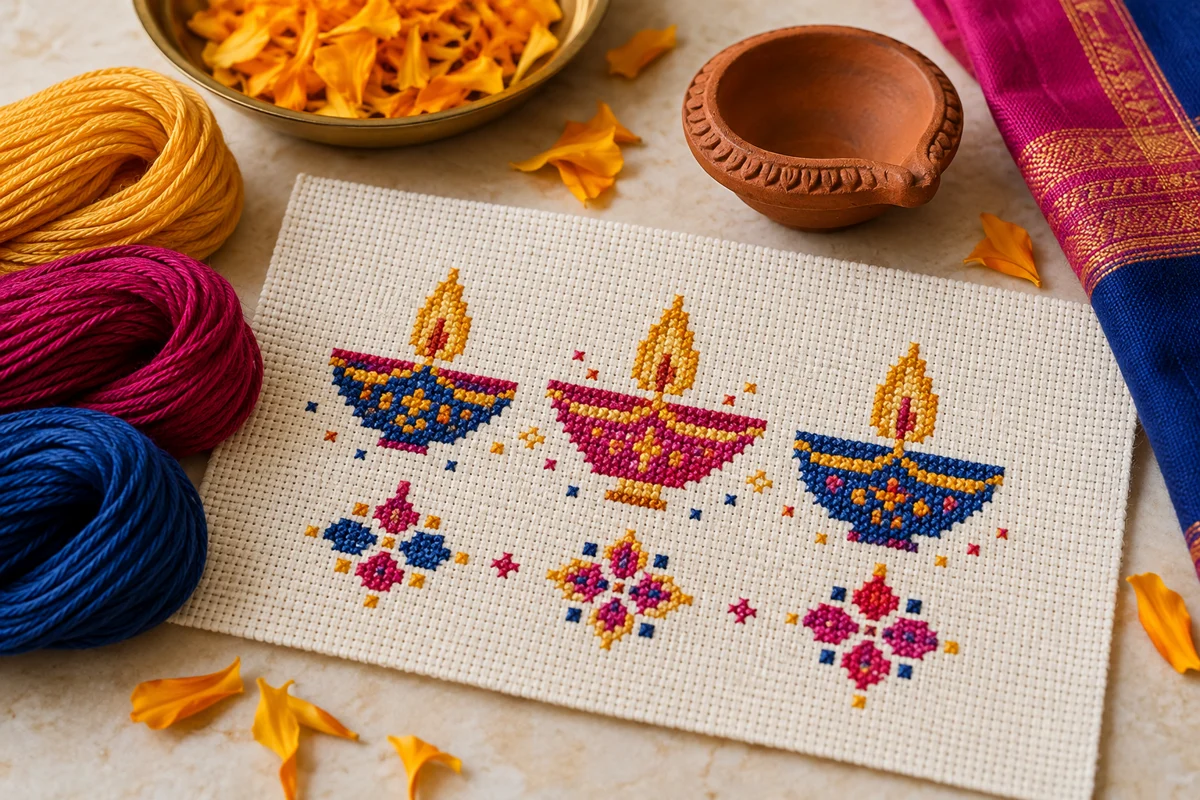
Diwali cross stitch patterns can use a decorative diya, geometric border or rangoli-inspired arrangement to create a thoughtful display or gift. Choose the subject with the recipient’s tradition in mind, then test the palette and finished size. A readable small design is more useful than a crowded sampler whose shapes merge after stitching.
Calendar reference: October 29, 2027 is the listed main Diwali date in India; regional observances vary. Check the calendar reference and your recipient’s local plans before setting a deadline.
Choose the motif and context deliberately
A diya is an oil lamp, while rangoli refers to a broader decorative practice rather than one fixed pattern. Look for a chart whose description explains its subject, and avoid assuming that every floral geometric motif carries the same meaning. Different families and communities observe the season in different ways.
If the design contains script, a sacred symbol or a religious image, use a trusted chart and verify the details with someone familiar with the relevant tradition. Do not stitch generated lettering as though it were accurate text. A non-text decorative lamp or border can be a suitable alternative when you cannot confirm the wording.
Make light and color readable on counted cloth
Saffron, magenta, teal and deep blue can create a lively palette, but each design needs a clear hierarchy. Decide which shade forms the lamp or border, which provides the dark structure and which creates highlights. Too many equally bright colors can make a small chart difficult to read.
Test a representative section on the intended Aida with the chart’s specified strand count. A pale flame may disappear on white cloth, while a dark lamp can vanish against navy. Choose the background and palette together, and record any substitutions beside their symbols so repeated sections stay consistent.
Finish a decorative object rather than a functional lamp accessory
A framed panel, card or hanging can display the motif safely. Keep textiles away from flames, hot oil lamps and heat sources; a stitched diya image does not make the fabric heat resistant. If you mount the work in paper, complete any material-appropriate care before assembly.
The listed main Diwali date in India for 2027 is October 29, with regional observances and related celebrations varying. Check the recipient’s local calendar and finish before the actual visit or mailing deadline. For a 56-square-wide design on 14-count Aida, allow 4 inches for the chart area plus the separate mounting allowance.
Before you begin
- Read the actual symbol chart, thread key and stitch-type notes.
- Calculate the design area and add the allowance required for your chosen finish.
- Test the intended cotton and fabric together on an offcut.
- Keep a readable working copy and check the first completed motif before repeating it.
Questions and next steps
Can I use a geometric motif without religious text?
Yes, if it fits the recipient and context. Describe it accurately rather than assigning a meaning the designer has not documented.
Do bright colors make a chart easy?
No. Check contrast, stitch types and isolated stitches in the actual grid.
Can the finished embroidery be used beneath a diya?
Do not assume it is suitable. Decorative embroidery is not automatically a heat-resistant mat and should be kept away from flames and hot lamps.
For practical preparation, see planning a coordinated color change, and backing a decorative hoop finish.
For another seasonal project, explore Eid Cross Stitch Patterns or Hanukkah Cross Stitch Patterns. Choose a chart that is actually supplied or available to buy; this selection guide does not promise a new downloadable pattern.
 English
 French
 Spanish
 German
 Arabic