
A Halloween cross stitch pattern does not need to be frightening to feel atmospheric. Imagine a forgotten cemetery gate, an old stone path, a crescent moon, ivy-covered headstones, pumpkins and a friendly ghost in a lavender night sky. That contrast between cute gothic cross stitch and quiet, shadowy scenery is what makes macabre cottagecore embroidery so appealing: it combines the charm of handmade décor with just enough mystery to feel like autumn after dark.
In this guide, we explore how to choose a Halloween cemetery cross stitch pattern PDF, understand a “beginner-friendly” claim, select Aida fabric, calculate finished dimensions, keep dark floss readable, organize a moody palette and turn a detailed design into framed seasonal décor. You will also find finishing ideas, troubleshooting guidance and a checklist for evaluating any digital embroidery chart before you buy.
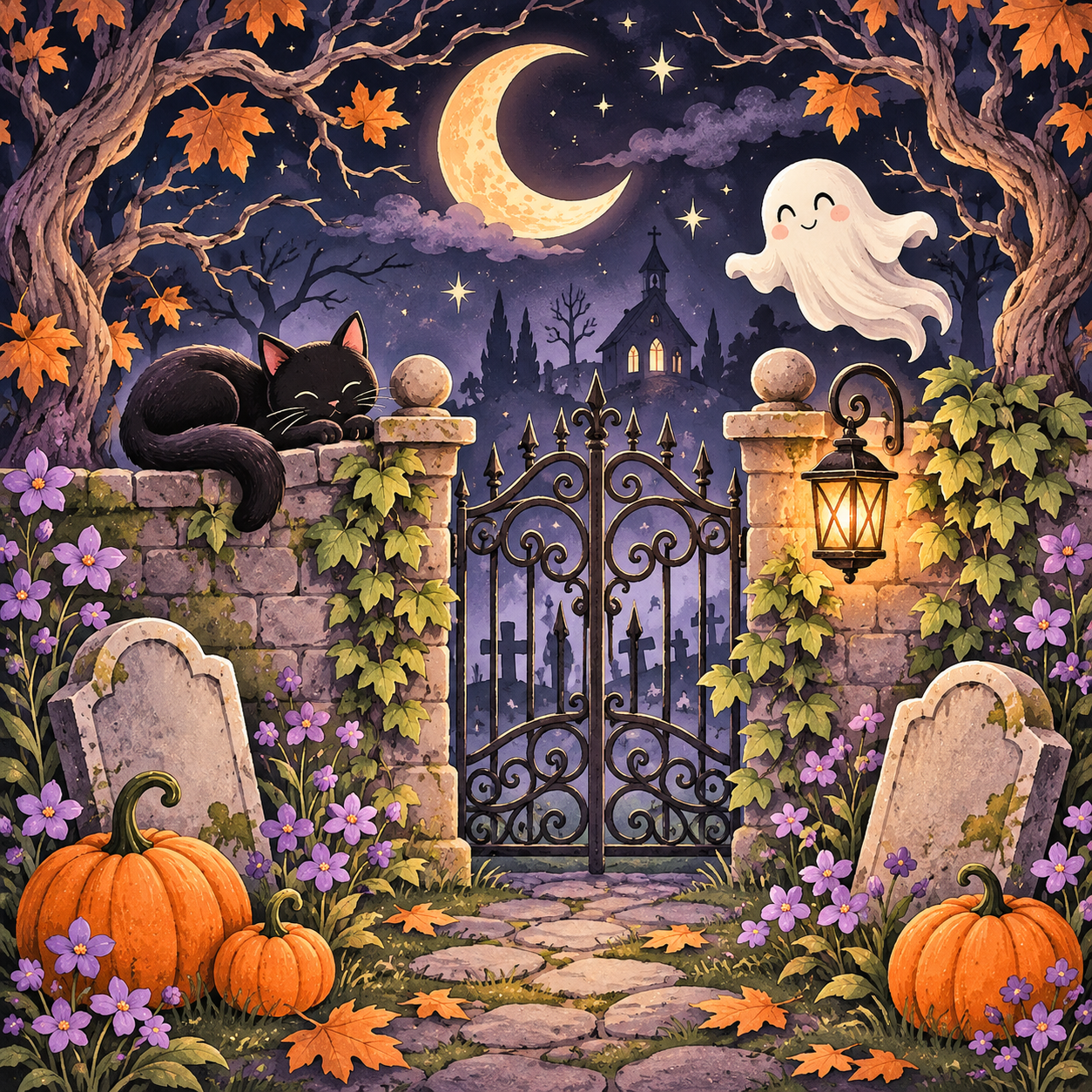
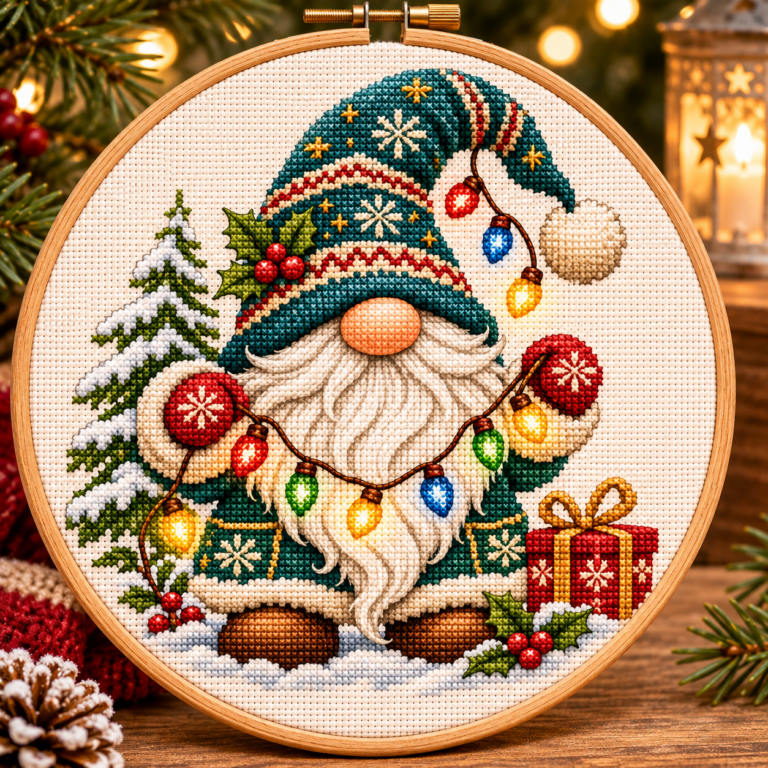
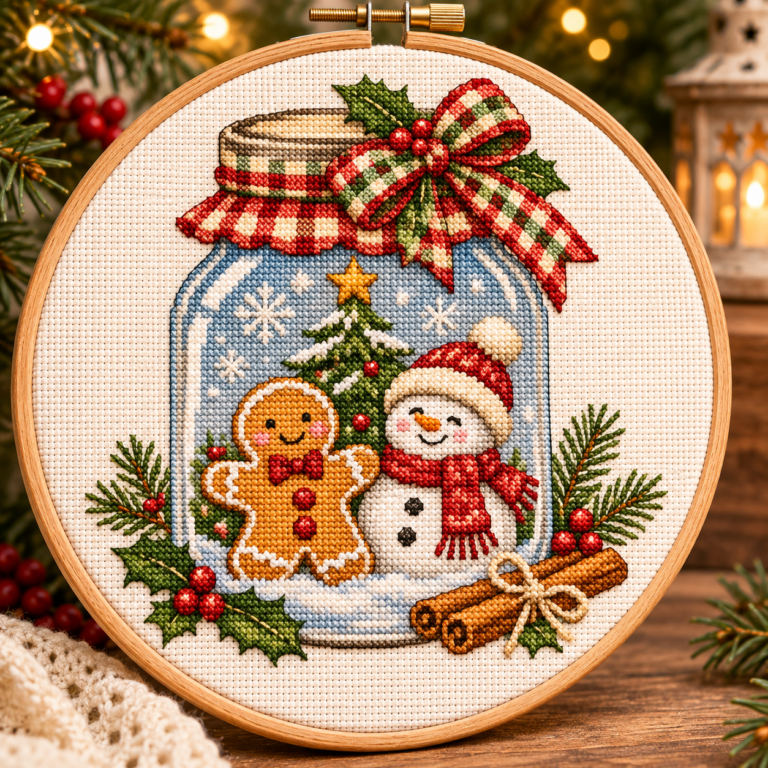
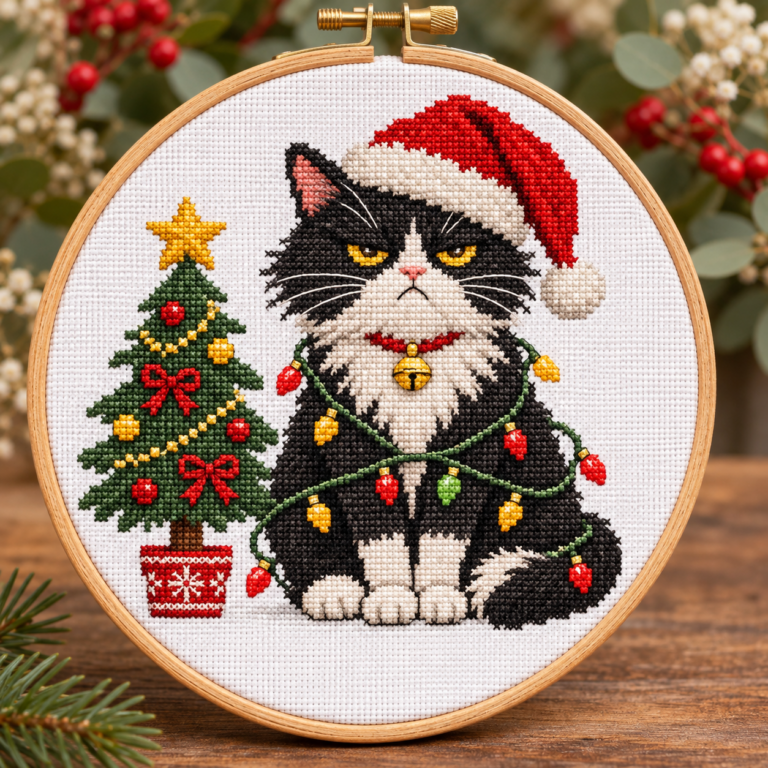
Artwork disclosure: the Halloween cemetery illustration above was created independently for this XStitchPattern editorial guide. It is not the reference Etsy seller’s artwork, a stitch-accurate chart, a finished embroidered sample or a verified downloadable PDF. Converting a complex illustration into a usable pattern requires chart design, symbol cleanup and an actual floss legend.
About the “Silent Cemestry” Etsy reference
The supplied Halloween cross stitch pattern Etsy listing is titled “Cross Stitch Pattern Halloween (PDF Download) Silent Cemestry Cute Gothic Macabre Cottagecore Embroidery Modern Beginner Friendly.” The listing could not be independently inspected because Etsy blocked automated access during verification. The supplied title establishes the intended theme and claims of digital delivery and beginner friendliness; it does not establish the exact design components, actual chart size, DMC color codes, number of pages, file contents, price or usage license.
The unusual phrase “Silent Cemestry” may be part of the seller’s creative title or a spelling variation. We do not silently convert it into official product specifications. This article uses the more commonly understood terms gothic cemetery cross stitch, Halloween cross stitch PDF, and spooky cottagecore embroidery to help readers find useful planning advice. If you want the exact referenced pattern, open its original Etsy page and verify what is included before purchasing.
Why cute gothic and cemetery cross stitch works so well
Traditional Halloween motifs—bats, black cats, ghosts, pumpkins and moons—are immediately recognizable even in a small number of stitches. Gothic architecture, crooked gravestones and shadowy gardens add atmosphere. Cottagecore brings a different set of details: climbing ivy, autumn leaves, tiny flowers, warm windows and a softly worn stone path. The visual challenge is to make those elements work together instead of competing for attention.
One effective composition uses three visual layers. The focal point might be a wrought-iron gate or a little ghost. The supporting layer adds pumpkins, a lantern, a cat or gravestones. The background carries the moon, distant building and deep sky. This structure gives a design a readable silhouette from across the room and smaller details to enjoy when stitching up close.
For beginners, a simpler motif—one ghost beside a pumpkin, or a single headstone with flowers—can capture the same mood with fewer color changes. More elaborate cemetery landscapes can contain hundreds of fine intersections, thin branches and scattered stars. A “cute” appearance does not necessarily mean a short or easy project.
The best gothic cottagecore motifs for a Halloween chart
Friendly ghosts and moonlight
Ghosts offer an easy-to-read light shape on a dark background. A few stitches can define a face, while a subtle outline helps prevent cream or white floss from disappearing against pale Aida. A moon adds a second bright area and gives the eye somewhere to travel. Consider whether you want a crescent, a full moon or just stars; including all three in a tiny design can dilute the focal point.
Black cats and curious silhouettes
A curled black cat is especially expressive when the ears, tail and body remain separate. A completely black silhouette can be elegant on warm linen, but it needs contrast against a navy or charcoal sky. If you enjoy dark animal motifs, our celestial cats and floral cross stitch guide approaches a similarly magical feeling through animal and botanical shapes rather than an entire cemetery scene.
Gravestones, ironwork and old architecture
Headstones provide strong vertical forms; an old gate adds decorative lines. Both need thoughtful pixel-level simplification in a counted chart. A stone carved with tiny letters may be impossible to read at miniature scale. If the design is intended for a two-inch ornament, choose the outline of the stone and perhaps one tiny symbol rather than an elaborate inscription. On a larger chart, subtle stone shading and ivy can build an appealing aged appearance.
Pumpkins, foliage and little wildflowers
Orange pumpkins introduce warmth to a purple, indigo and gray palette. Ivy and violet flowers soften the gravestones, giving the piece a cottagecore rather than strictly horror-inspired mood. Maintain enough difference between orange, brown and dark red to preserve the shape of each pumpkin. A little negative space between flowers and lettering prevents tiny details from becoming visually crowded.
Choose the right Aida fabric for a spooky design
Fabric count determines how large each charted square becomes. Fourteen-count Aida is a familiar starting point for many cross stitch beginners; 16-count and 18-count produce a smaller design from the same chart. The easiest fabric is the one you can count comfortably in your normal lighting. Darker cloth can be stylish but may be difficult to see without extra light behind or beneath the work.
For a design with black cats and midnight-blue skies, warm ivory Aida often makes dark outlines easiest to distinguish. A pale dusty lavender can give the artwork a romantic witchy look, while neutral gray can support both light ghosts and dark gravestones. Navy and black Aida are dramatic, but they are not automatic upgrades. Dark threads can vanish into them, and inexperienced stitchers may find it difficult to locate every hole.
Before buying a large fabric cut, place representative dark and pale floss strands on your chosen cloth. Check them in daylight and under your craft lamp. If your selected pattern relies on blank squares for the moon, ghost or sky, changing the fabric background may alter the entire design. Read the actual legend before making substitutions.
Use our 14-, 16- and 18-count Aida comparison for fabric-count decisions, and guide to identifying Aida count if your fabric does not have its packaging.
Calculate the finished size before downloading or cutting
For counted cross stitch using one full cross per square of Aida, the design width in inches = stitch width ÷ fabric count. Apply the same calculation for the height, then multiply inches by 2.54 to convert to centimeters. That gives the charted rectangle—not the size of fabric you need to allow for mounting.
For example, imagine a hypothetical 150 × 180-stitch gothic cemetery composition. These are teaching dimensions only; the Etsy listing’s actual stitch count could not be verified.
| Aida fabric | Stitched design (inches) | Stitched design (cm) |
|---|---|---|
| 14-count | 10.71 × 12.86 | 27.21 × 32.66 |
| 16-count | 9.38 × 11.25 | 23.81 × 28.58 |
| 18-count | 8.33 × 10.00 | 21.17 × 25.40 |
For a conventional framed finish, roughly two to three inches (5–7.5 cm) extra on each side is often a practical starting point; your chosen mounting system may need something else. If you plan a hoop, measure the inner usable opening. A square chart that fits by width can still extend outside the round display area at its corners.
When comparing a shop’s preview with an actual pattern, check whether the full image is stitched. Some designs deliberately leave the sky or ground as exposed fabric. Others fill every square, which changes the number of actual stitches, floss usage and labor involved. The chart dimensions alone cannot tell you precisely how many crosses you will make unless the pattern is full coverage.
Build a balanced gothic Halloween color palette
A moody cemetery scene does not need every color to be near-black. In fact, a narrow range of dark shades can make the finished work hard to read. A practical palette often uses indigo and dark violet for the night sky; charcoal, brown and warm gray for old stone and ironwork; cream or pale yellow for moonlight and friendly ghosts; pumpkin orange for warmth; and sage or muted green for ivy.
These are general color families, not verified DMC numbers or a palette from the reference listing. Follow any actual PDF’s floss key before purchasing thread. If you are converting your own original illustration, assign colors after testing how shapes translate onto the chosen stitch grid rather than automatically preserving every subtle digital gradient.
Pay particular attention to adjacent dark values. A black cat standing in front of a black gate can disappear unless the artist uses shape, negative space or a contrasting boundary. A lantern can illuminate one area of the scene and help separate silhouettes. If you change any color intentionally, make a tiny stitched sample on your selected fabric first.
What a trustworthy Halloween cross stitch PDF should include
Before paying for a digital chart, inspect the listing description and preview images. An “instant download” should be a genuine usable stitch pattern rather than only a decorative illustration. Basic chart information should be supplied, even if the design is small. Avoid assuming the seller includes a black-and-white symbols version, a full-page key or chart-tracking app support unless it is explicitly stated.
| Check | What to verify | Why it matters |
|---|---|---|
| Stitch count | Width and height in stitches | Fabric and frame planning |
| Pattern format | PDF chart or compatible digital file | Actual stitch instructions |
| Symbols | Legible symbol grid and legend | Accurate stitching |
| Floss key | Manufacturer and color list | Materials planning |
| Special stitches | Backstitch, half-cross or fractional stitches | Difficulty assessment |
| Pages | Page numbering and overlap where needed | Tracking larger charts |
| Access | Delivery method and file availability | Avoid mistaken physical-kit expectations |
| Rights | Seller identity and license terms | Legitimate personal use |
Be especially cautious if a seller uses a digital mockup of an embroidered hoop. A beautiful mockup is not proof that the finished chart is readable, that it has been test stitched, or that every prop in the photo is part of your purchase. Review actual chart-page previews and seller documentation wherever available. Our Halloween cross stitch patterns guide covers general seasonal motif selection and small-project planning, while this article focuses on the distinct cemetery and gothic cottagecore look.
Is a cute macabre cemetery pattern truly beginner-friendly?
“Beginner-friendly” describes the designer’s intention, not a fixed technical standard. A compact ghost and pumpkin chart using full crosses may suit a first project. A highly detailed wrought-iron gate under complicated branches could involve scattered symbols, large dark color regions, narrow lines and many chart pages. The easiest way to judge is to inspect a real sample page and the actual stitch dimensions.
Beginners benefit from broad clearly separated color blocks, strong landmarks and a limited amount of backstitch. A complicated composition can still be enjoyable if you like methodical work, but it may be a poor choice when you need a quick finished gift. Consider starting with one part of the theme: a little tombstone decorated with a rose, a moon and cat, or a smiling ghost beside a lantern.
Dark Aida can create an extra learning challenge. Counting holes is often slower, and unpicking an incorrect dark stitch may feel tedious. Practicing the first motif on a comfortable fabric count is a sensible way to avoid turning an enjoyable new hobby into a frustrating first experience.
Essential materials and preparation
For a counted cross stitch PDF you will usually need your authorized chart, counted fabric, stranded embroidery floss, an appropriately sized blunt tapestry needle, small scissors and a floss organizer. Optional tools include a hoop or scroll frame for tension, a task lamp, a removable fabric guide where suitable, and a needle minder placed safely out of children’s and pets’ reach.
Use the pattern’s stated strand count rather than assuming every chart uses two strands. On higher-count fabric, additional strands can create excessive bulk. For very dark fabric, a contrasting working surface or backlight may help distinguish the holes without altering the design itself.
Organize thread by the official symbol and manufacturer code. Labeling simply “dark purple” or “light gray” invites mistakes because several adjacent shades can look alike under warm indoor light. Keep a small note of any substitutions you make and do not confuse working notes with verified original product specifications.
How to stitch a gothic cemetery cross stitch chart
Step 1 — Read the pattern key and chart layout
Identify the full width and height, the page order and any repeated boundary rows. Check whether specialty stitches appear in a separate key. If the design contains a large dark sky or blank background, verify which areas are actually stitched. A printed symbol chart is the authority for what goes on your fabric.
Step 2 — Prepare fabric and choose a starting position
Calculate the chart dimensions on your selected Aida count, add mounting allowance, then cut fabric. Find the center or establish a reliable corner reference with careful measurement. Make sure the outermost pumpkins, branches and gravestones leave enough space around the composition for your final frame.
Step 3 — Establish one distinctive landmark
The gateposts, moon or central ghost can serve as a visual anchor, depending on the actual chart. Stitch a reasonably sized region with a clear symbol before jumping to scattered stars. Verify horizontal and vertical spacing against the key as you move from one object to another.
Step 4 — Keep the dark background controlled
Working large blocks of charcoal, indigo or violet is easier when you use a consistent plan. Avoid carrying dark threads over long exposed spaces behind pale fabric, where they may show through. For areas with several similar shades, mark completed symbols on a personal working copy if your license permits.
Step 5 — Build contrast around foreground objects
Check the boundaries of the cat, lantern, pumpkins and stonework. If the actual chart uses backstitch to distinguish shapes, follow the designer’s indicated placement. A one-square error in a thin gate bar may be more noticeable than a misplaced stitch in a large sky region.
Step 6 — Add small flowers and decorative details
Once the major forms are secure, work the ivy, little purple flowers, fallen leaves and stars. Counting from already finished landmarks reduces the chance of drifting across the fabric. Avoid introducing extra symbols simply because the digital art seems to contain a detail that the PDF chart does not show.
Step 7 — Review and finish the piece
Inspect the stitched scene against the chart before removing temporary marking. If your materials can be washed, use their recommended care method and allow everything to dry completely. Press cautiously from the reverse with a suitable protective surface, then frame without distorting the weave.
Cottagecore finishing ideas for Halloween embroidery
A dark wooden frame creates a vintage, haunted-library feel and works well for substantial cemetery scenes. Choose a frame with enough visible border that the illustration does not feel crowded. For a small, cheerful ghost, a natural wooden hoop with a ribbon can look lighter and more playful, especially alongside pumpkins or fall foliage.
A gallery wall of miniature spooky motifs can be easier to finish than a large full-coverage scene. Stitch a tiny ghost, moon, mushroom, pumpkin or black cat separately, keeping the color palette consistent. Then arrange the finished pieces with small autumn botanical prints. Our autumn squares sampler guide can help with planning several coordinated small designs.
If you are stitching a greeting card, select a motif whose important features fit inside the card’s aperture with comfortable blank margins. For decorative textiles, plan seam and backing allowances before starting. Some yarns, metallic threads, buttons and glued embellishments require special care; do not treat every finished project as machine washable.
Common mistakes in gothic and dark-fabric cross stitch
My black cat disappears against the sky
First check whether you followed the provided color key and fabric recommendations. If you are designing an original chart, increase tonal separation or preserve a thin area of negative space around the cat rather than adding arbitrary outline stitches. Contrast is especially important at small display sizes.
The cemetery gate is uneven
Verify both the horizontal and vertical coordinates of the gateposts, then compare the decorative scrollwork. Repeating shapes make a single row error noticeable. Count from an established central or edge reference instead of stitching decorative ironwork by visual estimation.
The pale ghost does not stand out
Compare cream and white floss against the selected fabric. If your chart assumes a stitched dark background, switching to light cloth can change how the ghost appears. Do not infer an outline or extra shading from a mockup alone; follow the actual symbols or test your own design revision separately.
There are too many individual stitches
Fine stars, flower petals and textured stone may introduce many isolated crosses. Work a small controlled section and organize colors before moving across the scene. Scattered stitches can add nuance, but uncontrolled jumping creates bulky thread carries and counting errors. For beginners, a simpler motif may give a more satisfying finish.
My PDF looks different from the listing photo
The listing image may be a digital illustration, a mockup or a photograph of stitched work. Its apparent detail may not match a symbol chart pixel-for-pixel. Read the seller’s description, inspect the chart preview and contact the seller when included files or image claims are unclear. Do not buy a product solely because its cover art is attractive.
Frequently asked questions
Is the Silent Cemestry Halloween PDF available from XStitchPattern?
No. This independent article is an educational guide. The referenced Etsy listing has not been verified as a product owned or distributed by XStitchPattern, and this site’s original illustration is not a downloadable cross stitch PDF. To check the seller’s actual item, use the linked Etsy reference.
How many stitches and DMC colors are in the referenced cemetery pattern?
The exact stitch count and DMC list could not be confirmed from the accessible reference. The 150 × 180-stitch example in this article is a hypothetical sizing exercise, not the listing’s specifications.
Is cemetery cross stitch suitable for beginners?
Some designs are, especially small motifs with full crosses and clear symbols. Complicated gatework, dark backgrounds, many isolated stitches and specialty stitches can increase difficulty. Check a genuine chart sample before relying on a “beginner friendly” label.
Can I stitch Halloween designs on black Aida?
Yes, but black Aida can make counting harder and may hide dark thread colors. Consider extra task lighting and a small test section. The right background depends on the specific pattern’s treatment of blank squares and dark shapes.
Is an instant PDF download the same as a complete embroidery kit?
No. A PDF usually contains digital chart files rather than fabric, floss, needles or a physical finished piece. Verify the product page for its exact contents and delivery method.
May I sell or share a downloaded Halloween chart?
Not automatically. The creator’s license controls distribution and commercial use, and a “digital download” or “personal use” label is not a blanket permission to redistribute files. Sharing a seller’s official listing is safer than forwarding its protected PDF.
How do I choose between a small ornament and a framed scene?
Calculate the stitched dimensions from the real chart and your fabric count. For ornaments, favor a compact recognizable shape and allow space for the circular hoop or hanging finish. For large scenes, plan a frame with mounting allowance and enough time to work the detailed background.
Explore more Halloween and cottagecore cross stitch ideas
The best gothic cottagecore pattern balances atmosphere with readability. Choose a real chart whose symbols are clear, whose fabric dimensions match your intended finish and whose color key supports the shapes you love. A friendly ghost among pumpkins can be every bit as memorable as a grand cemetery gate—and often easier to complete before Halloween.
Continue with our Halloween cross stitch project guide for small seasonal designs, celestial cat and moon stitching ideas for witchy botanical styling, or free and premium cross stitch hub to plan patterns for every season. Visit our matching gothic cemetery inspiration page for this theme, or browse the XStitchPattern Etsy storefront for currently available individual products and check each listing for the actual PDF contents. You can also join the free cross stitch pattern newsletter and follow the required email confirmation process.
Source transparency: the title and idea came from the original Etsy reference. Automated access to that specific listing was blocked, so this article intentionally does not claim to reproduce or verify its exact appearance, measurements, floss codes, product availability or artwork license. The hero artwork is a separate XStitchPattern original editorial illustration, not a stitched sample or downloadable chart.