
Thanksgiving cross stitch patterns work especially well when the design connects to the way a gift or table setting will be used. A leaf, acorn or small harvest sampler can become a removable tag, a framed keepsake or a place-card insert. Plan the finished object first, and keep Canadian and US celebration dates separate.
Calendar reference: US: November 26, 2026 and November 25, 2027; Canada: October 11, 2027. Check the calendar reference and your recipient’s local plans before setting a deadline.
Build a harvest palette that stays readable
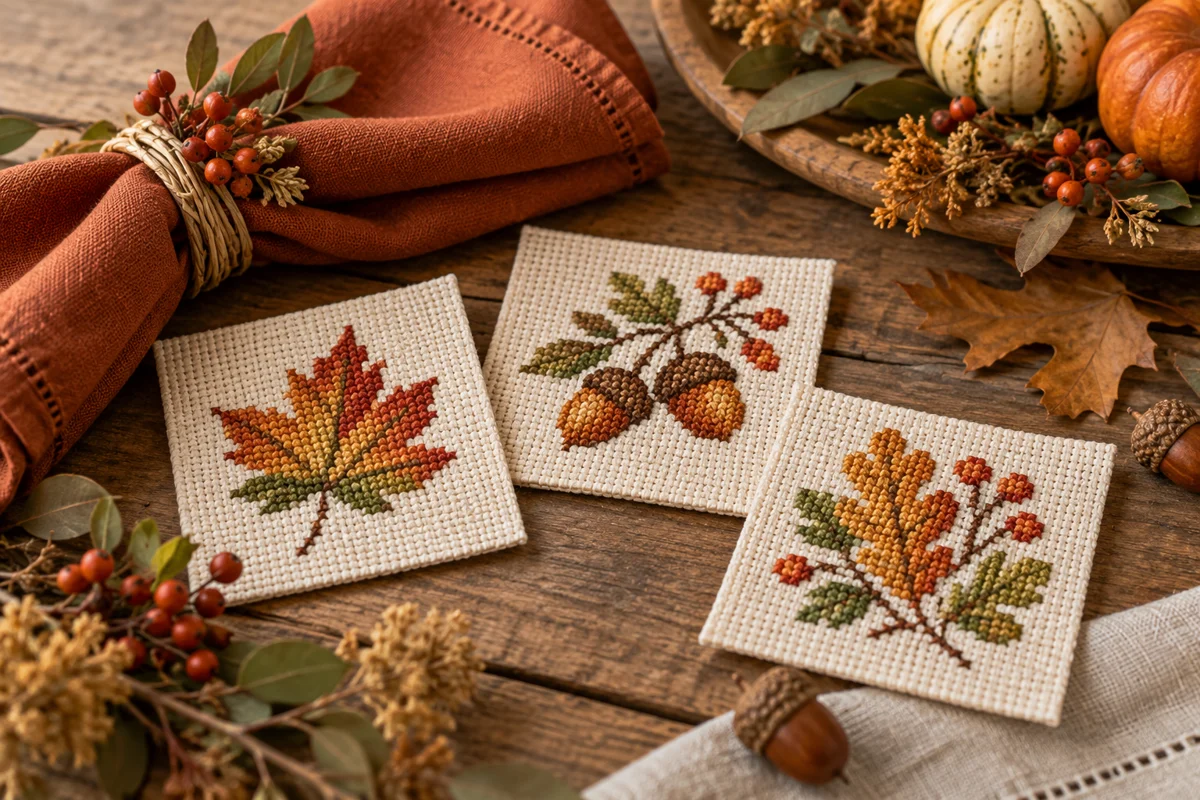
Rust, ochre, olive and warm brown suggest a harvest palette, but neighboring shades still need enough difference in lightness. An acorn cap should remain distinct from its body, and a leaf stem should not vanish into the background. Compare cotton against the actual Aida rather than choosing colors solely from a screen.
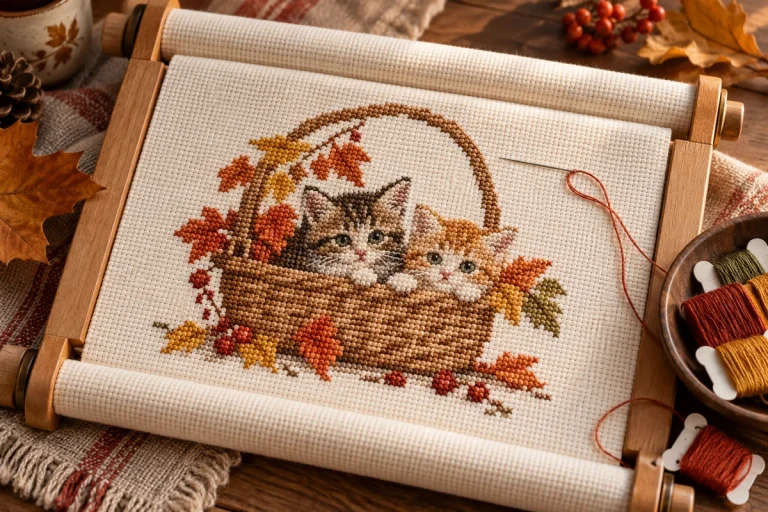
Use a short written substitution key if you adapt a chart. Keep every symbol assigned to a specific thread so the change stays consistent across multiple pieces. If you need a genuinely available starting project, our free leaf and acorn charts include visible grids and keys; the illustrations on this page do not replace them.
Choose a gift format that survives handling
For a meal setting, a small stitched card or removable fabric panel is easier to plan than a large tablecloth. Keep embroidery away from food spills, moisture and hot dishes. A decorative textile is not automatically washable, heat resistant or suitable as a trivet simply because it is made from cotton.
If you want a tag on a basket or wrapped gift, check the hanging hole, ribbon route and fabric backing before assembly. A finished tag should not depend on one loose stitch holding all its weight. Make one complete sample, then repeat its cloth count, palette and mounting dimensions for a coherent set.
Size the motif and work backward from the gathering
A 28-square-wide motif uses 2 inches on 14-count Aida. That is the charted width only: it says nothing about the allowance required to fold, sew or mount the cloth. Sketch the tag or window at its real size and check the outermost stitched row against it before you cut.
Count the actual number of gifts or places you need, then stitch and assemble one from beginning to end. Use that experience to set a realistic batch size. An early October Canadian celebration and a late November US gathering create different deadlines; do not treat one national date as a worldwide holiday.
Before you begin
- Read the actual symbol chart, thread key and stitch-type notes.
- Calculate the design area and add the allowance required for your chosen finish.
- Test the intended cotton and fabric together on an offcut.
- Keep a readable working copy and check the first completed motif before repeating it.
Questions and next steps
Can I use the same harvest motif for autumn and Thanksgiving?
Yes, if the recipient and setting suit it. Keeping dates or text on a removable card can make a textile useful for more than one season.
Should every place setting have a different design?
A shared palette and repeated motif often produce a calmer set. Vary ribbon or paper if you want distinction without charting many new pieces.
Can I sell a finish made from a free chart?
Check that designer’s license. Free access does not automatically grant commercial use or permission to redistribute the chart.
For practical preparation, see planning compatible fabric scraps, and recording thread substitutions.
For another seasonal project, explore Halloween Cross Stitch Patterns or Christmas Cross Stitch Patterns. Choose a chart that is actually supplied or available to buy; this selection guide does not promise a new downloadable pattern.
 English
 French
 Spanish
 German
 Arabic