
Wildflower cross stitch designs can feel airy and spontaneous even though every stem is counted. The main choice is composition: a loose meadow, a circular wreath or a gathered bouquet. Each shape asks for a different balance of detail, empty fabric and finishing space.
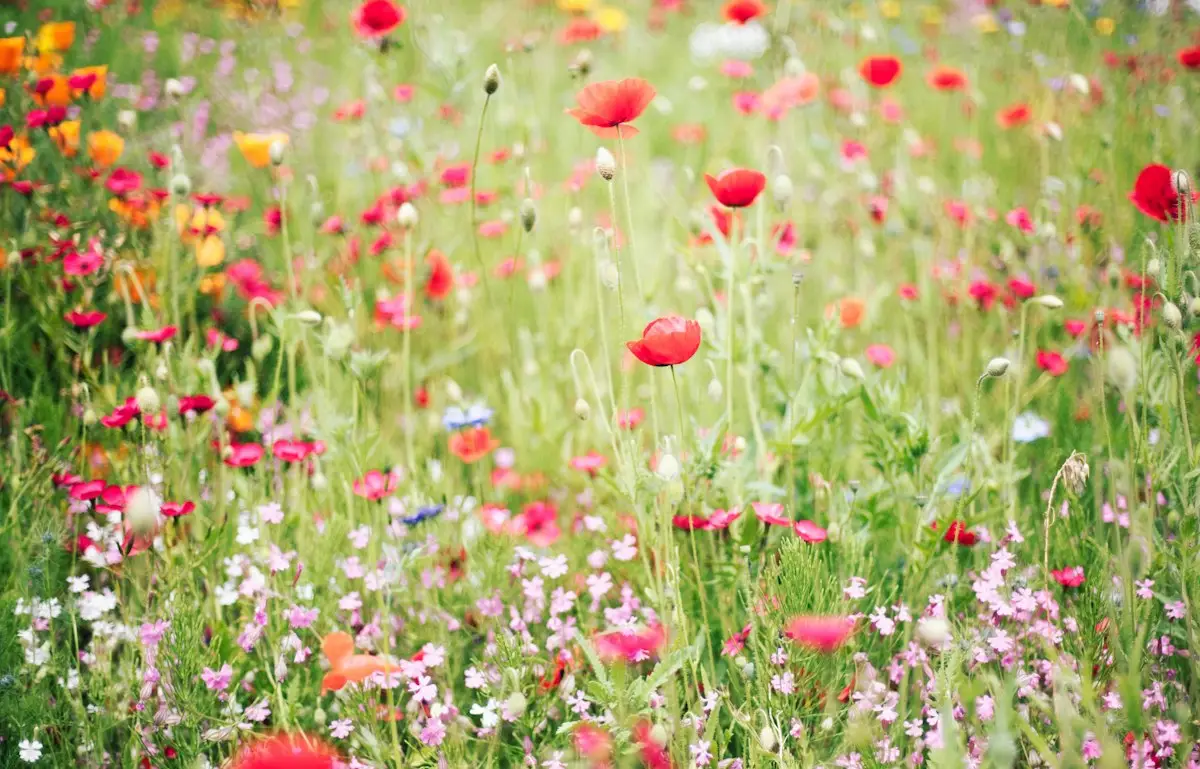
A meadow gives the flowers room to breathe
Meadow designs often spread stems across a horizontal area, with flowers at different heights. Unstitched fabric can be as important as the crosses because it separates delicate stems and flower heads. Check whether the chart is open or full coverage before assuming that a wide design means a large amount of filling.
A meadow can suit a landscape frame or a wide cushion panel, provided the fabric and finish are appropriate for the intended use. Look at the tallest stem and the lowest stitched point when calculating the required area. Do not size a frame from the width alone.
A wreath needs a balanced center and outer edge
A floral wreath works around a circular or oval outline. The empty center may be left plain or may contain lettering, depending on the pattern. Inspect the chart’s maximum width and height rather than relying on the nominal size of a display hoop.
Allow visual breathing room between the outermost stitches and the hoop or frame. A flower that touches the rim can look cramped even when the stitching physically fits. If you plan to add initials, check the available center area and the pattern’s permission terms before making alterations.
A bouquet concentrates color in one place
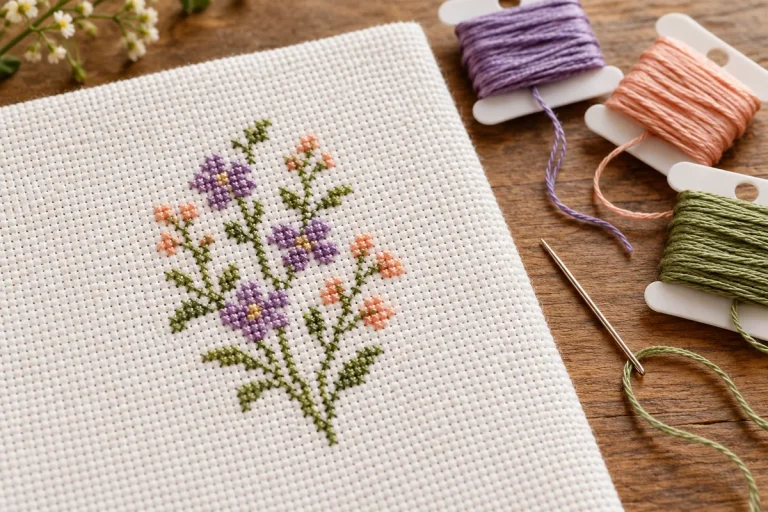
Bouquet designs gather stems into a compact arrangement. They can create a strong focal point, but overlapping petals and leaves may introduce frequent changes of color. A small bouquet with many isolated stitches is not automatically easier than a larger, more open meadow.
Look closely at the chart key and the transitions between neighboring flowers. If you prefer relaxed blocks of stitching, choose clearly separated flower heads and fewer shades. If you enjoy detailed counting, subtle petal shading and varied greens may be part of the appeal.

Compare three practical decisions
Start with the intended finish: a meadow often favors a wider opening, a wreath a centered opening, and a bouquet a focal arrangement with clear margins. Then compare the stitch types and density. Finally, calculate the stitched dimensions on the fabric count you are comfortable using.
An example makes the difference concrete. A 112 × 56-stitch meadow measures 8 × 4 inches on 14-count Aida. A 70 × 70-stitch wreath measures 5 × 5 inches on the same count. Those measurements describe the stitched rectangles only; you still need holding and mounting margins.
Choose fabric around the lightest petals
Lay the lightest and darkest threads on the proposed fabric. Pale petals may disappear on very pale fabric, while a strongly mottled background can compete with fine stems. Take a quick reference photograph to compare the options, but make the final decision with the actual materials in your stitching light.
A fabric color change also changes the unstitched background. For an open meadow, that can alter the whole picture. Our floral fabric color guide explores this in more detail, while the Aida count comparison helps with scale.
Use photographs as composition references
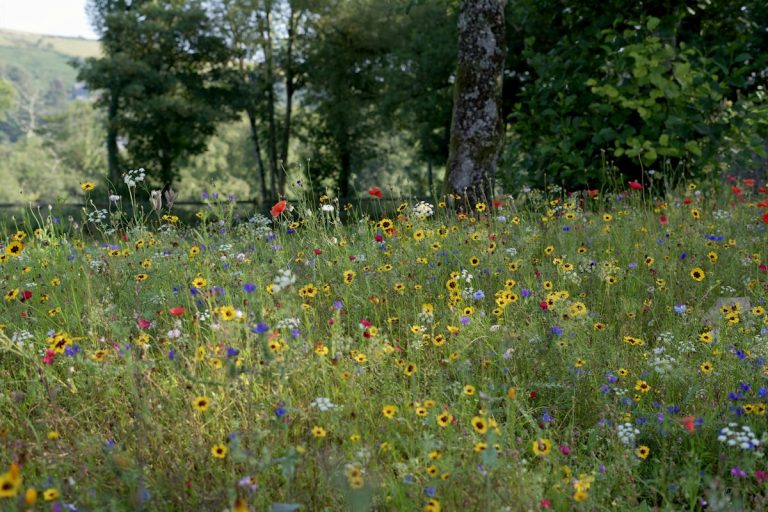
Real flowers can help you notice spacing, repeated colors and changes in height. You do not need to identify every species to decide whether you like a dense bouquet or a lighter meadow. Keep that inspiration separate from the chart instructions: the pattern’s symbols determine where your stitches go.
The reference photographs in this guide illustrate color and composition. For a purchased pattern, use the listing’s own chart preview and specifications to assess the finished stitched design. DMC’s counted-fabric guide explains the material choices behind a measured result.
Make a short list before choosing a pattern
Write down the finished orientation, maximum stitched dimensions, preferred fabric count and stitch techniques you want to use. Note whether the design includes backstitch, blends or fractional stitches. Check the included chart formats and whether the symbol key remains readable when printed.
Browse the floral and botanical collection with those requirements in mind. Once you have a chart, our wildflower stitching plan shows how to divide stems, petals and scattered colors into manageable sections.
Questions about wildflower compositions
Can I put a rectangular meadow in a round hoop?
Only if the entire stitched area fits comfortably inside the visible circle, with space around the corners. Use a paper template at the finished size before choosing the hoop.
Can I replace the chart’s greens?
You can experiment for personal stitching within the pattern’s terms, but keep enough contrast between stems, leaves and outlines. Our floss substitution guide explains a controlled way to compare alternatives.
Which composition is best for a beginner?
Choose clear symbols, full crosses and limited color changes. Composition alone does not determine difficulty.
Cover photograph: Natalie Kinnear. In-article photograph: Karly Santiago. Photographs used under the Unsplash License.

 English
 French
 Spanish
 German
 Arabic