
أ kitten family cross stitch pattern feels different from a single cat silhouette. Instead of one animal, it tells a domestic story: curious faces peeking out, sleepy kittens tucked into fabric, a ball of yarn, plants that frame the scene, and the warm shape of an old wooden dresser. The resulting embroidery can feel like a tiny room full of personalities—but all those details make planning especially important.
This independent guide looks at Cozy Cat Hideaway, the Kitten Family in a Wooden Dresser PDF by DiaStitchStudio on Etsy. The seller specifies a 270 × 186-stitch chart, 30 colors and five downloadable PDF files. We’ll calculate its real size on common Aida fabrics, compare the print formats, plan its wood, fur and gingham areas, and explain how to finish a substantial cat-lover wall piece. This article is a tutorial and editorial review, not a reproduction of the seller’s chart.
Why the wooden dresser makes this cat cross stitch memorable
The dresser provides a stable visual structure: warm horizontal wood lines divide the space, while kittens appear in different little pockets of activity. A leafy plant, a blue gingham blanket and yarn introduce softer textures. These elements matter because they make multiple similarly colored animals easier to distinguish—and because they give the viewer new details to notice each time.
Unlike a minimalist black-cat outline, this is a large, detailed interior scene. Treat the wooden furniture as the underlying structure, not simply a background to fill last. The shelves and edges tell you where the kittens belong. The cats remain the emotional focus, but the surrounding objects give their poses a clear setting.
The seller’s description mentions pinks, oranges, grays, blacks, creams, blues and natural wood shades. These are color families from the listing, not a verified list of particular DMC numbers; use the purchased PDF’s own floss key when preparing thread. For a different perspective on feline compositions, compare our guide to cat silhouettes, tabbies and stitched portraits.
Verified Cozy Cat Hideaway PDF specifications
DiaStitchStudio’s Etsy listing states the following details. The actual purchased PDFs haven’t been opened or stitched for this review, so technical instructions that depend on the symbol key should be checked against your download.
| Detail | Seller-stated information | What to confirm before stitching |
|---|---|---|
| Designer and pattern | DiaStitchStudio — Cozy Cat Hideaway | Use the seller’s exact chart and terms |
| Design grid | 270 stitches wide × 186 stitches high | Centerline, page joins and blank margins |
| Thread palette | 30 colors; DMC color key included | Exact thread numbers and any blend or backstitch notes |
| Recommended fabric | 14-count Aida | Check specialty stitches before changing count |
| Delivery | 5 PDF files, instant digital download | Identify the most readable printable version |
| Included layouts | Two-page color-symbol and black-and-white-symbol charts, plus larger multi-page formats | Confirm which pages form each complete chart |
| Subject | Multiple cats, wood dresser, gingham blanket, yarn and plants | Read small whisker, fur and plant details from symbols |
The listing also refers to a stitch-count and pattern-details section and a complete DMC key. Do not assume the five PDFs mean five different designs; the seller describes different chart layouts and reference materials for the same Cozy Cat Hideaway scene. It is a digital counted cross stitch pattern, not a completed framed embroidery, printed kit, floss or fabric shipment.
Does a five-PDF package mean Pattern Keeper compatibility?
No. Multiple PDFs may simply offer a compact overview and larger multi-page print layouts. The seller’s text does not specifically confirm a Pattern Keeper-tested chart in the information reviewed. If you use a tracker app, follow its official PDF import instructions and test symbol recognition before assuming the file is compatible. A printable black-and-white version is still useful when a mobile importer doesn’t recognize the PDF grid.
How large is a 270 × 186 kitten cross stitch pattern?
The standard calculation is stitches ÷ fabric count = finished inches when stitching one full cross per Aida square. For Cozy Cat Hideaway, 270 ÷ 14 = 19.2857 inches across, while 186 ÷ 14 = 13.2857 inches tall. That matches the listing’s rounded 19.29 × 13.29-inch dimensions on 14-count.
| Fabric | Stitched grid (inches) | Approx. stitched grid (cm) | Example cut with 3 in added per side |
|---|---|---|---|
| 14-count Aida | 19.29 × 13.29 | 48.99 × 33.75 | 25.29 × 19.29 in |
| 16-count Aida | 16.88 × 11.63 | 42.86 × 29.53 | 22.88 × 17.63 in |
| 18-count Aida | 15.00 × 10.33 | 38.10 × 26.25 | 21.00 × 16.33 in |
The example cutting dimensions add six inches total in each direction—three inches on all four edges—to give room for handling and framing. That’s a planning allowance, not a required margin for every finish. If you will use a scroll frame, mount to a mat board or work a wide border, adjust the fabric cut accordingly. See our fabric sizing and cut allowance tutorial for the general method.
The full rectangular grid contains 50,220 positions (270 × 186). This number describes the total possible square positions in the chart, not a confirmed count of completed crosses; any blank background positions are left unstitched. Likewise, the number of DMC colors cannot tell you the number of stitching hours. How densely the scene is filled and how often symbols change will matter much more.
Should you choose 14, 16 or 18 count Aida?
14-count makes each little window, ear and leaf easier to see, but produces a fairly wide framed project. 16-count reduces the footprint and may suit a smaller wall, while 18-count makes fine details physically more compact and may demand stronger lighting or magnification. If you are sensitive to close work, make a short trial on the chosen fabric before buying a large cut.
Changing fabric count changes the physical size of a one-cross-per-square chart; it does not change the symbol layout. Keep the designer’s instructions for any specialty stitches and number of working floss strands. Don’t try to shrink the piece by printing its PDF at 70%: smaller paper symbols don’t make a completed stitched square smaller.
Understand the five PDF files before printing
A multi-page pattern is easier to work when you understand what each version does. The seller describes both compact two-page charts and larger print-oriented layouts. An overview can help you navigate the whole picture, but for fine kitten markings you may need the larger symbols. Before stitching, open every file and check page labels, grid alignment and legend.
| File or information type | Best use | Caution |
|---|---|---|
| 2-page color-symbol chart | See color relationships and scene layout | Similar shades can blend on a low-quality printer |
| 2-page black-and-white symbol chart | Print clean symbols and mark progress | Symbol shapes, not floss colors, become your main reference |
| Larger multi-page color chart | Follow detailed sections at readable scale | Pay attention to repeated boundary rows and page joins |
| Larger multi-page black-and-white chart | Read small marks and annotate your work | Keep the color key accessible separately |
| DMC key and specifications | Buy materials and verify chart count | Use numbers in the actual purchased key, never guesses from preview images |
The public product listing identifies five PDF files while describing several chart formats and a DMC key. Exact file names, which items share a PDF, and the presence of individual page overlaps can only be confirmed once you’ve opened the purchased download. Some systems display a chart with repeated edge rows to aid alignment; check before marking those repeats as additional stitches.
Download through your Etsy account using a web browser as the seller instructs. If the app doesn’t offer the download action, open Etsy’s digital-download help page. Keep the original PDFs untouched and make a separate marked copy for stitching.
A practical 30-color strategy: cats, wood, plants and gingham
With 30 colors, you need a system that preserves the difference between a gray kitten, a cream cat, warm wooden drawer edges and leafy green vines. Organize by verified floss code first, then label chart sections for convenience. Different objects can share a code; assigning a separate physical skein to every object is unnecessary.
Cat fur: preserve eyes, ears and markings
Cats’ faces work as tiny focal points. Before you fill large areas of dark fur or pale cheek, locate both eye positions, the ear tips and any narrow markings on the chart. Count from a stable surrounding landmark such as the dresser edge. Missing a single dark stitch in an eye or whisker zone can change the expression, so keep the current PDF page magnified as you work.
Dark-fur and light-fur sections need different background checks. On pale cloth, a black or deep-gray head stands out well, but a creamy kitten may merge into the fabric. On darker cloth, pale fur will be obvious while some dark contours disappear. Place the actual named DMC threads beside a fabric sample before settling on the ground color. Our black-cat contrast guide explains the same value problem in detail.
Warm wood grain: use the dresser as a counting anchor
Horizontal drawer fronts and upright dividers help you keep the chart aligned, but small changes in brown shading can also produce dense symbol switching. Establish the structural edges first when the chart permits, then fill the bigger connected brown sections. If you want to stop midway through a drawer, note the column number on your working chart rather than carrying a loose thread across open fabric.
Blue gingham: why the checked blanket needs a separate pass
A checked blue blanket may contain alternating light and dark squares with regular rhythm. Even though the pattern looks repetitive, it is easy to shift a row by one stitch when your eyes follow the textile rather than the printed symbols. Mark a few landmark intersections on the PDF and cross-check the placement at regular intervals. Avoid replacing the seller’s exact gingham chart with an improvised checkerboard unless you intentionally redesign the piece for personal use.
Plant leaves and yarn: protect the small accents
Leaf tips, thin stems and the ball of yarn may occupy comparatively tiny spaces against the furniture. If the leaves are outlined in the PDF, add that detail at the point specified by the key. Keep green and brown threads on separate, clearly labeled cards, especially if they are similar in value. The goal is to preserve the design’s storytelling details without turning the back into a web of dark carried threads.
A six-stage stitching plan for Cozy Cat Hideaway
This workflow is intended for the seller’s larger, detail-rich chart; it’s not a substitute for the proprietary symbol map. If you’re accustomed to small decorative kittens, think of the piece as several connected mini scenes supported by the same wooden structure.
- Prepare the whole grid. Extract the PDFs, select a readable chart version, label your 30 DMC codes and calculate the fabric cut. Confirm the actual chart center and any grid alignment symbols.
- Stitch one reliable anchor. Choose a long, recognizable dresser edge or a strongly defined kitten silhouette near your usual starting position. Count its location twice before filling nearby shapes.
- Build the large furniture blocks. Fill connected wood-color groups in manageable areas, checking for tiny color changes. Work from known chart coordinates rather than estimating proportions from the product photo.
- Complete each kitten as an individual character. Move from broad fur areas to small face and ear details. Verify eye placement before you move to another animal, and avoid long thread carries behind pale cheeks.
- Handle textiles, plants and yarn separately. Count gingham intersections precisely; finish leaves and small yarn-related accents from nearby furniture landmarks. Compare the emerging picture to your chart at normal viewing distance.
- Audit and finish. Check page boundaries, unfilled squares, direction of top cross legs and any charted outlines. Only after the full composition is verified should you wash or press according to your materials and mount it in its final frame.
A line-by-line checklist can be surprisingly useful when a large household scene has many disconnected objects. Mark the area completed, the floss code used and the last verified coordinate on your working copy. That way, returning after several days doesn’t require you to recount the entire dresser. For more detailed planning, see our large cross stitch portrait planning article, which addresses a different high-detail subject.
How long might a 270 × 186 cross stitch take?
There is no responsible fixed hour estimate without knowing the number of actual stitched squares, the design’s distribution of color changes, specialty stitches and your personal speed. The maximum grid of 50,220 positions is not the same as the final stitched cross count, so simply dividing that number by a guessed stitches-per-hour rate can seriously mislead.
Instead, time three ordinary sessions on a nontrivial part of the pattern. Count the completed crosses and record how much time was spent changing colors or locating the next symbol. A dresser section with broad connected browns may be much faster than a tiny face with numerous isolated stitches. Use your own average on similar sections to plan a realistic gift deadline, allowing additional time for framing.
Cat-lover gifts and cozy nursery decor: choose the right finish
A kitten family tucked into an antique-style dresser fits a warm home setting: a reading nook, craft room, hallway gallery, pet-lover’s workspace or a nursery wall. Its wide shape is particularly suitable for a landscape frame. Because the 14-count grid is about 19.29 inches wide before any border, a miniature tabletop hoop is not the right assumption for the full picture.
Frame for a reading nook or craft room
A simple wood or neutral frame can echo the dresser without competing with the kittens. Measure the complete stitched area on the actual fabric and select a mat opening that leaves comfortable breathing room around the visible scene. Mount with archival-safe, reversible methods where possible; avoid sticking the stitching directly to ordinary cardboard or trapping it under glass with the crosses compressed.
Nursery wall art without turning it into a toy
The seller positions this as modern nursery decor, which can be lovely in a softly colored space. Keep the framed piece mounted securely and away from cribs, beds and places where young children can reach the glass, hanging hardware or loose textiles. A framed cross stitch is decorative wall art; it’s not a toy or a baby-safe accessory merely because the subject is cute.
A housewarming or cat-parent gift
This scene can be particularly appropriate for a multi-cat household. Rather than modifying the paid chart to make every animal look like a particular pet, personalize the gift with a dated label or a note about the recipient’s own playful cats. Preserve the designer’s original composition unless you have a clear right and a sound method for making personal changes.
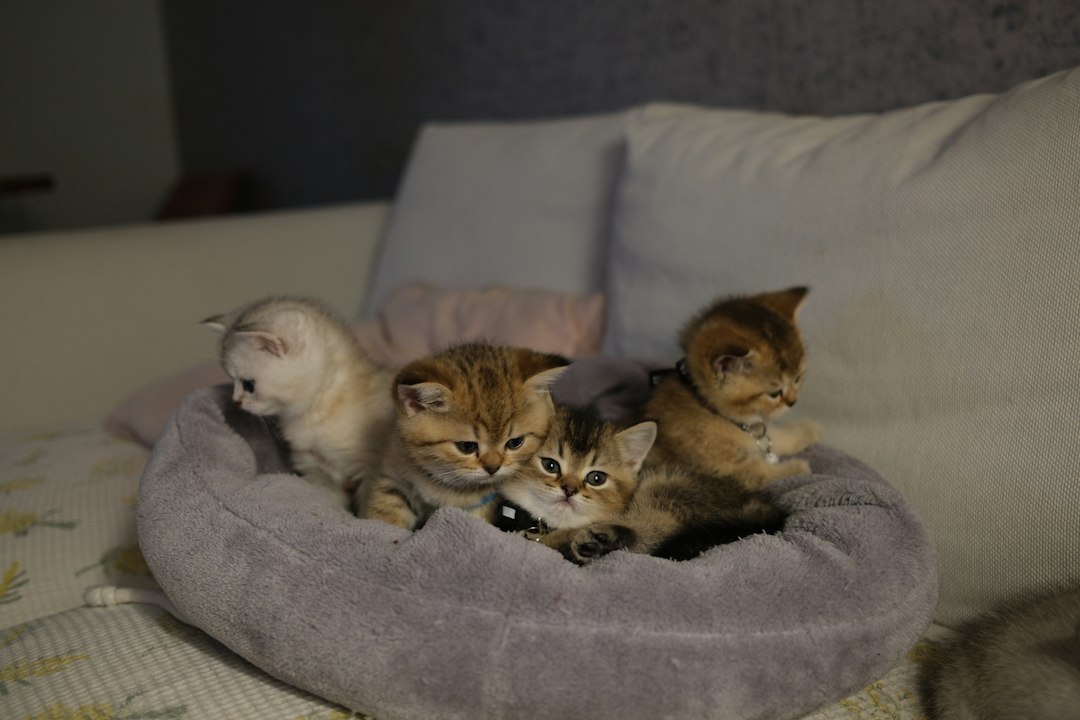
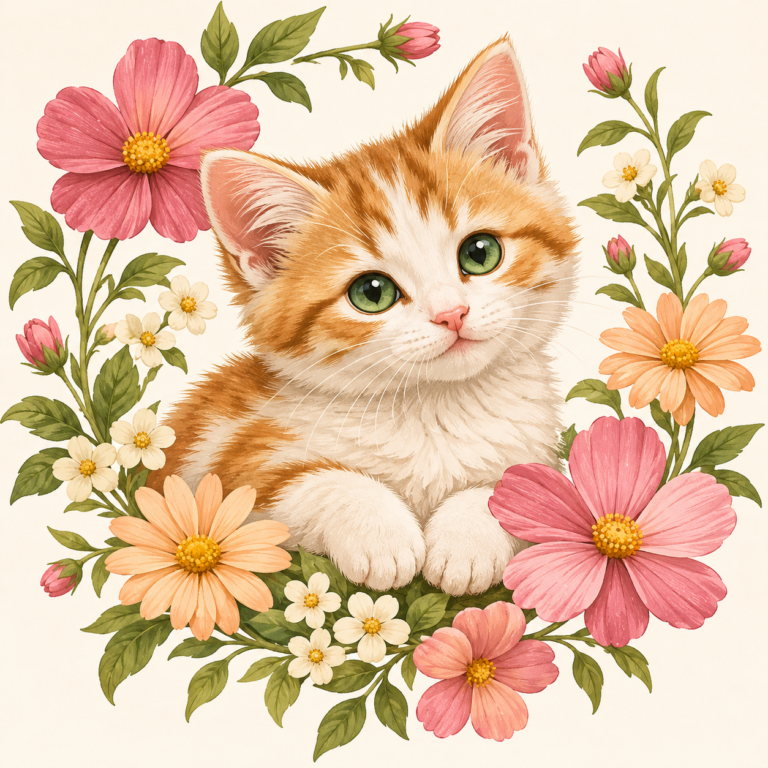
The photograph above shows real kittens, not a stitched example of DiaStitchStudio’s design. It is included as visual inspiration for the soft poses and cozy feeling that make multi-cat embroidery so inviting.
Three related PDF patterns from XStitchPattern
If you enjoy the subject but want a different chart, compare three separate digital designs from our own shop. The Autumn Kittens in a Basket PDF offers another group-of-kittens theme with an autumn mood. The Girl and Blue-Eyed Kitten PDF leans into the emotional detail of a pet portrait, while the Purple Abstract Cat PDF offers a more graphic, modern palette. All three were checked as published WooCommerce listings with actual digital download files attached; none is a copy or included file of Cozy Cat Hideaway.
Looking for more cat and animal counted cross stitch PDFs? Browse the XStitchPattern Etsy shop for our own digital designs. The Cozy Cat Hideaway design discussed in this guide belongs to DiaStitchStudio and is sold by that independent designer, not as part of XStitchPattern’s Etsy listings.
Common mistakes with detailed kitten-and-furniture charts
- Buying too little fabric. A 19-inch-wide stitched grid on 14-count needs substantial extra cloth for framing and holding.
- Calling 50,220 grid positions “stitches completed.” Empty areas don’t necessarily require crosses; verify the actual filled coverage.
- Assuming five PDFs mean five kitten designs. The seller describes multiple viewing and printing formats for the same image.
- Guessing DMC codes from photos. Use the real thirty-color legend included with the download.
- Using a tiny print preview to read faces. Choose the larger multi-page chart if symbols blur in compact layouts.
- Miscounting a gingham repeat. Align every check against the chart rather than extrapolating a blanket pattern.
- Overlooking the wooden structure. If dresser edges shift, kitten positions can become difficult to reconcile.
- Framing too close to the stitches. Check the inside mat opening and mounting margin before purchasing a frame.
Frequently asked questions about this kitten family PDF
How big is the Cozy Cat Hideaway cross stitch pattern?
DiaStitchStudio specifies a 270 × 186-stitch grid, approximately 19.29 × 13.29 inches on 14-count Aida, 16.88 × 11.63 inches on 16-count, or 15 × 10.33 inches on 18-count. Add fabric outside the design for holding and final mounting.
How many DMC colors are in the kitten dresser pattern?
The Etsy listing reports 30 colors and a complete DMC thread key. Exact color codes and quantities must come from the purchased chart; they’re not reconstructed from seller photographs here.
Does the download include a color and black-and-white chart?
Yes, according to the seller’s description: compact two-page color-symbol and black-and-white-symbol versions, plus easier-to-read multi-page alternatives. The listing identifies five PDF files overall. Always inspect those files to confirm their layout and page relationships.
Is this suitable for a complete beginner?
A beginner who knows how to read symbols can attempt a larger chart, but this one is not a quick first mini. Thirty colors, multiple kitten faces and patterned household objects demand patient counting. It may be more comfortable after you have finished a small animal chart such as the project ideas in our easy cat cross stitch guide.
Can I use 16-count Aida instead of 14-count?
Yes for a standard one-cross-per-square grid, subject to checking any specialty instructions in the actual PDF. The design would be approximately 16.88 × 11.63 inches on 16-count. Keep the fabric-cut margin separate from the stitched-grid dimensions.
Does the PDF work with Pattern Keeper?
The reviewed listing doesn’t explicitly confirm Pattern Keeper-tested import compatibility. Try a sample import using the exact PDF and verify symbol mapping before depending on the app. The printable multi-page charts offer a fallback if an app can’t recognize its grid.
Is the kitten scene a physical counted cross stitch kit?
No. DiaStitchStudio sells the PDF pattern as an instant digital download. Fabric, floss, needle, frame and the finished piece aren’t part of the stated purchase.
Can I give the finished embroidery as a baby shower gift?
A finished, securely framed decorative piece may be a thoughtful gift, but place it safely away from a baby’s sleeping or play area and keep hanging hardware inaccessible. Review the seller’s usage rights; purchasing a digital chart doesn’t give permission to redistribute the PDF itself.
Can I purchase this exact pattern at XStitchPattern?
No: the Cozy Cat Hideaway kitten family dresser PDF referenced here is sold by DiaStitchStudio on Etsy. XStitchPattern has separate cat cross stitch designs linked above; they are not the same chart.
A multi-cat project is worth careful planning
The charm of Cozy Cat Hideaway comes from the mixture of personalities and textures: kittens peeking out of a dresser, warm wood, a checked blanket, plants and yarn. At 270 × 186 stitches, it rewards organization. Select your Aida based on the finished wall space, choose the PDF layout you can read comfortably, keep the actual thirty-color key nearby, and verify the small faces and gingham as separate sections.
For further advice, explore our large kitten project planning guide, the calico kitty color guide, and our cat patterns overview. You can also sign up for XStitchPattern’s free-pattern newsletter for other counted stitch tutorials. The newsletter and our own shop are separate from the independent commercial design reviewed here.
Want something quicker than a large 270 × 186-stitch dresser scene? Our DIY cat hand embroidery ideas guide shows how to use a tiny original silhouette, backstitch and stem stitch on plain fabric. This is separate from DiaStitchStudio’s counted Cozy Cat Hideaway pattern.
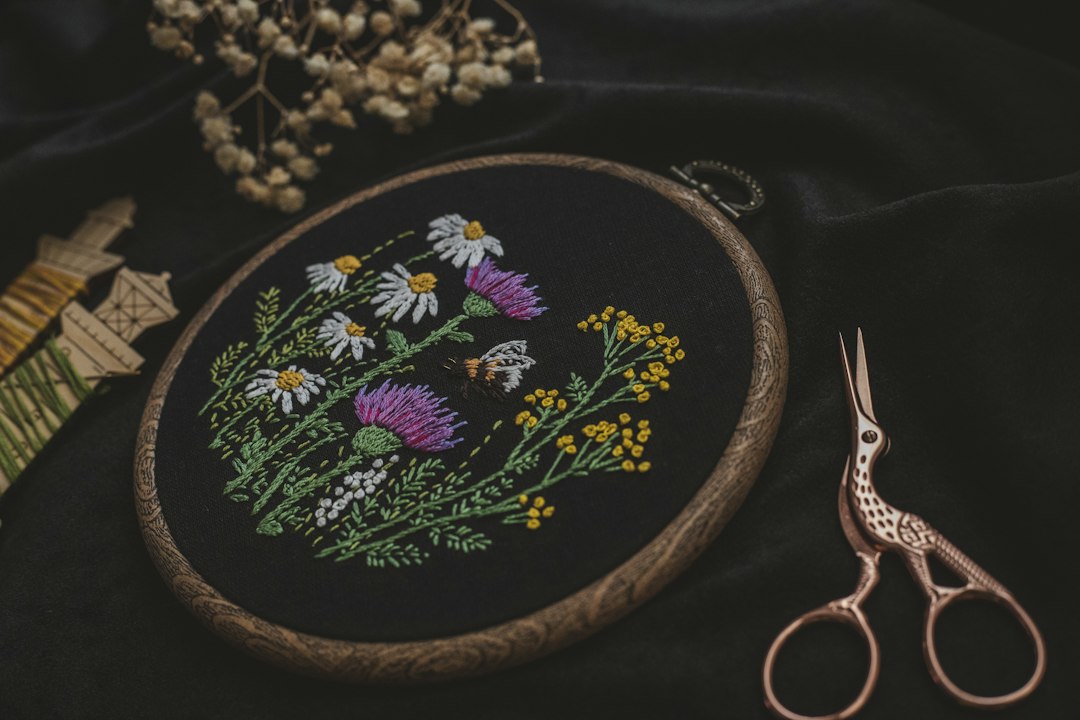
Editorial photo credits: Oleksandr Dorokhov (real cats and wooden dresser), Ksenia Yakovleva (embroidery materials), and zeliha turk (real kittens), via Unsplash. These photos are not representations of the paid counted cross stitch PDF or proof of a stitched sample.