
A beagle cross stitch pattern is a lovely way to celebrate those soft, drooping ears, curious eyes and distinctive tan, white and black markings. The challenge isn’t simply finding the right brown thread: it’s choosing a design that stays unmistakably beagle-shaped after a photograph or drawing is reduced to a grid of tiny crosses.
This guide began with “DOG BEAGLE CROSS STITCH.” by coffeeflavour on Redbubble, a beagle-themed sticker featuring a cross-stitch-style design. It is not presented here as a downloadable counted cross stitch chart. The public Redbubble catalog identifies the work as a sticker, while the individual listing page was not accessible for independent inspection. We’ll use the idea as a starting point for an original beagle needlework project: choosing a photograph you have rights to, preserving key breed markings, deciding between a tiny motif and a more detailed portrait, and selecting Aida fabric and finishing formats.
Important: There is no official coffeeflavour cross stitch PDF included here, and this article does not trace or recreate that artist’s sticker. The beagle photographs are independent editorial references, not screenshots of the Redbubble artwork or samples stitched from a pattern.
Sticker art or cross stitch PDF: what are you actually getting?
A cross-stitch-style sticker can look remarkably similar to an embroidered design when viewed on a phone. But a print-on-demand sticker and a proper counted chart are very different products. A sticker provides a printed image on adhesive material. A cross stitch PDF should tell you precisely which squares to stitch, what each symbol means and which thread colors to use.
| Product type | What you receive | Can you stitch it directly? |
|---|---|---|
| Beagle-themed Redbubble sticker | A printed sticker featuring an artist’s design | No; a sticker is not a counted symbol chart |
| Real beagle cross stitch PDF | A stitch grid, symbol key and designer-specified thread list | Yes, if the charts and instructions are supplied |
| Original photo-to-pattern project | A chart produced from your own or licensed image | Only after you’ve generated and checked a usable chart |
| Beagle-inspired editorial photograph | A photo used to study anatomy and color | No, not until you design a separate chart |
That distinction matters for searchers looking for a “beagle cross stitch pattern PDF.” Even if the printed sticker image resembles rows of little stitches, it doesn’t establish real stitch dimensions, a DMC key, backstitch instructions, Pattern Keeper compatibility or an instant-download file. Check the product format before placing an order.
What makes a beagle recognizable in counted cross stitch?
A dog portrait can lose its personality when converted too small. With a beagle, four visual landmarks carry much of the character: long soft ears, a bright muzzle and forehead blaze, expressive eyes, and contrasting saddle or body colors. Depending on the individual dog, the markings can be tricolor, lemon-and-white or other accepted beagle color combinations. Use the actual pet as your guide rather than assuming every beagle needs an identical black saddle.
1. Keep both floppy ears in the silhouette
Beagle ears are broad, hanging forms that frame the face. Choose a front or three-quarter view where at least one ear is separated clearly from the neck or shoulder. On a very small grid, a dark ear merging into a dark chest or background can make the head look much narrower. A little unstitched background around the ears often improves the silhouette more than adding extra brown shades.
2. Protect the white blaze and muzzle
The white area through the forehead, nose bridge and chest can be the most recognizable part of an individual dog’s markings. If you choose white Aida and leave all those areas blank, the muzzle may seem to disappear. A small dark nose, tan cheek boundary or charted outline can help define the face. Test the motif on your actual fabric color before choosing final thread substitutions.
3. Place the eyes with deliberate precision
Tiny dark eyes give a beagle expression. If an eye shifts even one grid square on a miniature motif, the head can appear lopsided. Locate the eye positions in relation to the top of the muzzle and the lower edge of the ears before filling large fur sections. You can simplify fur shading, but preserve the spacing and direction of the gaze.
4. Use the black saddle only where your dog has one
Some classic beagle portraits have a striking dark back, while others are much lighter or have different markings. If you’re personalizing a design, let the subject’s real coat lead. Black areas can read as one solid patch when charted too small; use a restrained near-black or dark-brown boundary where the original photo shows it. No DMC numbers are assigned here because we have not produced or tested a specific chart.
Choose a beagle cross stitch project that fits your goal
The right format depends on whether you’re stitching a quick dog-lover gift or trying to capture a pet’s particular expression. A silhouette is efficient for a beginner, while a large shaded portrait can be a much longer project. Use the examples below as hypothetical concept sizes only. They are not specifications of the Redbubble sticker or any paid PDF.
| Project concept | Illustrative stitch grid | What to prioritize | Possible finish |
|---|---|---|---|
| Tiny beagle head | 32 × 36 stitches | Ears, muzzle and one clear eye line | Gift tag or mini hoop |
| Simple sitting beagle | 60 × 75 stitches | Full outline, chest and coat blocks | Small frame or wall hoop |
| Beagle face portrait | 100 × 120 stitches | Eye spacing, nose and true markings | Framed pet-lover gift |
| Detailed custom pet portrait | 150 × 180 stitches | Color transitions and expression | Larger framed keepsake |
An adorable thumbnail doesn’t tell you how complicated the chart really is. A 60-stitch design with many isolated color changes may be slower than a 100-stitch silhouette with connected color blocks. Look at symbol density and the actual counted area, not the image’s displayed pixel dimensions.
Beagle cross stitch sizing on 14-, 16- and 18-count Aida
For an ordinary one-cross-per-square chart, divide the design’s stitch width and height by the fabric count. For example, 60 stitches across on 14-count Aida gives 60 ÷ 14 = 4.29 inches. Changing to 18-count makes the same chart 3.33 inches wide, but the chart still contains the same pattern positions.
| Hypothetical grid | 14-count Aida | 16-count Aida | 18-count Aida |
|---|---|---|---|
| 32 × 36 | 2.29 × 2.57 in | 2.00 × 2.25 in | 1.78 × 2.00 in |
| 60 × 75 | 4.29 × 5.36 in | 3.75 × 4.69 in | 3.33 × 4.17 in |
| 100 × 120 | 7.14 × 8.57 in | 6.25 × 7.50 in | 5.56 × 6.67 in |
| 150 × 180 | 10.71 × 12.86 in | 9.38 × 11.25 in | 8.33 × 10.00 in |
These are stitched-grid dimensions, not cutting dimensions. For a framed portrait, you may plan a generous allowance—for example, 2.5 inches beyond the stitching on each side, subject to your mounting method. If the design is 7.14 × 8.57 inches, that example would suggest cutting at least 12.14 × 13.57 inches. Your specific frame, hoop and mounting approach may require more or less. Our cross stitch fabric size guide walks through the calculation.
For a very small beagle head, round hoops require an additional check. A rectangular 2.29 × 2.57-inch motif cannot simply be assumed to fit inside a three-inch circular opening: the rectangular corner-to-corner span can exceed the circle even when the width does not. Test the occupied stitches inside a paper circle and allow a clean border before cutting cloth.
How to plan an original beagle cross stitch chart from a photo
If you want a recognizable beagle, begin with a photo of your own dog or a photograph you are licensed to adapt. Don’t download the Redbubble artist’s illustration and convert it into a new chart without permission. A clean photograph of a beagle is a safer, more distinctive starting point, especially if the finished gift celebrates a specific pet.
- Choose a clear, front-facing or three-quarter image. Keep both eyes visible and avoid motion blur. A photo with soft, even daylight makes it easier to separate tan cheeks from cream markings.
- Crop around the animal. Remove distracting furniture and distant scenery so the ears and muzzle occupy useful grid space. Keep enough room around the top of the head and the ears.
- Select the stitch grid before the color count. Choose a small silhouette or a larger portrait based on your goal. A tiny grid cannot reproduce every fur transition regardless of how many thread colors are permitted.
- Limit the first palette. Separate the major color families—light muzzle, warm tan fur, dark ear or saddle, and nose or eye accents. Add intermediate shades only if the face genuinely becomes clearer.
- Inspect the stitch preview at its actual size. Zoom out to normal viewing scale. If the eyes disappear or the muzzle resembles a dark blob, adjust the crop, contrast or grid size before exporting.
- Check the symbol chart and floss key. Make sure similar thread colors have distinguishable symbols and that the printed key matches the actual project. Don’t treat the preview picture alone as the chart.
- Test an important section. Stitch one ear, eye or small muzzle portion on your intended Aida. Confirm that thread coverage, value contrast and counted shapes work before starting the full portrait.
DMC’s Stitch Your Photo guidance also emphasizes choosing a sharp subject with a simple background and clear color contrast. For more detail on selecting a suitable reference, read our step-by-step guide to choosing a photo for a custom pet cross stitch pattern.
Color planning for a tri-color beagle
Brown, black and white seem like an easy three-color scheme, but the beagle’s expression often relies on differences in value: a dark ear shadow, a warm cheek, a cream highlight and a genuinely dark nose. If all tan patches are mapped to the same mid-brown, the face can look flat. On the other hand, too many near-duplicate browns may create confetti stitches with little visible improvement.
Plan your shades by function rather than by random DMC numbers: one light background or muzzle role, one or two warm fur roles, a dark contour role, and a nose/eye role. For a larger realistic portrait, add intermediate colors only where the photo proves they are useful. This is an illustration strategy, not a thread list for any particular PDF. Use the exact DMC key supplied by the designer when following a purchased chart.
Should you stitch the white fur on white Aida?
It depends on the intended finish. Leaving the white blaze unstitched can save time and create a clean minimalist look, but the facial shape must still be visible. If the rest of the design has no strong boundary, choose a warm cream or pale blue-gray fabric that makes white floss readable, or retain a darker charted outline. Do not substitute fabric or floss solely by copying a product mockup: compare actual thread samples on the selected cloth.
Backstitch can help, but it isn’t automatic
A thin line can define a floppy ear or muzzle at a small scale. However, don’t add backstitch to someone else’s chart unless the instructions permit it or you’re intentionally creating your own variant. A design made entirely of full crosses may look better with careful color-block transitions. If you create an original chart with backstitch, test the line thickness at the finished display size.
A beagle portrait workflow from the first stitch to the final frame
Once the chart and colors are settled, work in an order that protects the most recognizable features. For a small or medium head-and-shoulders design, the ear and nose landmarks are often easier to verify than scattered white fur. For a larger chart, divide the pattern into manageable blocks and use a consistent counting reference.
- Prepare the chart. Mark the true grid center or a reliable starting corner, label the working colors and check whether any specialty stitches are included.
- Cut and secure Aida. Use the calculated grid dimensions plus finishing allowance; protect the raw edges with an appropriate method.
- Begin with a stable contour. Use a clearly defined edge of an ear or the dark nose region to confirm your coordinates against the chart.
- Build the large coat sections. Work tan, cream and dark areas without carrying thread over long unstitched distances, especially behind pale sections.
- Finish the eyes carefully. Compare their relative height, spacing and shape with the chart before moving far from the face.
- Check the finished animal at normal viewing distance. The beagle should read as a beagle without needing to inspect every individual cross.
- Mount and present appropriately. Secure the back, select a frame or hoop and keep fabric safely away from permanent adhesives and damp surfaces.
The way you finish matters as much as the actual design. Use our cross stitch framing guide for preparing, mounting and displaying a finished piece. In a gift, a simple label on the back can include the dog’s name or a meaningful date without changing the stitched artwork.
What does a real beagle look like compared with a simplified chart?
The photograph below offers a second independent reference for a tricolor beagle. Look at the white facial blaze, the darker back and the transition from tan forehead to muzzle. A stitch chart won’t need every hair or tiny shadow. It needs the boundaries that establish the face and keep the ears recognizable.
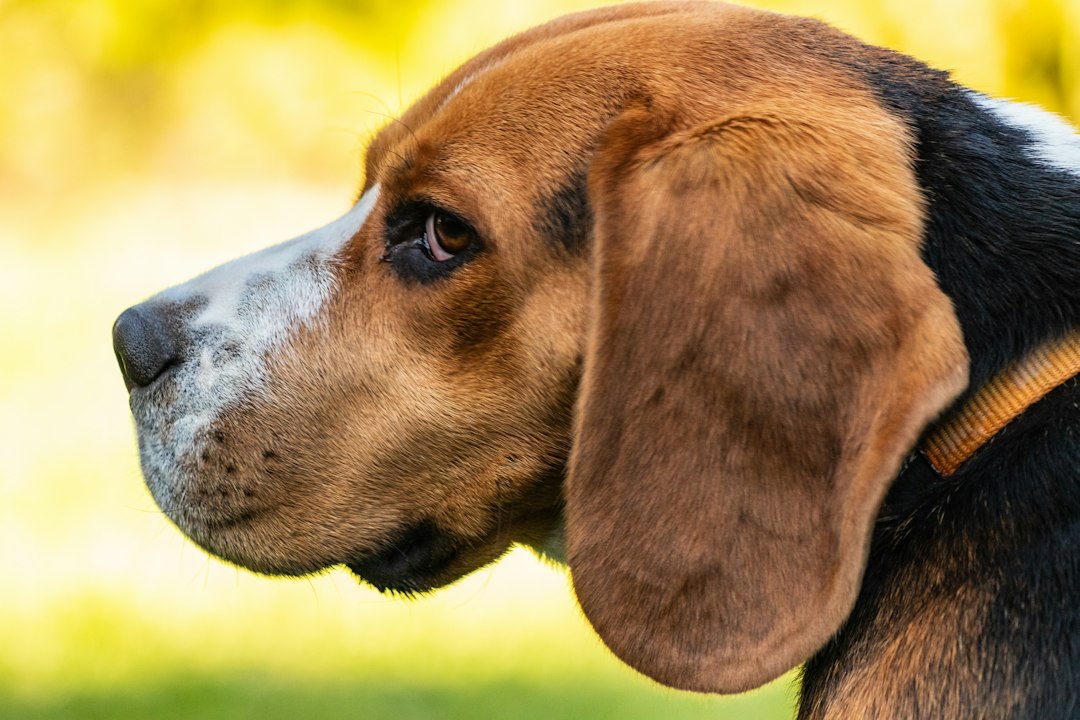
This is a real dog photograph by Grant Durr on Unsplash, not a cross stitch design, an illustration from Redbubble or a result produced by following the steps above.
Beagle cross stitch gifts for dog lovers
A framed portrait for a devoted pet parent
A medium beagle portrait can be a meaningful birthday, housewarming or pet remembrance gift. Choose a format large enough to preserve the dog’s eye expression and distinctive markings. Give yourself time for finishing and framing; a real handmade gift isn’t ready simply because its last cross has been completed.
A miniature beagle card or gift tag
For an approachable project, a simple dog head with clean ears can suit a greeting card or small holiday gift tag. Keep the motif compact enough to fit inside the cutout window, accounting for the fabric border and card construction. Our mini cross stitch project guide explains why some small charts make more practical gifts than others.
A little beagle-themed craft shelf
You might combine a stitched beagle with a dog photo, small illustrated print or paw-shaped ornament on a shelf. Keep separate artworks appropriately credited and don’t suggest the Redbubble sticker is a chart that can be stitched from. For a cohesive gallery, choose one repeated background color or frame finish rather than matching every object exactly.
Pet remembrance and personalization
A personal keepsake should feel specific to the dog. Use a licensed or personally taken photograph and preserve unusual features—a slight asymmetry in the blaze, an extra dark patch or a favorite pose. Consider adding a name and year on the framing mat instead of forcing tiny letters into a chart too small to hold them.
Related dog cross stitch PDFs from XStitchPattern
If you prefer a ready-made design instead of developing a beagle-specific chart, here are two separate dog-themed products available from our shop. Both were checked as published WooCommerce products with attached PDF downloads at the time of review. They are not beagle designs, and neither contains the independent Redbubble artist’s sticker artwork.
El Golden Retriever Hug Cross Stitch PDF offers a warm pet-lover theme and a different dog portrait subject. Our Autumn Walk Woman and Dog PDF combines a canine companion with a peaceful landscape. Compare the actual chart specifications on their product pages to see which suits your intended fabric and finishing size.
For broader dog-stitch planning, our Golden Retriever portrait guide covers a distinct character-led design, while the Autumn Walk sizing guide focuses on coordinating a human figure, dog and scenery. Neither article turns a printed sticker into a downloadable embroidery pattern.
You can also browse the XStitchPattern Etsy shop for our available counted cross stitch designs. The Redbubble DOG BEAGLE CROSS STITCH sticker by coffeeflavour belongs to another independent artist, and its printed product is not included with any XStitchPattern PDF.
Beagle cross stitch mistakes to avoid
- Confusing stickers with stitchable charts. A printed illustration may look like stitching, but it doesn’t necessarily include counted symbols or thread codes.
- Using someone else’s sticker illustration without permission. Start from your own or an appropriately licensed photo when creating a new dog pattern.
- Cropping off the floppy ears. The beagle’s outline is often more important than subtle fur shading.
- Making the face too tiny. If the eyes, nose and blaze become only a few adjacent pixels, choose a larger grid or simpler pose.
- Guessing floss numbers from a thumbnail. Build and test a palette for your own photo, or follow a real designer’s supplied key.
- Counting grid positions as actual stitched crosses. Blank background squares don’t necessarily need stitching.
- Assuming all 3-inch hoops fit every 3-inch-wide design. Check the motif’s occupied outline within the circle and allow mounting space.
- Adding a dark outline everywhere. Place lines where they clarify the silhouette, not simply because an edited digital preview has heavy edges.
Frequently asked questions
Is the Redbubble Dog Beagle Cross Stitch product a PDF pattern?
The referenced item is listed as a sticker by coffeeflavour on Redbubble. The public catalog identifies it as print-on-demand merchandise, not as a downloadable embroidery chart. The individual listing could not be independently opened during this review, so verify current product options and details with Redbubble directly.
Can I turn that artist’s sticker into a beagle chart?
Only if you have an appropriate right or permission to adapt the artwork. Buying a sticker generally does not grant permission to reproduce its underlying illustration in a new chart. For a personal beagle portrait, use a photo you’ve taken or a properly licensed image instead.
How many stitches should a small beagle motif have?
There is no universal count. A stylized little head might work in a grid around 32 × 36 stitches, but a detailed pet portrait can require far more. The sizes in this article are planning examples, not specifications from a commercial pattern.
What Aida count works for a beginner?
Many beginners find 14-count Aida comfortable because the holes and stitches are relatively easy to see. Moving the exact same chart to 16- or 18-count reduces its physical size but doesn’t change the stitch grid. Use the real chart to decide on dimensions.
How many DMC colors should I use for a beagle?
Start with the dog as it appears in your licensed reference photo. A simple silhouette might use only a handful of color roles; a realistic portrait can use substantially more. Don’t invent codes or copy someone else’s legend without checking what actually matches the pattern being stitched.
Are full stitches enough for a beagle portrait?
Yes, a well-designed full-cross chart can create a recognizable beagle. Some designers add backstitch or fractional stitches for particular facial details, but those techniques are not mandatory for every beagle pattern. Read the chart key before changing the stitch types.
Is there a free downloadable beagle chart on this page?
No new free beagle grid or PDF is provided here. This page offers original project planning instructions, size calculations and inspiration. For a downloadable chart, choose a designer who explicitly supplies a usable symbol grid and clarifies the license.
Can I order a beagle cross stitch design from XStitchPattern?
This article does not claim that a beagle-specific PDF is currently ready in our shop. XStitchPattern has separate dog-themed downloads linked above. For a custom portrait, check the actual product availability and order requirements before paying; an illustration or personalized-product listing without a finished file is not the same as an instant PDF download.
Make the beagle recognizable before adding more detail
A beautiful beagle cross stitch starts with an honest choice of source image and the shapes that give the dog character: long ears, a clear muzzle, expressive eyes and coat markings. Choose the stitched dimensions early, keep a clean contrast on your Aida and test the face at its true display size. Once those decisions are right, color refinement and finishing become much easier.
If your next project involves another dog breed, explore the pet-photo selection tutorial y our cross stitch size guide. For future digital patterns and craft tutorials, you can join XStitchPattern’s free-pattern newsletter; this signup is independent of coffeeflavour’s Redbubble merchandise.
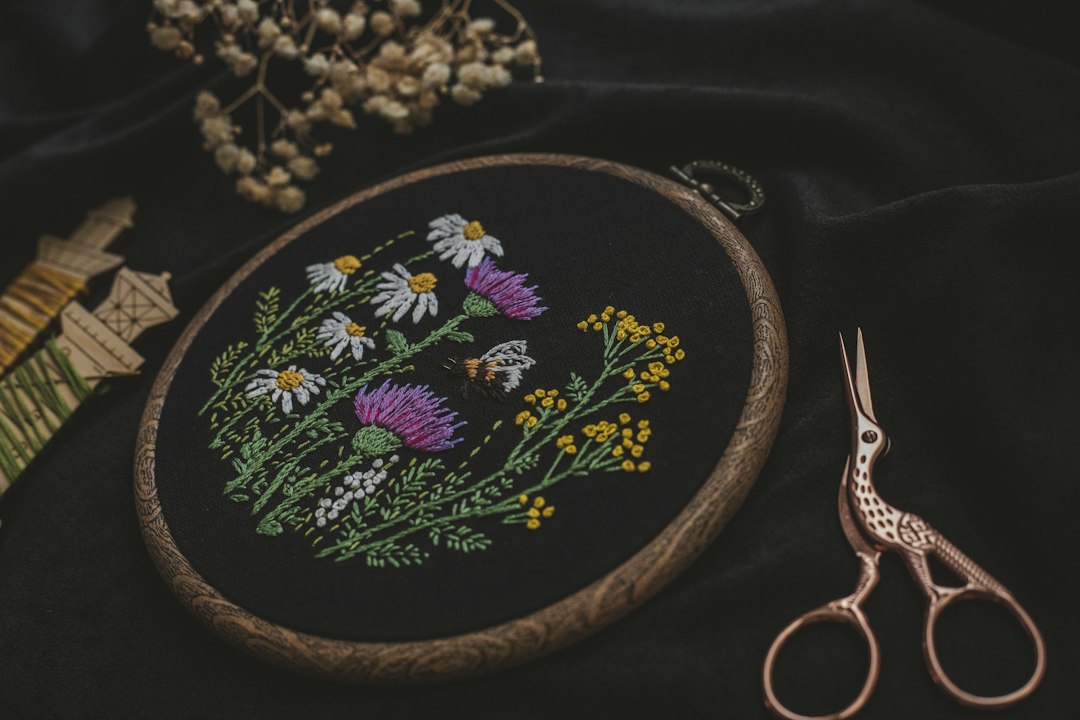
Editorial image credits: Luke MacGillivray (beagle portrait), Ksenia Yakovleva (embroidery materials) and Grant Durr (tricolor beagle), via Unsplash. These are photographic references, not pictures of the Redbubble sticker or stitched XStitchPattern samples.