
Twelve small designs can tell the story of a whole season: the first amber leaf, a pumpkin at a roadside stand, a mushroom after rain, a tiny woodland creature, or a warm mug at the end of a chilly walk. To compare autumn ideas with the other seasons, see our cross stitch pattern hub for every season. A 12 mini autumn cross stitch patterns bundle is appealing because the motifs can become separate handmade gifts or sit together as a fall harvest and woodland sampler. The trick is making a consistent collection from twelve shapes that may have very different stitch footprints.
This guide was prompted by the 12 Mini Autumn Cross Stitch Patterns Bundle, Fall Harvest & Woodland PDF on Etsy. The specific listing page could not be independently accessed, and search results returned other autumn bundles with different motif counts. We therefore treat “12 mini patterns” as the user-supplied listing title, not independently established file contents. We do not claim a verified designer, DMC palette, stitch dimensions, motif inventory, total number of PDF files or commercial license for that listing. For those details, check the original seller’s actual listing and downloaded chart.
Instead of recreating someone else’s chart, you’ll get a 12-slot creative organizer, practical 14-, 16- and 18-count Aida calculations, advice for small hoop ornaments and cards, and a completely independent free 19 × 19 mini pumpkin chart that you can stitch from this page. To see our own different designs, browse the XStitchPattern Etsy shop or use the WooCommerce “Browse & Buy on Etsy” gateway. Neither is a direct checkout for the reference bundle.
What should a genuine 12-pattern autumn PDF bundle include?
A bundle title is a starting point, not enough information to cut fabric or buy thread. Before purchasing an autumn mini collection, check the full product description and file previews. If a designer markets twelve separate charts, ask whether you receive one combined layout, twelve individual pages, or both. A preview can show a set of icons without establishing how the files are arranged. Do not confuse an instant-download product with a physical kit.
| Buyer checklist | What to verify in the actual Etsy listing | Why it matters |
|---|---|---|
| Twelve-design scope | The exact motif inventory and whether each is individually stitchable | Avoids assuming icons in a mood board are included |
| Stitch dimensions | Width × height of the whole chart and of individual designs | Sets the real fabric and hoop sizes |
| Thread information | Genuine DMC codes and approximate requirements | Prevents speculative floss purchases |
| Chart readability | Color symbols, black-and-white symbols, legend, page scale | Affects printing and beginner usability |
| Special stitch types | Full crosses, backstitch, fractional stitches, French knots | Changes tool and skill requirements |
| Digital files | Number, format and download method | A picture preview is not a usable symbol chart |
| Usage permission | Personal stitching and sale-of-finished-work conditions | Paid charts cannot simply be republished |
For this specific reference URL, those technical details remain unverified. Other seasonal Etsy bundles may show 12, 20 or 120 designs, so their thread counts and sizes cannot safely be copied into this article. A clear buying decision starts with the details of the actual listing you’re ordering, rather than numbers borrowed from an unrelated product. Open the referenced 12-mini Etsy page to check its current status.
A creative twelve-motif fall harvest and woodland map
The following table is an original editorial mood board: twelve suggested seasonal themes in three rows of four. These are not asserted to be the twelve designs inside the commercial PDF. Think of it as a reusable way to organize any legitimate collection you purchase, or as inspiration for drawings you create yourself with permission.
| Position | Imagined mini motif | Color focus | Why it works in a collection |
|---|---|---|---|
| Row 1 · 1 | Harvest pumpkin | Amber and deep orange | A strong rounded anchor |
| Row 1 · 2 | Golden maple leaf | Mustard and copper | Diagonal movement |
| Row 1 · 3 | Small acorn pair | Brown and moss | Simple woodland shape |
| Row 1 · 4 | Sunflower head | Ochre and warm black | Bright round accent |
| Row 2 · 1 | Toadstool mushroom | Rust and cream | Different tall silhouette |
| Row 2 · 2 | Woodland fox idea | Orange and bark | Character-led focal spot |
| Row 2 · 3 | Pine sprig | Forest green | Gives the eye a rest |
| Row 2 · 4 | Autumn berries | Wine red and olive | Small clustered contrast |
| Row 3 · 1 | Cozy mug | Chocolate and oat | Human warmth |
| Row 3 · 2 | Tiny lantern | Brass and charcoal | Dark-light contrast |
| Row 3 · 3 | Windblown leaf | Ochre and rust | Motion near bottom edge |
| Row 3 · 4 | Mini cottage | Warm cream and brown | A storytelling finish |
To make the entire group feel related, repeat a dark bark-brown for little contours and leave some untouched ivory fabric between motifs. Use the same visual scale for objects with similar weight: a cottage should not unintentionally dwarf a pumpkin by five times unless you intend a whimsical perspective. Put the busiest shapes apart from one another and give the simple pine sprig or acorn some breathing room.
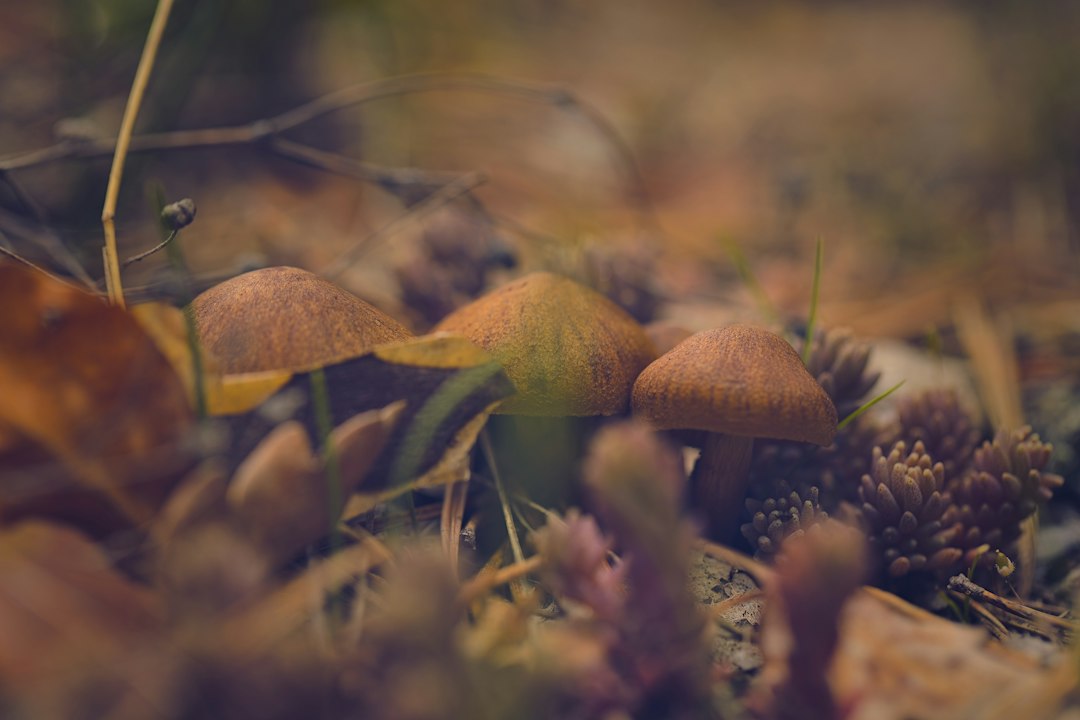
These mushrooms are photographed in nature, not stitched from a purchased chart. Their pale stems, shaded caps and surrounding greens illustrate a useful palette principle: a woodland motif looks clearer when its main shape and background are sufficiently different in value.
How big are mini autumn patterns on different Aida counts?
Cross stitch dimensions are determined by the number of counted squares and the fabric count. The basic formula is stitches ÷ count = inches, for a normal one-cross-per-Aida-square design. If the actual chart is 24 stitches across, that is 24 ÷ 14 = about 1.71 inches on 14-count Aida. The same 24 stitches on 18-count become about 1.33 inches.
Because the seller’s stitch counts for the named reference are not verified, these are hypothetical sample grids for planning small motifs. They do not represent its twelve actual designs.
| Example motif grid | 14-count Aida | 16-count Aida | 18-count Aida |
|---|---|---|---|
| 20 × 20 stitches | 1.43 × 1.43 in | 1.25 × 1.25 in | 1.11 × 1.11 in |
| 30 × 24 stitches | 2.14 × 1.71 in | 1.88 × 1.50 in | 1.67 × 1.33 in |
| 40 × 35 stitches | 2.86 × 2.50 in | 2.50 × 2.19 in | 2.22 × 1.94 in |
| 50 × 50 stitches | 3.57 × 3.57 in | 3.13 × 3.13 in | 2.78 × 2.78 in |
Those are the stitched rectangles only. Add enough extra cloth for whichever frame, hoop, card or fabric project you choose. If you use linen or evenweave over two threads, the effective stitches per inch can be different from the raw fabric-thread count. Don’t use the table unchanged in that situation. Our fabric sizing guide explains how to calculate accurately from a genuine chart.
A full 3 × 4 woodland sampler: an actual layout example
Here is a useful planning model: four columns and three rows, each square allowed a hypothetical 30 × 30-stitch cell, with eight blank grid positions between adjacent cells. The required width is 4 × 30 + 3 × 8 = 144 stitches. The height is 3 × 30 + 2 × 8 = 106 stitches. The cells are boxes for positioning, not necessarily filled with crosses.
| Fabric | 144-stitch width | 106-stitch height | Stitched layout (approx.) |
|---|---|---|---|
| 14-count Aida | 10.29 in | 7.57 in | 26.13 × 19.23 cm |
| 16-count Aida | 9.00 in | 6.63 in | 22.86 × 16.83 cm |
| 18-count Aida | 8.00 in | 5.89 in | 20.32 × 14.96 cm |
These dimensions deliberately exclude outer margins or an additional border. At 14-count, allowing an illustrative two inches of extra fabric on every side would lead to a cut of roughly 14.29 × 11.57 inches. Adjust this allowance to the actual way the finished piece will be mounted or sewn. If some original motifs are wider or taller than a 30-stitch cell, enlarge the cells before laying out anything. Never squeeze a design by changing the chart’s printed zoom setting.
The same bundle can also make twelve individual ornaments rather than one 3 × 4 sampler. For separate pieces, you should calculate each motif’s actual occupied width and height and cut enough fabric for each finish. A sampler requires consistent relative positioning; a series of ornaments can use different hoops and leave the remaining charts for another day.
An original free autumn pumpkin mini cross stitch chart
If you’d like to practice before choosing or purchasing a bundle, here is a fresh, independent mini: a cheerful pumpkin with a tiny green leaf and a stem. It uses a 19 × 19 stitch grid, 120 full crosses and five color roles. It was created for this XStitchPattern tutorial and has no relationship to the paid Etsy chart artwork. This design has been digitally counted, but not physically test-stitched; it is offered as a transparent practice exercise, not a guaranteed test sample or downloadable PDF.
Its actual stitch count includes the orange pumpkin body, a few ochre highlights, russet outer curves, a small brown stem and a green leaf. You can choose shades of embroidery floss you already own. These five symbols are color roles, not fabricated DMC thread codes or a legend belonging to the independent Etsy seller.
Free original mini pumpkin — 19 columns × 19 rows
01 ...................
02 ........S..........
03 ........SS.G.......
04 .........S.GG......
05 ........SS.GGG.....
06 .......ROSORG......
07 .....ROOOOOOOR.....
08 ....ROOOYYYOOOR....
09 ...ROOOOYYYOOOOR...
10 ...ROOROYYYOROOR...
11 ...ROOROYYYOROOR...
12 ...ROOROYYYOROOR...
13 ....ROOOYYYOOOR....
14 .....ROOOOOOOR.....
15 ......ROOOOOR......
16 ........ROR........
17 ...................
18 ...................
19 ...................
Symbols S, G, R, O and Y are full crosses; each period (.) is unstitched fabric. Numbers at left label rows only. This chart is independently drawn for XStitchPattern and is not the Etsy seller’s artwork or a PDF. Digitally checked at 120 full crosses; not physically test-stitched.
| Symbol | Suggested color role | Full crosses |
|---|---|---|
| S | Deep brown pumpkin stem | 7 |
| G | Mossy-green leaf | 7 |
| R | Russet pumpkin outline and lobes | 28 |
| O | Warm pumpkin orange | 60 |
| Y | Golden ochre highlight | 18 |
| . | Unstitched fabric | 241 blank grid positions |
To stitch it, begin at a reliable center or count carefully from the top-left occupied square. Work the pumpkin’s orange body and russet contours, then finish the highlights, stem and leaf. Keep the upper leg of each full cross angled consistently. If you use a dark or patterned fabric, check whether the orange and russet colors separate clearly before starting.
How big will the original mini pumpkin be?
| Fabric count | 19 × 19 full grid | Approximate centimeters |
|---|---|---|
| 14-count | 1.36 × 1.36 inches | 3.45 × 3.45 cm |
| 16-count | 1.19 × 1.19 inches | 3.02 × 3.02 cm |
| 18-count | 1.06 × 1.06 inches | 2.68 × 2.68 cm |
Although the pumpkin itself uses fewer positions than 19 × 19 because of the unstitched background, use the full 19-square planning rectangle for an uncomplicated first fabric layout. Add extra fabric for holding, backing and trimming. This design can become a small greeting-card insert, a simple stitched patch or a tiny framed keepsake once finished appropriately. It is smaller than many framed bundle pieces, which makes it useful for practicing tension before you commit to a larger sampler.
A fall palette that keeps all twelve mini motifs connected
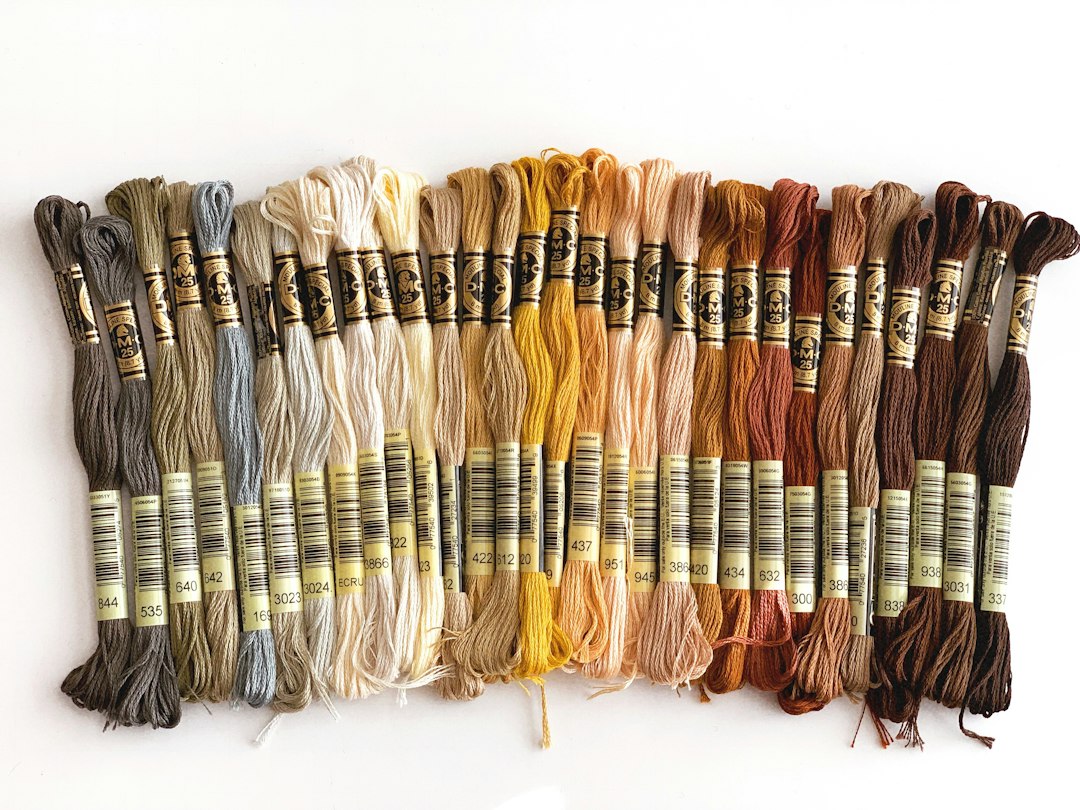
The most memorable autumn palettes often use a few repeated color families rather than twelve completely different combinations. Try starting with russet, pumpkin orange, ochre, dark bark brown and pine green. Let warm ivory Aida provide the empty space between subjects. The lightest golden thread should still read against the cloth, while the darkest color can define a tiny leaf stem or the side of a mug.
For variety, give one or two imaginary woodland figures a red or muted plum accent. This is an optional creative direction—not the real DMC key for the paid bundle. When following a purchased chart, begin with the designer’s legend and then test personal substitutions using real thread, especially if you replace pure white Aida with oatmeal or dyed fabric.
| Palette route | Suggested accent shades | Ideal mood |
|---|---|---|
| Pumpkin & Cinnamon | Orange, rust, gold, chocolate | Warm kitchen and harvest |
| Woodland Moss | Pine green, tan, ochre, charcoal | Quiet forest and mushrooms |
| Cottage Evening | Burgundy, mushroom, cream, cocoa | Bookish and cozy |
| Bright Orchard | Coral red, mustard, leaf green, oat | Playful fall mini cards |
Six gift and display ideas for twelve autumn minis
If you want to display miniature fall motifs beside a single statement piece, our Autumn Porch cross stitch planning guide covers the larger 200 × 200-stitch format, fabric dimensions and rustic frame choices.
1. A quilt-like 3 × 4 mini gallery
Frame all twelve as an even grid, with repeating gaps and a clear external margin. Take measurements from the real charts and set the cell size around the widest, tallest motif you have. A warm wood frame works beautifully with an oatmeal fabric ground, but keep the wall around the display quiet so the small shapes remain readable.
2. A harvest-themed greeting card series
Choose one pumpkin, one leaf and one mushroom from patterns you are permitted to stitch and turn them into separate cards. Each card should have a window slightly larger than the outer stitched shape, plus a secure fabric margin behind the front. The mini cross stitch card-making guide covers the practical opening-and-backing approach.
3. A woodland bookmark trio
A narrow branch, leaf or mushroom can sit near one end of a fabric bookmark. Test its placement against a paper strip before stitching. Keep the back flat and securely finish the Aida edges so loose threads don’t catch between pages. A finished bookmark is typically more useful than a tiny piece of unmounted fabric given as a gift.
4. A dozen individualized fall gift tags
You don’t have to stitch twelve identical tags. Let one recipient have the acorn, another a mug, and another a little fox—if your legally obtained charts include those shapes or you’re using your own originals. Plan the finishing material once and then batch the steps. Consistent backing card, ribbon and edge treatment will connect the set even when its motifs differ.
5. Tiny autumn hoops for a reading corner
Small individual hoops can hang as a loose seasonal arrangement near a bookshelf. Confirm that the full stitched motif fits comfortably inside the circular opening rather than relying only on its width. For instance, a nearly square 30 × 30-stitch design on 16-count Aida measures about 1.88 inches per side; its corner-to-corner diagonal exceeds two inches, so it won’t fit neatly in a two-inch circle without cropping.
6. Fabric patches for a tote bag or cloth napkins
Small cross stitch can decorate sturdy fabric, but Aida rectangles should be properly secured before being attached to something washable. Protect the edge from fraying, keep loose reverse-side threads out of contact with rough objects, and use appropriate stabilization. A test wash matters if the object will be used routinely. For children’s accessories, avoid detachable embellishments that could become a hazard.
How to stitch a multi-motif bundle without losing your place
- Confirm the original PDF contents. Check the seller’s actual files and usage terms before planning twelve finished objects. Never assume every chart uses the same stitch types or dimensions.
- Create an inventory page. Label each chosen motif, its measured grid rectangle, real floss codes and intended finish, even if the chart arrives as one combined PDF.
- Choose a shared fabric. Test the background against the lightest and darkest actual floss values. You can stitch every motif on one cloth only if the intended layout and margins fit.
- Draw the layout on paper. Use real cell dimensions and include eight or another consistent number of blank columns between hypothetical cells.
- Stitch one complete mini first. Verify thread coverage, how the symbols print, and the finishing method before cutting cloth for a dozen projects.
- Keep a color record. Separate multiple rust, gold and tan skeins using the actual thread numbers in the downloaded key. Avoid guessing from preview images.
- Mark completed areas gently. Keep a working copy of the chart for highlights, while preserving an untouched original PDF.
- Inspect each finish. Check the reverse, mounting space, fabric edge, and any potential rubbing or washing before you call a mini gift complete.
For legitimate Etsy PDF purchases, consult Etsy’s instructions for downloading a digital item. A purchased chart may be accessed through a web browser even if its files aren’t offered from a particular screen in the mobile app.
Miniature does not always mean beginner-easy
An autumn icon that fits in a one-inch square can still require careful counting if the pattern contains isolated details, fractional stitches or many similar shades. A large solid pumpkin may feel easier than a tiny fox face whose eye placement changes the expression. When evaluating the referenced bundle, check symbol spacing and stitch types rather than relying on the word “mini” alone.
Another useful distinction is stitch count versus grid positions. The original pumpkin practice grid here contains 361 positions (19 × 19), but only 120 full crosses; the other 241 positions stay unstitched. A chart’s width and height alone can’t tell you how long it takes to complete. Our size-versus-complexity article explains why time estimates should account for actual crosses and thread changes.
Where to find ready-to-download fall PDFs from XStitchPattern
For a finished PDF file rather than a project planner, our shop has separate autumn designs with confirmed downloadable files: Autumn Oak Leaves & Acorns Cross Stitch PDF, Autumn Kittens in a Basket PDF, and Autumn Walk Woman and Dog PDF. Each has its own subject and pattern details, and none includes the referenced independent 12-mini bundle.
You can visit the XStitchPattern Etsy store or use our 12 Mini Autumn WooCommerce inspiration page and click Browse & Buy on Etsy. That button opens our store’s existing catalog. If you want the specific twelve-design bundle shown in your reference, visit the original Etsy listing; we have not verified a corresponding XStitchPattern product.
For more practical reading, the Autumn Squares guide offers a different square-based format and its own original free acorn, Autumn Acorn project guide focuses on woodland stitching, and our Thanksgiving guide looks at harvest gift finishes. Each has a different objective rather than duplicating the same commercial charts.
Common mistakes with 12-pattern autumn bundles
- Mixing up twelve patterns and other bundles. Search results may show twenty or even 120 autumn charts; those specifications cannot be transferred to this listing.
- Inventing DMC colors or counts. Use the verified floss key and grid from the actual seller’s PDF.
- Assuming a 3 × 4 layout is included. The twelve-slot plan here is editorial, not the seller’s chart arrangement.
- Cutting Aida to the stitched dimensions. Add enough cloth for framing, card mounting or a finished patch.
- Using an undersized mini hoop. Check both dimensions and the motif’s diagonal, leaving space near the inner hoop edge.
- Taking inspiration photography for finished samples. Pumpkin, mushroom and floss photos here are not stitched examples.
- Republishing a paid PDF as a free download. The original design belongs to its maker; stitch only within the permission granted.
- Confusing a shop homepage with an exact product checkout. Our WooCommerce button opens the XStitchPattern Etsy catalog, not the third-party listing.
Frequently asked questions
Does the referenced Etsy bundle contain exactly twelve patterns?
Its title states 12 Mini Autumn Cross Stitch Patterns Bundle, but the exact individual motif list and file contents weren’t independently accessible during research. Verify the product’s current description, photos and download details with the original Etsy seller.
What woodland and harvest motifs are included?
The title specifies fall harvest and woodland as themes; individual pumpkins, foxes, leaves or mushrooms discussed here are editorial planning ideas, not verified contents of the seller’s PDF. Check the seller’s legitimate files for the exact designs.
How large will the complete twelve-motif sampler be?
It depends on each pattern’s real grid and the spacing you choose. A purely illustrative 4-column × 3-row arrangement of 30-stitch-wide cells with eight blank positions between them is 144 × 106 stitches—about 10.29 × 7.57 inches on 14-count Aida before mounting margins.
Is there a free pumpkin pattern on this page?
Yes. The independent original 19 × 19 full-cross pumpkin grid appears above. It uses 120 full crosses and five optional color roles. It is a practice chart embedded in the article, not a downloadable PDF and not part of the commercial Etsy bundle.
Can I stitch a mini on 18-count Aida?
Yes, if the real chart suits full crosses on that fabric and you can comfortably see the holes. A 30-stitch-wide design becomes about 1.67 inches wide on 18-count, compared with 2.14 inches on 14-count. Check thread coverage and any specialty-stitch instructions in the actual PDF.
Can I sell finished pieces made from the bundle?
Only according to the original designer’s license and applicable rules. A digital PDF purchase does not automatically grant unlimited commercial rights or permission to share, modify for resale or redistribute the chart. Ask the seller if the usage terms are unclear.
Does the WooCommerce Buy on Etsy button sell this specific bundle?
No. The XStitchPattern WooCommerce item is an external navigation page linking to our own Etsy shop. It is not a twelve-chart product download or checkout for the original seller’s Etsy listing.
Are the images photos of stitched copies of the pattern?
No. They are independently licensed photographs of real pumpkins, woodland mushrooms and embroidery supplies. The mini pumpkin symbol grid is an original digital pattern drawn for this guide, but we have not physically stitched it to claim a tested outcome.
Make one tiny fall story at a time
A harvest and woodland collection becomes much more personal when you choose a finish for each motif before starting. One chart may become a card for a friend, another a little frame beside a book stack, and a third a practical fabric bookmark. Whether you follow the legitimate seller’s charts or practice with the original pumpkin grid above, plan the real stitch size, keep your palette readable and leave enough fabric to finish neatly.
For updates on new cross stitch ideas and available free patterns from XStitchPattern, visit our free-pattern newsletter signup. The signup is separate from the commercial Etsy bundle and does not deliver the third-party files.
Editorial photo credits: Element5 Digital (harvest pumpkins), Anton Atanasov (woodland mushrooms), and Karly Santiago (floss), via Unsplash. Images are not replicas, chart screenshots or stitched samples from the referenced Etsy bundle.
If you love miniature harvest charts but want to plan a larger project, read our 260 × 254 Cozy Fall Vibes cross stitch guide for book-stack motifs, latte-and-pumpkin color planning, accurate fabric cut sizes, and a realistic stitching schedule.