
An adorable floral kitten cross stitch is one of those projects that can work in several settings: a spring nursery print, a thoughtful gift for a cat lover, a flower-themed gallery wall, or a small handmade keepsake. The combination looks simple at first glance, but a kitten’s expressive face and a wreath of flowers create two different stitching challenges. The eyes and whiskers need definition; petals and leaves need clear spacing so they do not merge into a muddy background.
This guide helps you choose or plan a floral kitten cross stitch pattern PDF, understand the difference between a digital illustration and a chart you can actually stitch, calculate finished dimensions, select a fabric count, organize colors and finish the result. You will also find practical tips for beginners and intermediate stitchers, plus links to related cat and floral projects already published by XStitchPattern.
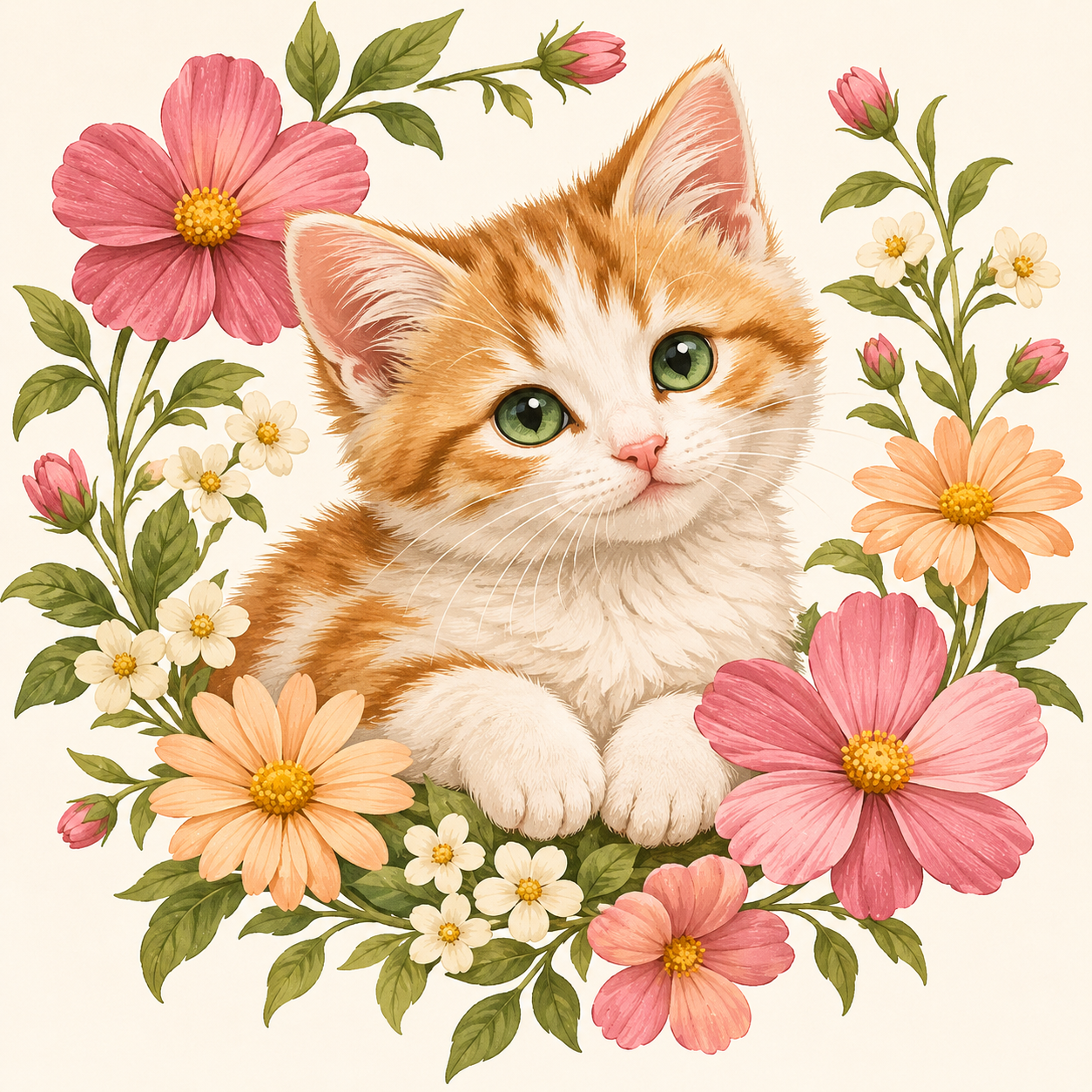
About the artwork shown: the kitten-and-flowers image above is an original editorial illustration created for this guide. It is not a photograph of stitched work, not a verified chart preview, and not a downloadable or purchasable floral-kitten PDF. A real counted cross stitch PDF must include a symbol chart and the information needed to stitch it; a pretty image alone is not a pattern.
What the reference page actually shows
The supplied PinMaster “Top simple cross stitch” Substack article is a roundup of links to third-party patterns. Its currently accessible list includes titles such as Reading Kitten Cross Stitch Pattern PDF and Floral Black Cat Cross Stitch Pattern, but it does not independently identify an item titled “Adorable Floral Kitten Cross Stitch Pattern PDF.” The URL’s query string does not verify a product listing, PDF content, designer, stitch dimensions, DMC palette, purchase price or licensing terms.
Consequently, no specifications in this guide are presented as facts about an unidentified commercial chart. If you find the exact seller’s product, use its official PDF details for the fabric calculation and follow its actual color key. Do not substitute measurements taken from an illustration, a similar cat pattern, or another seller’s chart.
How to recognize a well-designed floral kitten cross stitch pattern
Consider the kitten first. Its silhouette should remain recognizable when you step back from the preview. Look for a readable nose and eyes, ears with clear boundaries and fur tones that separate the face from the flowers. A chart that uses only a handful of pixels around each eye can be charming in a mini, but those pixels carry a disproportionate amount of expression. Enlarging a miniature chart does not create new detail; it only increases the physical size of the same stitches.
Then look at the floral border. Are the flower heads separated from the foliage? Can you recognize individual petals, or do all the colors blend together? Is there enough open fabric between flower stems and whiskers? A well-planned floral composition usually establishes a visual hierarchy: a clear kitten face first, several primary blossoms second, smaller filler leaves and flowers last. That distinction makes both the design and the stitching experience easier to follow.
Finally, evaluate the chart itself—not just the listing image. A proper pattern needs a readable symbol key and a chart sized for the intended fabric. For high-detail pieces, examine the preview for scattered single stitches, frequent color changes and extensive backstitch. These are not necessarily defects, but they increase the work involved.
Five practical checks before selecting a PDF
- Subject clarity: the kitten still looks like a kitten at the expected finished size.
- Flower legibility: the blooms and leaves remain distinct rather than forming a single colored cloud.
- Symbol contrast: symbols are distinguishable when printed in black and white or displayed on a small screen.
- Actual contents: the product specifies the chart, key and downloadable file format you will receive.
- Rights and delivery: you can identify an authorized source and understand whether a physical kit is included.
Best Aida fabric for a cat-and-flowers design
For many stitchers, 14-count Aida is a comfortable starting point because each square is relatively easy to see. Sixteen-count Aida makes the same grid smaller, which can suit a compact frame, while 18-count makes the design smaller again. However, a high-count fabric may be less comfortable when you are working tiny clusters in the fur or closely spaced floral details.
Fabric color matters as much as count. Ivory or warm cream cloth creates a soft, cottage-inspired background for ginger or tabby cats and pink flowers. White Aida can make bright colors look crisp, although pale cream petals may need enough outline contrast. Pale pink and light sage can be appealing alternatives if the kitten’s edge remains clear. Do not choose a dark background from a mockup alone: pale whiskers and flower centers may work beautifully, while other parts of a pattern may depend on unstitched light fabric.
Our Aida count identification guide explains how to measure unlabeled cloth, while choosing Aida colors for floral projects explores contrast and palette decisions in more detail. Before cutting your final fabric, hold representative floss colors against an offcut in the light where you normally stitch.
Calculate your finished kitten design size
A stitch chart is measured in counted squares. To estimate the visible stitched rectangle on Aida, divide the design width in stitches by the fabric count to obtain inches, then repeat for the height. To convert inches to centimeters, multiply by 2.54. This assumes one full cross per Aida square, the usual counted cross-stitch arrangement; specialty fabrics and techniques may use a different counting method.
Example only: imagine a hypothetical kitten-and-flowers chart measuring 120 × 140 stitches. These are teaching dimensions, not verified specifications for the reference product or the illustration above.
| Aida count | Chart area in inches | Chart area in centimeters |
|---|---|---|
| 14-count | 8.57 × 10.00 | 21.77 × 25.40 |
| 16-count | 7.50 × 8.75 | 19.05 × 22.23 |
| 18-count | 6.67 × 7.78 | 16.93 × 19.76 |
Those numbers describe the chart area, not the cloth you should cut. For a conventional framed finish, an initial allowance of around 2–3 inches on every side is common, but mounting techniques differ. Follow the frame or finishing instructions you actually plan to use. A 120-stitch-wide chart on 14-count fabric, for instance, is about 8.57 inches across before any mounting allowance; a 9-inch-wide fabric scrap would be far too narrow for most framed finishes.
If you have a hoop in mind, measure its usable internal display area, not only its advertised outer diameter. A circular hoop is especially unforgiving for designs with flowers reaching into all four corners. The small-hoop fitting guide explains the geometry with miniature motifs; the same reasoning applies to small kitten designs.
Plan a kitten-and-floral color palette without inventing DMC numbers
The eye naturally reads a kitten’s face before the surrounding border. It helps to distinguish three groups of color: fur, botanical accents, and facial details. An orange-and-cream kitten might use pale biscuit, medium ginger, warmer rust and cream tones. Pink, peach and ivory flowers can be supported with olive or sage leaves. A subtle dark accent around the eyes, nose and mouth helps preserve expression.
These are descriptive palette ideas, not a supplied DMC floss legend. When using a real commercial chart, follow its exact printed floss numbers and symbols unless you are deliberately experimenting with substitutions. Two shades that look different on a glowing phone screen can be indistinguishable under evening lamps, especially when stitched in scattered groups.
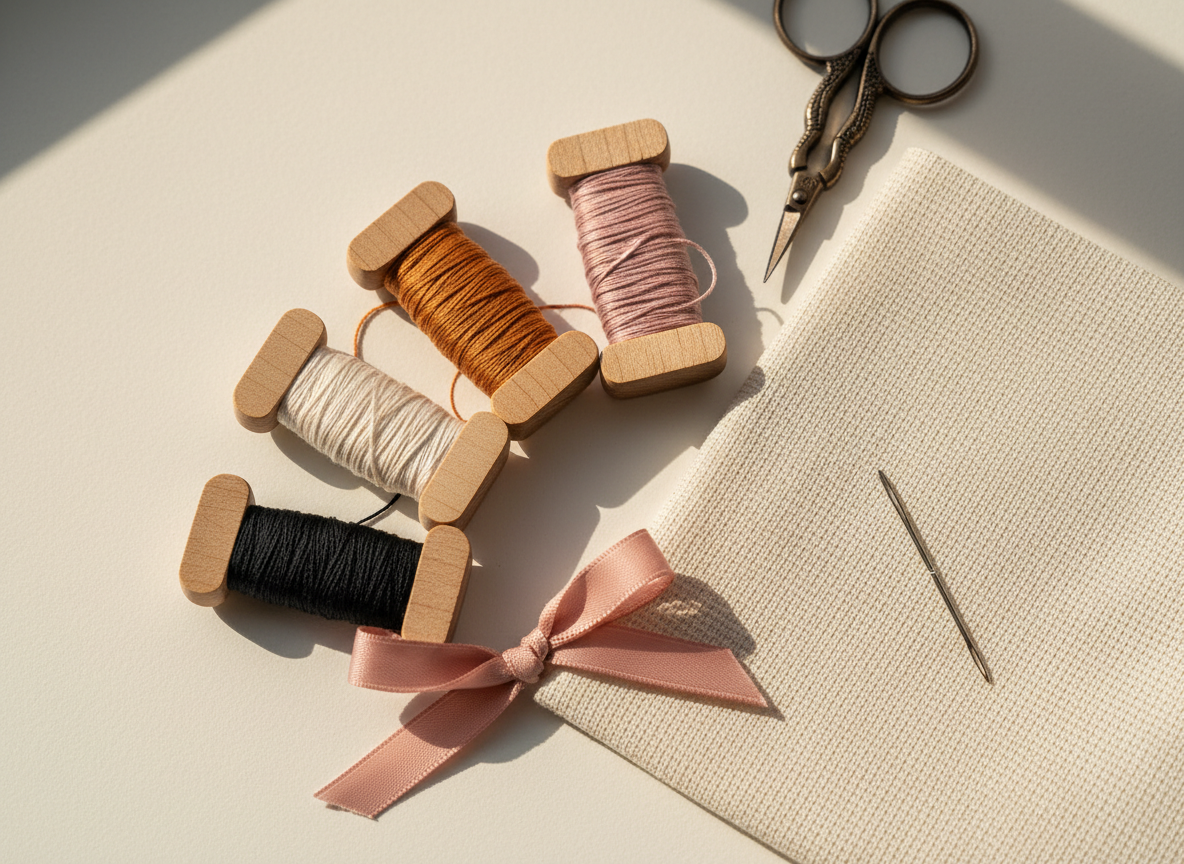
Use a thread card or organizer to keep every symbol tied to its manufacturer number. Do not rely on memory when several greens or soft pinks are nearly identical. If you want to substitute shades, make a tiny sample on the same Aida. Compare it against the source key, and preserve enough value contrast between the face and the flower border.
How to keep the face expressive
The whiskers and eyes often contain more delicate visual information than a large petal. Resist the temptation to replace all small dark stitches with one broad outline just because that seems faster. First check whether the designer included backstitch, fractional crosses or carefully placed full stitches. A counted-cross-stitch chart represents these features differently. If the instructions do not include a whisker line, do not assume that a mockup proves one exists in the chart.
For stitchers creating their own original chart, a limited and consistent color family is easier to control than dozens of near-duplicates. Sketch the kitten’s silhouette, eyes and large blooms first. Convert at the intended grid size, then inspect individual pixels before deciding the thread palette. Automatic image conversion can introduce scattered stitches in soft fur gradients; simplify those consciously rather than deleting detail at random.
Materials and tools: what you actually need
A counted cross stitch project begins with a reliable chart, counted fabric, embroidery floss, a blunt tapestry needle and scissors. A hoop or frame can help hold the fabric, although some stitchers prefer working in hand. Additional materials depend on the finish: backing cloth for a hoop, mounting board for a frame, or cardstock for a greeting card.
| Supply | What to check | Why it matters |
|---|---|---|
| Pattern PDF | Symbols, legend, chart dimensions, file access | It defines the actual design |
| Aida or suitable counted fabric | Fabric count, color, cut size | Controls scale and contrast |
| Embroidery floss | Designer-specified color key | Keeps stitched details faithful |
| Tapestry needle | Size suited to fabric holes and thread strands | Reduces fabric distortion |
| Scissors and organizer | Sharp tips, labeled threads | Prevents tangles and confusion |
| Hoop or frame | Comfortable working tension and finished size | Helps with stitching and display |
| Optional needle minder | Secure placement away from children and pets | Keeps the needle easier to track |
Some kits include many of these materials; a digital PDF generally does not. Always check the seller’s exact listing before ordering supplies or expecting physical delivery. A photograph of a wooden hoop, printed paper or styled craft desk does not mean those props are included.
Step-by-step: how to stitch a floral kitten chart
Step 1: read the whole chart before threading the needle
Find the total width and height, all symbols and their assigned floss numbers, the recommended strand count and any specialty stitch information. If a chart is split over multiple pages, locate its page order and overlap markers. Confirm whether blank squares represent intentionally unstitched fabric, a background shade or something else specified in the instructions.
Step 2: prepare the correct cloth size
Calculate the stitched area for your chosen Aida count and add extra fabric for your finishing method. If fabric edges tend to fray, use a compatible temporary edge finish before handling it extensively. Press the fabric if needed, using the textile’s care instructions. Avoid pulling the material out of square while placing it in a hoop.
Step 3: mark a reliable starting reference
Many stitchers fold the fabric gently to establish its center, then align that with the chart’s center mark. Others begin from a clearly defined corner while carefully measuring placement. Either can work if you verify your counts before stitching. For a kitten with a floral wreath, check that the outermost petals leave enough blank fabric for mounting.
Step 4: establish the main silhouette
Begin with a distinct part of the design: a large patch of fur, a clear ear boundary or a strong flower outline. Working a recognizable section creates reference points for nearby stitches. Resist long thread carries across open fabric, especially if you are using light-colored cloth, because stranded threads may show through or catch during finishing.
Step 5: place facial details carefully
Count both horizontally and vertically before placing the eyes, nose and tiny mouth stitches. They are central to the kitten’s expression. Check their position against the chart after each small cluster rather than waiting until the rest of the head is complete. If an eye sits one square too high or too far apart, correcting it early will protect the balance of the face.
Step 6: add large blossoms before filler foliage
When the face is established, move to one main flower and verify its distance from the kitten. Then fill neighboring petals, leaves and smaller accents. Stitching by flower group can be easier than jumping between all identical colors across the entire chart. There is no universally best stitching order: choose a sequence that lets you count accurately and keeps the back manageable.
Step 7: review specialty stitches and finish the surface
If the actual chart requires backstitch, add it where the instructions specify, paying attention to whisker placement, floral stems and eye outlines. Remove temporary marks according to their own instructions before final finishing. Wash only when the fabric, floss and any added materials are suitable for washing. Dry thoroughly, press from the reverse on an appropriate surface and mount without distorting the grid.
Is a floral kitten cross stitch good for beginners?
It can be, but the difficulty depends on the chart—not on how cute its cover illustration looks. A kitten made from broad color blocks with a few distinct flowers can be a satisfying first or second project. A highly shaded fur portrait with confetti stitches, blended floss, complex outlines and dozens of scattered colors may be better suited to an experienced stitcher.
A beginner-friendly pattern normally has recognizable symbols, a limited range of essential stitches, clearly marked dimensions and enough separation between the central subject and decorative border. The simplest way to assess difficulty is to inspect a real chart sample, not to trust the word “easy” alone. For broader planning, our guide to cat cross stitch subjects and styles discusses silhouettes, tabby patterns and portrait-like designs.
If you are still learning color changes, try a small floral motif on spare fabric before attempting a detailed cat face. You can practice maintaining stitch direction, checking the symbol key and securing thread ends. Those skills transfer directly to more complex work without forcing you to start with an expensive or oversized chart.
Troubleshooting common kitten-and-flower stitching problems
My kitten’s eyes look uneven
Check the position of the eye highlights and the darkest outline stitches, one square at a time. Compare your counted coordinates with the chart rather than adjusting visually by instinct. A light reflection placed differently in each eye may be intentional; an extra misplaced cross can also change the expression significantly.
The flowers disappear into the fur
Verify that you have used the specified floss and fabric background. If the problem arises from an original design you are creating, separate petals from the kitten with small negative spaces, a stronger value difference or a simplified foliage arrangement. Do not assume that adding uncharted outlines will faithfully recreate a purchased pattern.
The back is getting bulky
Long carries between isolated floral stitches can make the reverse thicker than expected. Finish one manageable region before moving to a distant area, park or secure threads in a way appropriate for the fabric, and avoid creating tight knots that could show on the front. The exact method may vary with the project and your preferred stitching technique.
The pattern is too large for my chosen hoop
Recalculate the design size using the true stitch count and fabric count. Remember the visible circle needs to contain the occupied corners of the motif, not just its width. A higher fabric count can make the chart smaller, but test whether you can stitch comfortably at that scale. Choosing a larger frame is often the simplest solution.
I see scattered single stitches everywhere
Confetti stitches can provide subtle fur shading, but they also create more thread starts and stops. If the pattern is intentionally detailed, organize the symbols and work in controlled sections instead of randomly jumping around. Work in clearly labeled sections and use your actual chart symbols to manage scattered stitches.
How to finish your kitten cross stitch as a gift
A classic wooden hoop complements cottage-style kittens and soft floral colors. Choose a hoop large enough to frame the whole design with visible fabric around the edges. Check its inner opening, not only its stated diameter. A stitched card works well for a smaller kitten face or individual floral motif; large full-detail patterns generally suit a frame, cushion panel or wall hanging better.
For a gift, include a short handwritten note about why you chose the kitten or its flowers, rather than making unsupported claims about how many hours it took. If the piece will be displayed in a nursery, keep small detachable embellishments, loose magnets and sharp accessories away from children. Avoid heavy or fragile frames directly above a crib or cot.
Framing can elevate a carefully stitched piece, but pulling too tightly can warp the square grid and make facial features look stretched. Mount evenly, check from a distance and allow the floral border to breathe. When you photograph the result, use soft natural light and distinguish an actual stitched sample from a digital concept image.
Related floral and cat designs on XStitchPattern
If you like the combination of animals and flowers, the Coquette Calico Kitty cross stitch guide explores a different, bow-accented kitten aesthetic. The Easter Cat cross stitch project guide focuses on a kitten surrounded by seasonal florals and eggs. For a more mysterious palette, the Celestial Cats floral and moon-themed guide uses a contrasting visual direction.
This floral silhouette is another XStitchPattern-owned artwork for comparison, not the same floral kitten reference. You can also browse the year-round free and premium cross stitch pattern hub for seasonal project planning or explore the XStitchPattern Etsy shop for individual currently available digital pattern listings. Check each listing to confirm whether its chart, price and download options meet your needs.
Floral kitten cross stitch: frequently asked questions
Is the Adorable Floral Kitten Cross Stitch Pattern PDF available for download here?
No. This is an educational design and stitching guide. The original kitten illustration on this page is not a published stitch chart, and the provided Substack link does not identify or verify a downloadable product with that exact title. Do not assume the XStitchPattern store offers that PDF unless a specific product listing confirms it.
Can I convert the kitten illustration directly into a cross stitch pattern?
In principle, artwork can be translated into a counted grid using pattern-design software, but automated conversion needs manual cleanup. Soft fur and layered petals may create too many close shades, isolated stitches and indistinct features. A usable PDF would still need a verified stitch grid, chart symbols, floss legend and clear delivery rights. This editorial illustration has not been converted, tested or issued as such a chart.
What Aida count should I choose for a kitten pattern?
Fourteen-count is a comfortable starting choice for many beginners, while 16- and 18-count make the same chart physically smaller. Select the count after calculating from the actual PDF’s dimensions, taking your eyesight, working light and intended finish into account.
How many DMC colors does a floral kitten pattern need?
There is no single correct number. A minimalist design may require only a small palette, while detailed fur and botanical shading can demand many more. The supplied link does not verify a floss list for this particular title; follow the real seller’s chart if you obtain one.
Is a floral kitten pattern suitable for a gift?
Yes. A floral kitten is a versatile motif for cat lovers, birthdays, spring gifts and framed needlework. Choose the format based on the recipient’s interests and the time you can comfortably commit. Avoid an overly complex pattern if you have a fixed deadline.
How do I know whether a picture is a real stitched sample?
Look for clear stitch texture, fabric holes and honest labeling in the listing description. Digital renderings and lifestyle mockups can help visualize a design but do not prove that the pattern has been physically stitched or tested. When in doubt, ask the designer directly.
Can I use a free pattern commercially?
The word “free” describes a price, not an unrestricted license. Check the chart designer’s usage terms before reproducing, distributing or selling the pattern or derivative products. Attribution alone does not grant permission to reuse another designer’s protected image or PDF.
Choose a kitten design you will enjoy stitching
The charm of an adorable floral kitten comes from its expressive face and the gentle contrast of blossoms against fur. When choosing a true cross stitch PDF, make sure those details remain legible at the finished size, the color key is clearly documented and the file’s contents and rights are understood. Begin with the finish you want, calculate the real fabric size and take your time with the face and flower borders.
Explore the matching floral kitten inspiration page, the cat pattern planning guide and our floral Aida color guide for your next steps. For free-pattern updates, use the XStitchPattern signup page and confirm your subscription when prompted; downloadable files are not exposed publicly through this article.
Source and image transparency: Editorial inspiration comes from PinMaster’s third-party cross stitch roundup; its accessible content did not verify an item bearing the exact title in this article. The main floral kitten illustration is an independently created XStitchPattern editorial image, not a copy of a third-party design. All fabric sizing figures labeled as examples are illustrative only, not commercial-product specifications.