
A finished cross stitch can collect hand oils, pencil traces and lint during stitching. Gentle cleaning may improve its appearance, but not every fabric or thread is washable. This guide helps you decide whether washing is appropriate, and how to dry and press without flattening the embroidery.

Decide whether your piece should be washed
Look first at the pattern, fabric and floss care instructions. Standard colourfast cotton embroidery floss and plain cotton Aida are often washable, but hand-dyed threads, specialty fibres, beads, metallics, glue-on embellishments and some printed fabrics may not be. If any material is uncertain, test a small spare sample before putting the finished piece in water.
Do not soak a finished design just because it looks a little wrinkled. Surface lint can often be removed with a soft brush, and gentle pressing can smooth creases without washing. A delicate antique or valuable stitched object is best assessed by a qualified textile conservator rather than treated with a home recipe.
Check for colour bleeding first
Use any leftover pieces of your darkest red, blue or black thread. Wet each sample separately in clean cool water, press between white cloth and look for transferred dye. If you see colour transfer, do not assume an entire stitched piece will be safe to soak; dark stitching can stain pale cloth very quickly.
Keep colourfastness tests realistic: the same water temperature and cleaning agent you intend to use are important. Natural fibres can also shrink or distort, so for a new type of Aida it helps to test and prepare a scrap before committing to a large project.
Wash gently, without rubbing the crosses
Fill a clean basin with cool or lukewarm water, according to the manufacturer’s care advice, and use a small amount of mild detergent suitable for the textile. Gently move the fabric through the water; do not scrub the stitches, twist the cloth, or rub a dark area against an unstitched white area. Allow only the recommended amount of soaking time.
Rinse with clean water until no detergent remains. Support the whole piece as you lift it; wet fabric can stretch under its own weight. If the project has a backing, adhesive, paper or special finish, take it apart only if doing so will not damage it, or omit washing entirely.
Dry the embroidery flat
Place the piece between two clean, colourfast towels and press gently to remove excess water. Roll the towel without wringing, then unroll and lay the embroidery flat on another dry towel. Straighten the weave while damp so the horizontal and vertical cloth threads sit at right angles.
Keep the fabric away from direct heat or intense sunlight. A tumble dryer can distort delicate stitching or shrink materials unpredictably, so flat air-drying is usually the safer starting point. Make sure the work is fully dry before mounting it behind glass or storing it in a closed container.

Iron from the back to protect raised stitches
Lay the embroidery face-down on a soft, clean towel. Place a pressing cloth over the back and use the lowest suitable heat for the fabric and thread. Press and lift the iron instead of dragging it across the stitched area. The soft towel provides space for the crosses to sit without being flattened.
Check a corner first; metallic or specialty threads may not tolerate heat at all. If the piece needs only light smoothing, a little carefully controlled steam may be enough—but never expose an untested embellishment to direct steam. Let it cool flat before moving or framing.
Finish or store the piece safely
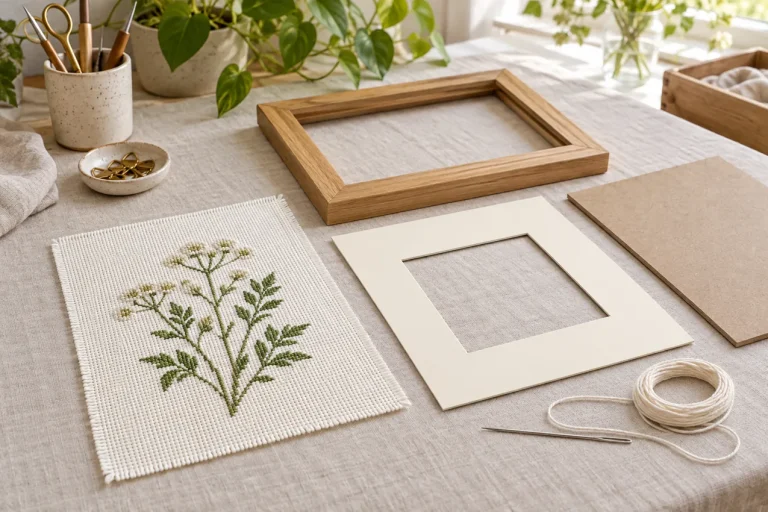
When completely dry, check that no dark floss has bled and the cloth remains square. Trim loose tail ends at the back. If you plan to frame the work, use clean acid-free mounting materials where practical and do not sandwich damp fabric behind glass. The framing tutorial explains common display options.
For storage, wrap the embroidery in clean unbleached cotton or acid-free tissue and keep it away from damp, direct sun and strong perfume. Avoid tightly folding through raised cross stitches, which can create a visible crease that is difficult to remove later.
Frequently asked questions
Should I wash cross stitch before framing?
Only if the materials are washable and cleaning is actually needed. A clean, unsoiled piece may require pressing rather than a full wash.
Can I iron straight over the front of the embroidery?
Pressing directly onto the front can crush the raised X stitches. Work face-down on a soft towel with appropriate low heat and a pressing cloth.
Related resources
Find more useful cross stitch guides and tools. For technique fundamentals, see DMC’s cross stitch resource. Explore our pattern collection only once you have checked each design’s availability and materials.

 English
 French
 Spanish
 German
 Arabic