
Christmas cross stitch patterns range from a single card motif to a detailed botanical wall panel. The right choice depends on the recipient, the display size and the time you can give both stitching and finishing. Choose one clear project type before buying supplies, then build a plan that includes washing, mounting and gift preparation where appropriate.
Calendar reference: December 25, 2026 and December 25, 2027. Check the calendar reference and your recipient’s local plans before setting a deadline.
Match the chart to the gift, not just the season
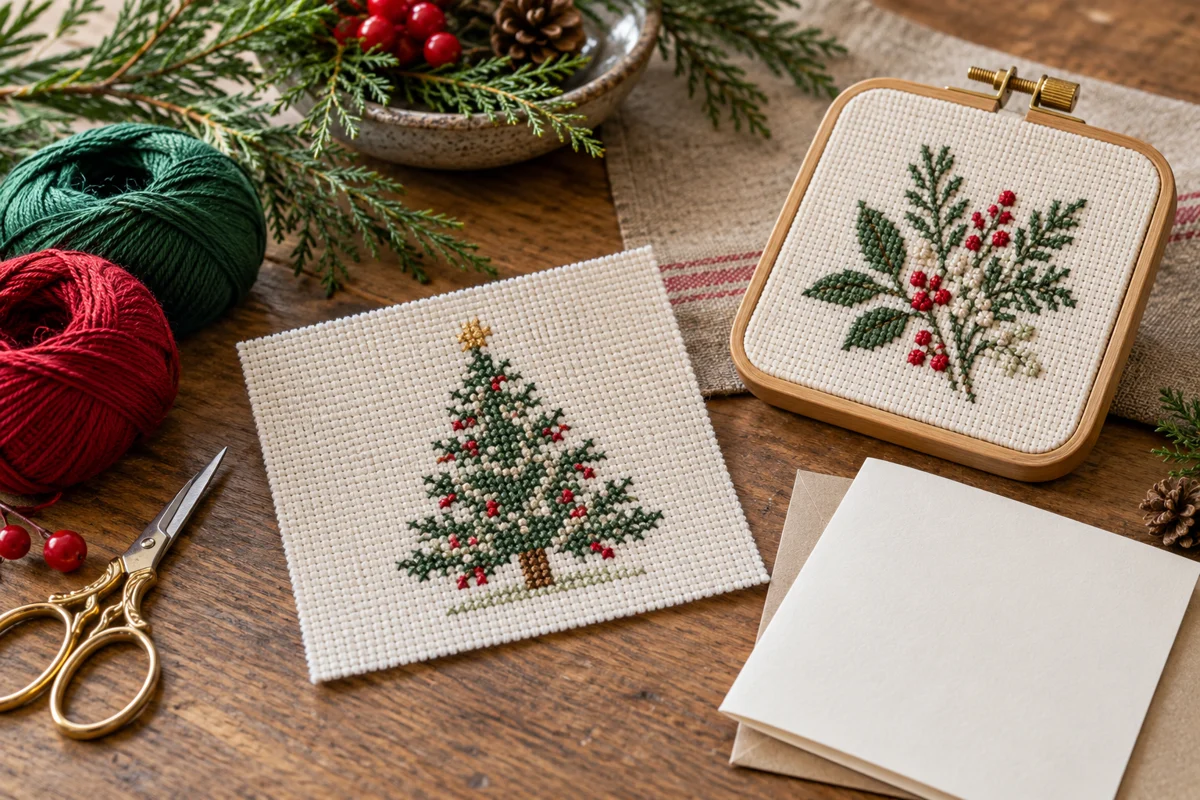
For several recipients, small repeated motifs can be more manageable than a different detailed picture for everyone. A tree, star or simple botanical shape can become a card or tag when its outline remains clear at the chosen scale. Confirm the chart actually provides the instructions you need; a beautiful display image is not the chart itself.
For one substantial keepsake, look for a complete symbol key, chart dimensions and page layout. A larger mandala or sampler may have relatively few colors yet still require careful counting over a wide area. Our Christmas mandala PDF pattern is an example of a larger botanical project; check the live product specifications before planning your finish.
Decide between cards, ornaments and framed work
A card needs an opening that shows the full motif and a reverse that sits comfortably inside the paper construction. An ornament needs a backing, hanging method and secure edges. A frame needs enough sound cloth for mounting. Those are different allowances, so do not trim all your projects to the same border.
If your main aim is an ornament, use our existing ornament finishing tutorial for the construction decisions. This guide helps you choose the project before that stage. For a frame, compare the measured design with the actual mount opening and allow space for any backstitched details outside the main crosses.
Keep the last stage in the schedule
Count the weeks until you want the gifts ready rather than working only toward December 25. A mailed gift, school exchange or early family visit may need an earlier finish. Do one representative stitching session and record what you completed; avoid assuming that a chart’s color count predicts how long it will take.
Set aside time for thread ends, any care permitted by the materials, drying and assembly. Keep an unfinished piece stored without sharp creases across the embroidery. If the available time becomes shorter, reduce the number of gifts or choose a smaller chart. Do not rush a wet textile into a closed frame just to meet a deadline.
Before you begin
- Read the actual symbol chart, thread key and stitch-type notes.
- Calculate the design area and add the allowance required for your chosen finish.
- Test the intended cotton and fabric together on an offcut.
- Keep a readable working copy and check the first completed motif before repeating it.
Questions and next steps
Are PDF patterns the same as physical kits?
No. A PDF normally supplies instructions and charts; a kit may include materials. Read each listing so you know exactly what is supplied.
Can I use Christmas designs on cushions?
A chart can inspire a cushion panel if its size fits, but the cross stitch pattern may not include sewing or cushion-construction instructions.
Where can I find another legitimate pattern source?
DMC’s official pattern catalogue is one option. Check the exact design’s stitch technique, file contents and usage conditions before downloading.
For practical preparation, see cross stitch card planning, and framing a finished textile.
For another seasonal project, explore Advent Cross Stitch Patterns or Christmas in July Cross Stitch. Choose a chart that is actually supplied or available to buy; this selection guide does not promise a new downloadable pattern.
 English
 French
 Spanish
 German
 Arabic