
Hanukkah cross stitch patterns can become small cards, gift tags or a reusable display when the symbols and lettering are checked carefully. Choose a design that fits the recipient’s practice and the space where it will be used. A modest, accurately planned motif is a better starting point than a large sampler assembled from unverified symbols.
Calendar reference: Begins at sunset December 24, 2027 and continues into January 1, 2028. Check the calendar reference and your recipient’s local plans before setting a deadline.
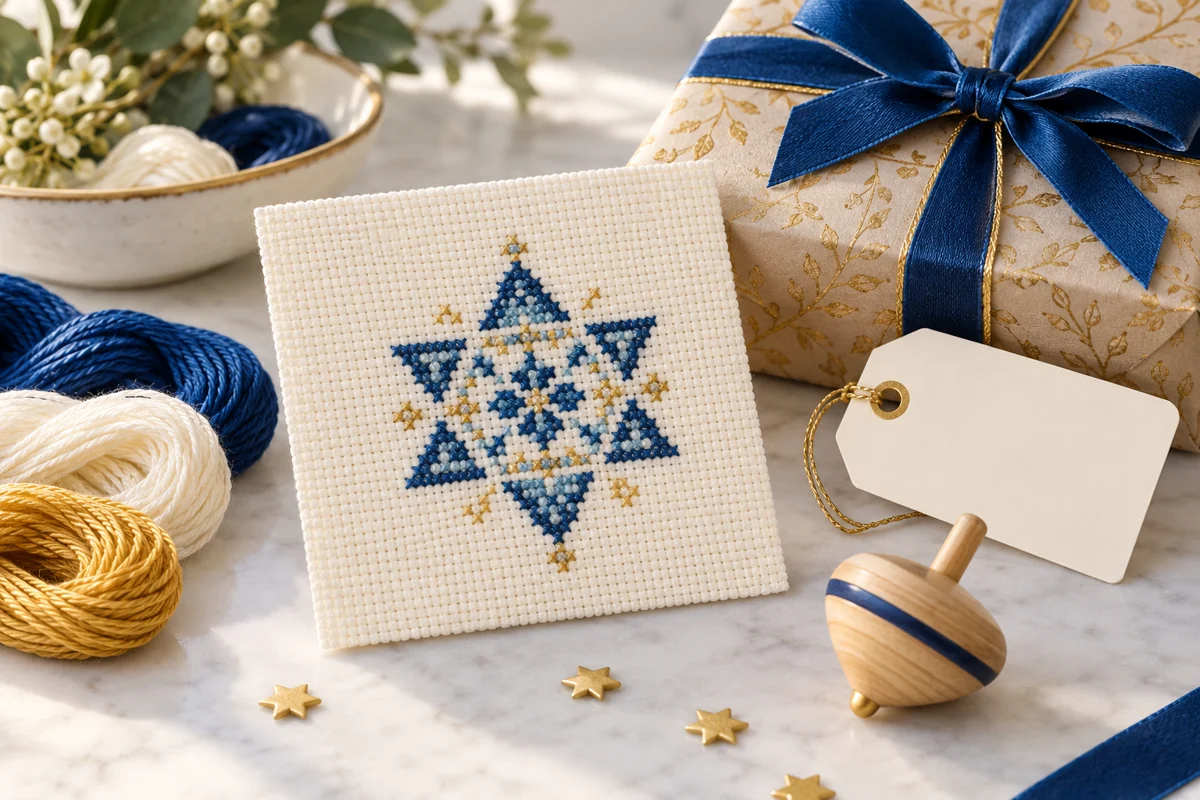
Check the candle arrangement and lettering
If a chart shows a Hanukkah lamp, check that it represents the eight festival lights and the additional shamash, rather than a generic seven-branched menorah. The layout and use of the lamp matter more than a decorative image’s apparent symmetry. Use a trusted chart and consult a knowledgeable reader if you are unsure.
For Hebrew wording or letters on a dreidel, verify the actual forms and reading direction before stitching. A generated image is not reliable lettering evidence. If you cannot verify the text, choose a non-text geometric motif and put the personal message on a separate card.
Plan a coherent set without multiplying the work
A repeated small motif in one palette can make a calm group of tags or cards. There is no requirement to make eight different detailed patterns. Choose the number of pieces you genuinely need and complete one sample, including backing, before starting a batch.
Blue, ivory and warm gold are one possible decorative palette, not a requirement. Compare the lightest thread with the Aida so highlights remain visible, and check that dark outlines do not disappear. Record thread substitutions and keep the same cloth count across pieces if you want them to match physically.
Use the evening start when setting the deadline
Hanukkah begins at sunset on December 24 in 2027 and continues into January 1, 2028. A gift intended for the first evening should be ready before that evening, not simply sometime on the first daytime calendar date. Check local timing and the recipient’s plans when arranging delivery.
For a small panel 42 squares wide, the chart area is 3 inches on 14-count Aida before allowances. Choose a frame, card or backing that leaves the full motif visible. Decorative textiles should stay away from lit candles and other heat sources, even when the stitched subject itself is a candle or lamp.
Before you begin
- Read the actual symbol chart, thread key and stitch-type notes.
- Calculate the design area and add the allowance required for your chosen finish.
- Test the intended cotton and fabric together on an offcut.
- Keep a readable working copy and check the first completed motif before repeating it.
Questions and next steps
Is every menorah design a Hanukkah lamp design?
No. Check the chart’s candle arrangement and description; a Hanukkah lamp includes eight festival lights plus the shamash.
Do I need a different chart for each night?
No. A single well-finished keepsake or repeated small motif can be a thoughtful choice.
Does the cover provide verified Hebrew or a chart?
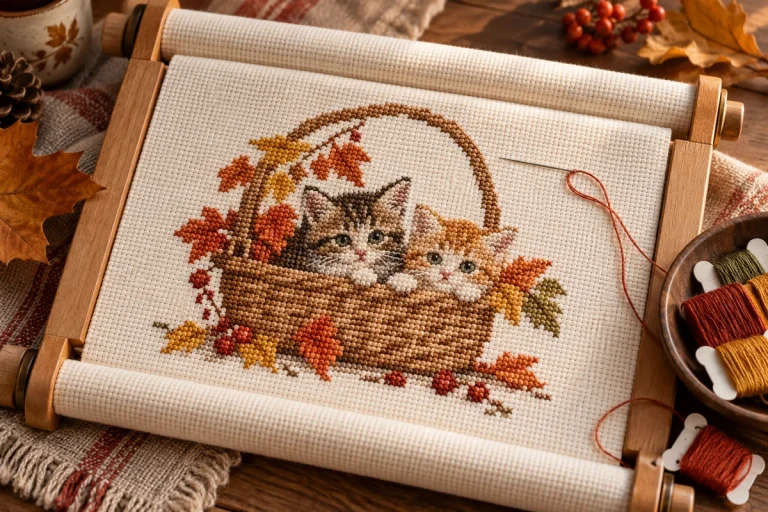
No. The editorial illustration avoids lettering and is not a downloadable pattern.
For practical preparation, see planning small stitched cards, and mounting a reusable textile display.
For another seasonal project, explore Diwali Cross Stitch Patterns or New Year Cross Stitch Patterns. Choose a chart that is actually supplied or available to buy; this selection guide does not promise a new downloadable pattern.
 English
 French
 Spanish
 German
 Arabic