
St Patrick’s Day cross stitch patterns can be effective with a small shamrock, a simple border and a carefully chosen green palette. The most important decision is whether the shape stays readable at the size you want to stitch. A clean three-leaf motif often needs fewer embellishments than a crowded sampler of seasonal symbols.
Calendar reference: March 17, 2027. Check the calendar reference and your recipient’s local plans before setting a deadline.
Know which leaf shape your chart uses
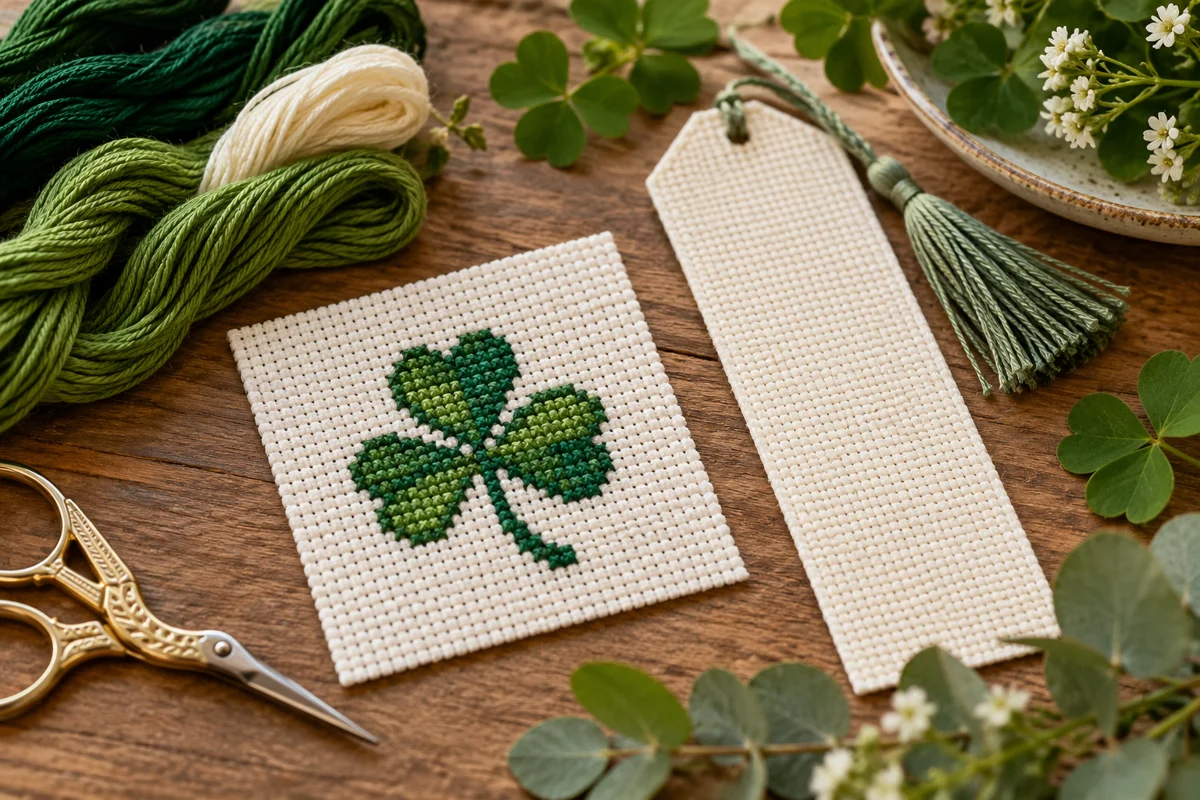
A shamrock is usually represented with three leaves, while a four-leaf clover is a different familiar motif. Decide which subject you want and inspect the actual chart. At a small scale, the spaces between the leaves and the curve of the stem can matter as much as the filled areas.
Count from the center and check the relationship between the lobes before repeating a motif in a border. Do not add or remove squares casually to make a shape fit an opening. If a silhouette no longer reads clearly, choose a larger charted version or a different display format.
Separate greens by lightness as well as hue
Emerald, olive and moss may look different in skeins but merge after stitching on the same fabric. Compare the intended shades side by side on your Aida. A dark outline on dark green cloth can disappear, while a very pale highlight may vanish against white.
A single-color shamrock can be a sensible first project if the symbol chart is clear and the stitches form connected groups. A multicolor Celtic-style border may be substantially more demanding even with a limited palette. Follow the designer’s thread key, or record each tested substitution beside its symbol so the design stays consistent.
Finish a small seasonal keepsake neatly
Choose a bookmark, card or small framed panel before cutting the cloth. A 30-square chart width measures about 2.14 inches on 14-count Aida. That measurement excludes the mounting and handling allowance, so the fabric cut must be larger than the motif.
If you make a bookmark, plan backing and a secure edge that will not shed yarn into the book. For cards, check the aperture against the completed leaf and stem. March 17 is the celebration date, but mailing and assembly need their own earlier deadline. A modest finish with sound edges is more useful than an ambitious border with no backing plan.
Before you begin
- Read the actual symbol chart, thread key and stitch-type notes.
- Calculate the design area and add the allowance required for your chosen finish.
- Test the intended cotton and fabric together on an offcut.
- Keep a readable working copy and check the first completed motif before repeating it.
Questions and next steps
Are shamrock and four-leaf clover charts interchangeable?
They are different motifs. Choose the one you intend and keep the charted leaf count instead of changing it by accident.
Can I stitch the design in one green?
If the chart’s form remains readable, a one-color version may work. Test the silhouette and check whether shading is needed to separate overlapping parts.
Can I use a border from a commercial chart on items I sell?
Check the designer’s license. Buying a PDF does not automatically permit redistribution or every commercial use.
For practical preparation, see bookmark sizing and finishing, and comparing replacement greens.
For another seasonal project, explore Easter Cross Stitch Patterns or Mother's Day Cross Stitch Gifts. Choose a chart that is actually supplied or available to buy; this selection guide does not promise a new downloadable pattern.
 English
 French
 Spanish
 German
 Arabic