
Autumn cat cross stitch patterns can look like cosy weekend projects in a small shop preview, yet a detailed kittens scene may involve months of counted stitching. Before choosing fabric or setting a gift deadline, check the chart dimensions, the number of actual crosses and the page layout. This guide explains how to turn a large seasonal cat design into a practical project without losing the facial details that make it appealing.
Read the project scale before choosing the fabric
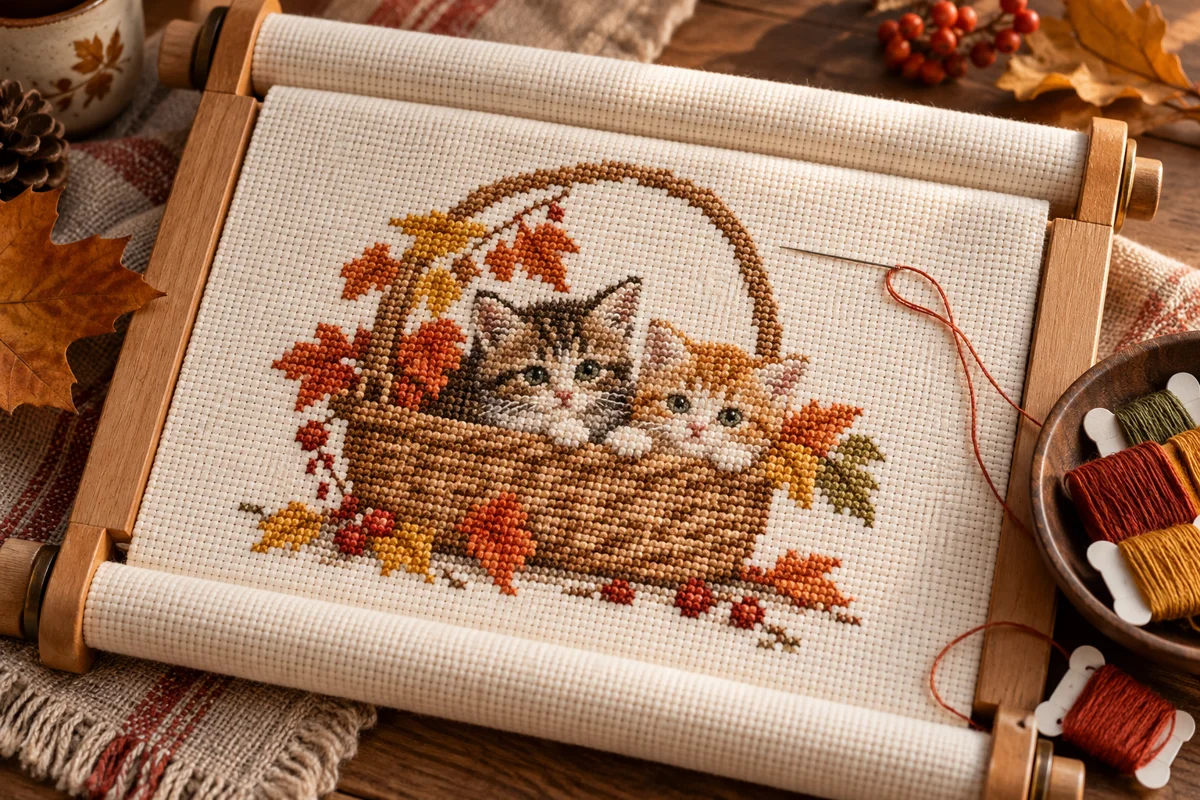
Our Autumn Kittens in a Basket PDF pattern provides a useful worked example: its current listing specifies a 250 × 300-stitch chart, 13 DMC colours and 61,383 crosses listed in the floss key. These are different measurements. The chart rectangle contains 75,000 possible squares; it does not follow that every square is stitched. The listing is the source for these specifications, rather than an independent stitch-through test.
The colour count alone does not describe difficulty. A palette of thirteen shades can still contain small changes around eyes, fur and basket edges. Inspect the actual symbol pages and note where neighbouring symbols are similar. If this is your first counted project, try a small beginner chart first so you can practise counting and securing thread without committing a large piece of cloth.
Calculate the stitched area and the fabric cut separately
On Aida worked one cross per square, divide the chart width and height by the fabric count. A 250 × 300 chart measures approximately 17.86 × 21.43 inches on 14 count, 15.63 × 18.75 inches on 16 count, or 13.89 × 16.67 inches on 18 count. A finer count makes the picture smaller; it does not reduce the number of crosses in the chart.
Add the allowance required on every side for handling and your intended finish. For illustration, adding three inches on each side to the 14-count design produces a fabric cut of about 23.86 × 27.43 inches. That allowance is an example, not a universal framing rule. Check the requirements of your scroll frame or framer before cutting, and use our fabric size and margin guide if you change counts.
Map chart pages without duplicating overlap rows
The product listing describes twenty chart pages plus a cover and floss key. Arrange the chart pages in their printed order and identify coordinate labels before starting. If the PDF repeats rows at a page edge, establish which squares are overlap and which are new stitching. An overlap is a navigation aid, not an instruction to stitch the same area twice.
Choose a start point you can locate on both chart and cloth. Keep a note of its coordinates and count back to a second reference before placing a distant feature. For another explanation of this decision, see Scarlet Quince’s first-stitch tutorial. A removable grid is optional; any marking method needs its own material test and removal instructions.
Give kitten faces their own checking points
Work connected groups that give you a trustworthy reference for the next group. Around a face, check the position of the eye, ear and nose against the chart before filling the surrounding fur. A one-square shift can matter more in an expression than in an irregular leaf. Keep the upper legs of your full crosses travelling in the same direction throughout the project.
Review the stitching from ordinary viewing distance as well as close up. Do not improvise extra backstitch or change a facial colour solely because a zoomed screen preview looks different from the thread in daylight. When an area seems wrong, compare symbol, colour number and coordinates first. Our mistake-correction guide explains how to assess a small error before unpicking a larger section.
Set a seasonal deadline using your own progress
Record the crosses you actually finish during several normal sessions, including time spent counting and changing thread. Divide the remaining listed crosses by your own average to get a rough stitching estimate, then add separate time for preparation and finishing. The result is a planning estimate, not a promised completion date or a target you must meet.
If you begin close to autumn, it is reasonable to make the piece for a later season. Store the project with its working chart, thread key and a note of the last completed coordinates. Decide on framing early enough to preserve sound mounting margins, but wait until the work is ready before making irreversible cuts. For seasonal display ideas, explore our harvest stitching guide.
Frequently asked questions
Are autumn cat patterns automatically beginner-friendly?
No. Judge the actual chart scale, symbol changes and stitch types. A small palette can belong to a substantial project.
Can I finish the kittens design in a weekend?
The example has more than 61,000 listed crosses, so it should be planned as a substantial project. Your own stitching pace and available time determine the schedule.
Does this article include the paid PDF?
No. This is a project-planning guide. The linked product page describes the separately purchased PDF and its contents.
 English
 French
 Spanish
 German
 Arabic