
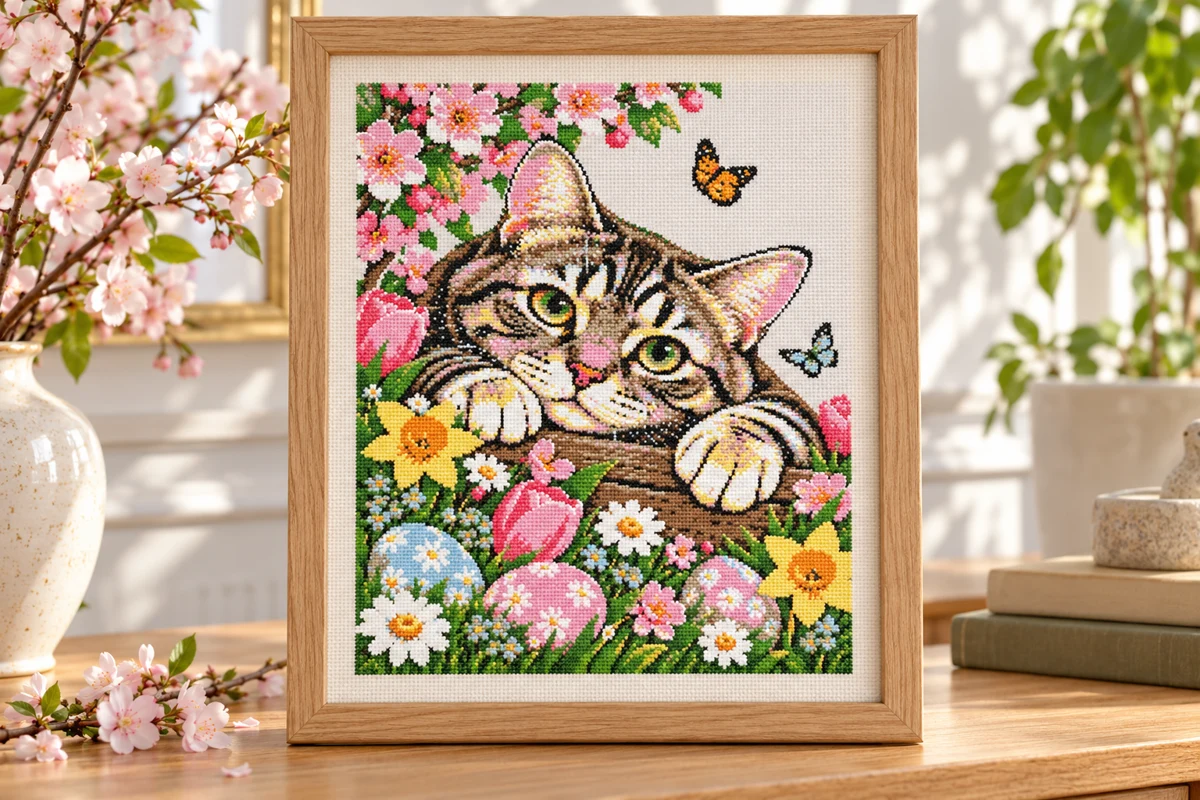
An Easter cat cross stitch project can be a substantial spring picture rather than a quick holiday motif. Before cutting fabric, compare the actual chart dimensions with your intended display, inspect the symbol pages and choose a way to track your counting. This guide uses a detailed tabby kitten design as a worked example, so you can distinguish the attractive preview from the practical work needed to complete and mount the embroidery.
Understand the difference between chart size and stitched crosses
The Spring Tabby Kitten Easter PDF pattern has a 200 × 250-square chart and thirteen DMC colours. Its supplied floss legend lists 42,668 crosses in total. The chart rectangle contains 50,000 possible squares, but those are not all stitched: the unworked areas are part of the layout. These figures come from inspecting the supplied PDF, not from a timed or completed physical stitch-through.
That distinction affects planning. A small colour palette does not automatically mean a small project, and empty space does not mean you can ignore its coordinates. The kitten’s eyes, paws, flowers and eggs still need to sit in their charted relationship. If you are new to counted stitching, work a small beginner chart before committing to a large seasonal scene.
Calculate fabric before selecting a frame or cushion
For Aida worked one full cross per square, divide the chart width and height by the fabric count. The 200 × 250 chart measures approximately 14.29 × 17.86 inches on 14 count, 12.50 × 15.63 inches on 16 count, or 11.11 × 13.89 inches on 18 count. These are calculated design dimensions, not fabric-cut sizes and not promises that a particular frame will fit.
For example, if your chosen finishing method needs a three-inch allowance on every side, add six inches to each design dimension. On 16 count, that example produces a fabric cut of 18.50 × 21.63 inches. The allowance is illustrative: confirm the actual needs of your mounting method, frame or cushion construction before cutting. Our cross stitch size and margin guide explains how to change the calculation for another count.
Map the twelve chart pages before the first stitch
The PDF contains fourteen pages: a cover preview, twelve numbered colour-symbol chart pages and a DMC floss legend. Open the file in a PDF reader and identify its chart coordinates before printing. Keep the original file unchanged and use a separate working copy for progress marks, so you can return to a clean source if you accidentally mark the wrong area.
Where chart edges repeat coordinates or include an overlap, identify which squares are navigation aids and which continue the design. Do not stitch repeated overlap as an extra band. Decide on a start point that can be located reliably on both chart and fabric, then check it from a second reference. DMC’s guide to beginning cross stitch explains the purpose of finding the centre; our PDF chart-reading guide covers symbols, keys and page navigation.
Keep white stitches separate from unstitched background
The supplied key includes DMC B5200 Snow White. A white chart symbol is a stitch instruction; a blank square is not interchangeable with that instruction. White details can help define paws, flower petals and the highlights in the design. Removing them because the fabric is pale would change the pattern rather than simply save background stitching.
Organise the thirteen shades by their printed DMC numbers and symbols. Similar pinks or browns can look deceptively close in evening light, so return each thread to its labelled place after use. The PDF specifies two strands for cross stitches. Prepare and test that combination on the fabric you intend to use, and consult our strand and coverage guide if you are unsure how fabric count affects appearance.
Use the kitten’s face and wooden plank as checked landmarks
A recognisable feature is a useful reference only after its position is correct. Check the distance between an eye, ear and nose against the chart before filling the surrounding fur. A one-square shift in an expression can be more noticeable than the same shift inside an irregular patch of leaves. Keep the upper legs of the full crosses consistent throughout the piece.
The wooden plank can help you read the composition, but count its charted edges rather than treating every brown stitch as a straight baseline. For separated flowers or butterflies, establish the location from two reliable directions instead of guessing from the cover. A scattered-stitch workflow can help manage isolated groups without carrying dark thread conspicuously across open fabric.
Plan progress around your own stitching sessions
Time a few ordinary sessions that include counting, threading and checking, then use your own progress to estimate what remains. Do not calculate a gift deadline from colour count alone. If a short session contains many tiny colour changes, it may finish fewer crosses than a session spent on a connected area. Leave room for interruptions and for correcting the occasional misplaced stitch.
Keep the working chart, thread key and a note of the last completed coordinates together. Before putting the project away, check that the fabric is supported and no sharp fold runs through the completed work. Seasonal stitching is still useful if it finishes for a later spring. Our broader Easter pattern guide helps you compare smaller alternatives when the available time is limited.
Choose a finish that preserves the complete composition
Check every outer blossom, butterfly and egg before centring a mount. The visual centre of the kitten’s face is not necessarily the centre of the complete rectangular chart. Preserve sound cloth around the embroidery until you have chosen the actual frame opening or other construction. Our framing guide explains the next decisions.
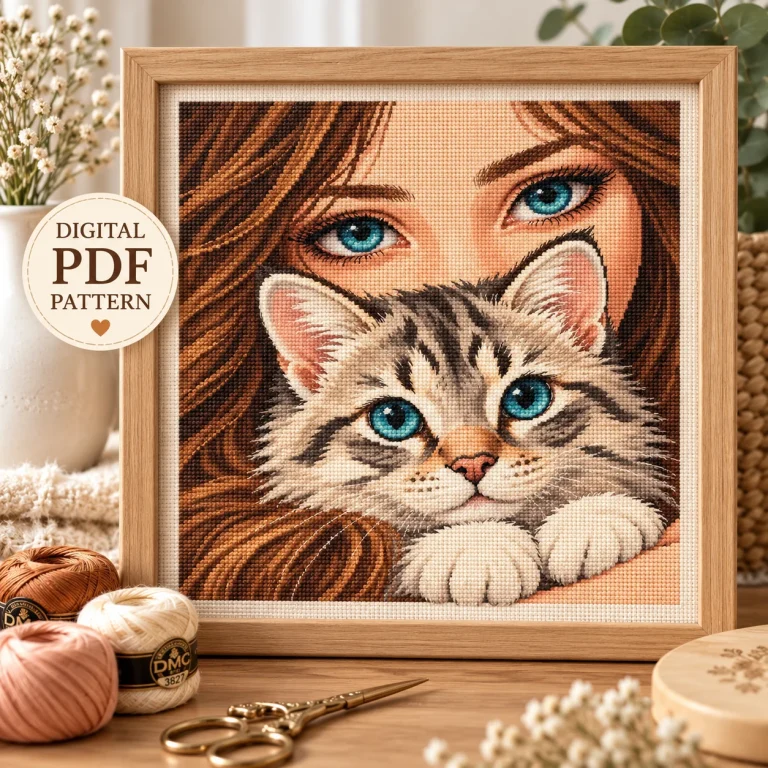
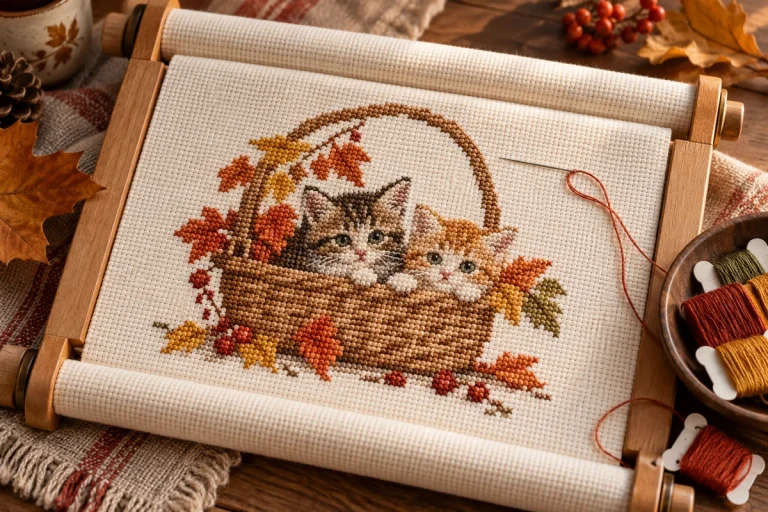
A cushion mockup can suggest a display idea, but a cross stitch PDF does not automatically include cushion sewing instructions or materials. Assess cleaning and pressing against the actual fabric and threads before treating the finished work. The lifestyle images accompanying this project are illustrative mockups; use the actual PDF preview for the exact counted design and its colour placement.
Frequently asked questions
Is this Easter cat design a quick beginner pattern?
It has more than 42,000 listed crosses across twelve chart pages. It is best planned as a substantial project for someone comfortable with counted charts, rather than a quick beginner motif.
Do I need to stitch all 50,000 chart squares?
No. The complete grid is 200 × 250 squares, while the floss legend lists 42,668 crosses. Follow the individual chart symbols and leave genuinely blank squares unworked.
Does the PDF include the transparent source artwork?
The product supplies the counted cross stitch PDF described in its listing. The original artwork is used to develop and present the design; a separate transparent PNG download is not included unless the listing expressly adds it.
Can I read the file in a stitching app?
You can view the PDF with a suitable PDF reader. Compatibility with a specialised stitch-tracking app has not been verified, so the product does not promise it.
 English
 French
 Spanish
 German
 Arabic